Colorado Department of Local Affairs releases "Planning for Hazards: Land Use Solutions for Colorado," a guide and website to help Colorado agencies prepare for natural disasters and reduce risks through resilience and hazard mitigation.


The Colorado Department of Local Affairs (DOLA) Division of Local Government released a new Planning for Hazards: Land Use Solutions for Colorado guide and website designed to help Colorado counties and municipalities prepare for natural disasters and reduce risks through the integration of resilience and hazard mitigation.
The guide and website provide a unique compilation of comprehensive materials, disaster recovery strategies, and lessons learned assembled over the years since the state’s devastating fires and floods in 2012/13. The guide includes information about creating a planning framework, hazard identification, and risk assessments to help communities implement resiliency strategies. The website provides users a variety of options to obtain specific information on targeted topics that will be supplemented over time with additional videos and links to new resources. The University of Colorado Denver, who participated in development, will manage and maintain the website.
In support of the state’s disaster recovery efforts, DOLA provided funding for the guide and website, and collaborated with an advisory committee comprised of state and federal agencies, local governments, and subject-matter experts in hazard mitigation and land use planning to create the final products.
Read the full story: Colorado Department of Local Affairs Press Release

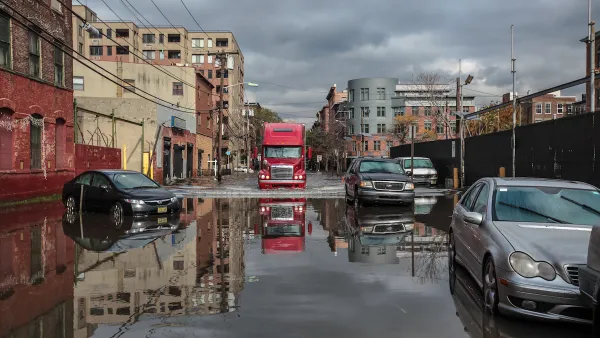
Federal Government Announces National Climate Resilience Framework
The document is designed to guide federal investment into community-driven solutions tailored to local conditions and needs.

Norfolk Plans for Resilience in the Face of Climate Change
The Ohio Creek Watershed Project aims to protect the city's coastline and prepare for future sea level rise.
Charrette: A Social Innovation Lab
When charrettes and public design workshops reach their most inclusive and transparent forms, do they become social innovation labs? Hazel Borys thinks so.

Planetizen Federal Action Tracker
A weekly monitor of how Trump’s orders and actions are impacting planners and planning in America.

Amtrak, CN end decades-long dispute with eight-year agreement
The new operating agreement establishes an updated framework for the companies to work together, including processes to resolve disputes.

Judges permit Denver to divert 77,000 acre feet from the Colorado River for reservoir expansion
Overuse and climate change have caused the Colorado River’s water levels to plummet.

Boston has spent millions making the Green Line more accessible — and there’s no end in sight
While the city has invested millions into expanding and adding platforms to the Green Line to make it more accessible, new train cars set to arrive next year will be too tall for disabled passengers to board without raising the current platforms.

Idaho may see an 18% drop in federal surface transit funding — the largest estimated cut in the US
Transit systems in rural communities are much more reliant on federal funding to provide their services.

How ‘post-disaster gentrification’ alters neighborhoods after natural calamities
After hurricanes, fires or other calamities, the original residents of a community are often replaced by younger, wealthier residents.

FREE Course: Walkable City 1: Why Walkability?
After describing his path towards focusing on walkability as the essence of good planning, Jeff Speck marches through his five principal reasons for making more walkable places.
Reinventing Malls: Planning Alchemy—Turning Gray Fields Into Gold
The course focuses on the opportunities and imperatives that shape reinvention of mall sites.

City of Wisconsin Rapids
Harvard University Graduate School of Design
KFH Group Inc.
The Architects Foundation
University of Cincinnati Online
The Pocatello Development Authority
The Urban Renewal Agency of the City of Pocatello