The document is designed to guide federal investment into community-driven solutions tailored to local conditions and needs.


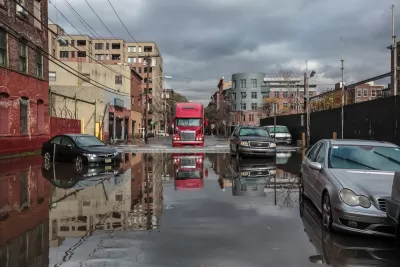
A newly released federal plan seeks to address climate resilience at the national level while focusing in on locally tailored solutions, reports Ysabelle Kempe in Smart Cities Dive.
“The ‘National Climate Resilience Framework’ identifies the federal government’s six overarching climate resilience goals and provides specific actions that could be taken to accomplish them.” The framework is intended to guide the investment of federal funding to go beyond “traditional disaster response” and build resilience for the future.
The document sets out goals such as “Embed climate resilience into planning and management,” “Increase resilience of the built environment to both acute climate shocks and chronic stressors,” and “Equip communities with information and resources needed to assess their climate risks and develop the climate resilience solutions most appropriate for them.”
The plan was announced along with a $500 million investment in climate resilience distributed to various federal agencies. “For example, the Energy Department will get nearly $168 million for electric grid modernization and the Labor Department will get $16 million to create climate resilience jobs in underserved communities.”
FULL STORY: National climate resilience plan unveiled by Biden administration


Renewable Energy Under Pressure: Lessons on Grid Resilience in Extreme Weather From Texas and California
How preparation and modern infrastructure can prevent power failures in an era of climate change.
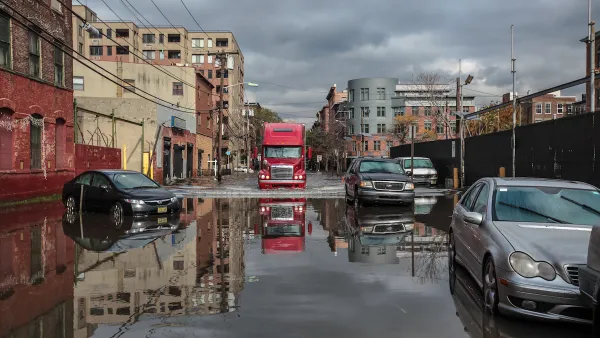
FEMA Resilience Program Cuts Grant Funding
The Building Resilient Infrastructure and Communities program funded projects from flood prevention to power station upgrades.
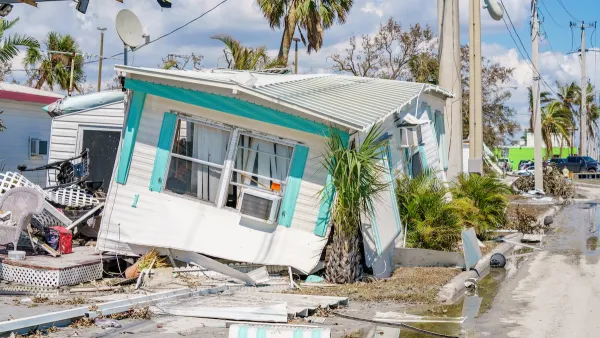
How to Make Manufactured Housing More Resilient
Manufactured housing builders must balance affordability with the need to protect housing against extreme weather events.

The state-sanctioned urbicide of Austin
People don’t kill cities. Freeways do.

US to reduce Colorado River water deliveries to Mexico
A new Colorado Treaty amendment reduces Mexico’s Colorado River water allocation by 250,000 acre feet.

New Jersey’s second-largest city bans standalone data centers
Jersey City will continue to allow co-location facilities, such as those meant for research institutions that store their own data.

Amtrak not solely to blame for New Jersey commuter rail's unreliability, report finds
A new study from the Garden State Initiative found that NJ Transit’s budget grew 20% across a 4 year period, but reliability declined significantly over the same period.

EPA erases limits on planet-warming pollution from power plants
Under Monday’s plan, power plants would still have some limits on how much mercury, arsenic and other contaminants they can emit.

Phoenix announces new on-demand transit service, more frequent RAPID buses
Both new services will launch in October, and are part of Phoenix's Project Effective Access Solutions for Easing Congestion.

FREE Course: Walkable City 1: Why Walkability?
After describing his path towards focusing on walkability as the essence of good planning, Jeff Speck marches through his five principal reasons for making more walkable places.
Reinventing Malls: Planning Alchemy—Turning Gray Fields Into Gold
The course focuses on the opportunities and imperatives that shape reinvention of mall sites.

Eagle County Government
Harvard University Graduate School of Design
Nashville Planning Department
The Architects Foundation
University of Cincinnati Online
The Pocatello Development Authority
The Urban Renewal Agency of the City of Pocatello
Journal of the American Planning Association