In a substantial part of the city, parking requirements will be eliminated for subsidized and senior housing.


In the newest release from the city, a map shows that the plan will go forward in 90 percent of the area originally proposed for the new designation. The zone includes primarily areas where new multi-family housing is allowed within a half-mile of a subway station.
Parking requirements outside the transit zone will be unaffected, as will market-rate housing anywhere in the city.
Still, Streetsblog Editor-in-Chief Ben Fried says it's the most important parking requirement change he's seen in New York City in almost ten years, paving the way for future plans to go further.
The new rules also allow existing parking to be removed from subsidized housing, if new below-market-rate housing is built on the site.
The transit zone was proposed in September as part of a major update to the city's zoning code. Outlined in February 2015 and approved last month, the Zoning for Quality and Affordability plan also addresses height requirements and improvements to building exteriors.
Read the full story: Parking Requirements Will Be Reduced in a Huge Chunk of NYC

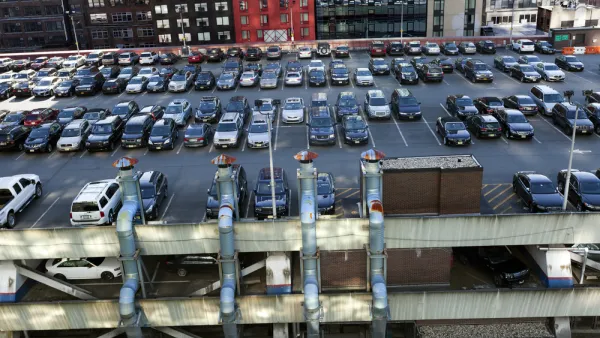
New York City Proposes Parking Requirement Overhaul
The New York Department of City Planning is working on an overhaul of its parking requirements with the potential to impact hundreds of developments.
New York City Council Approves Sweeping Zoning Changes
Politico New York reports all the important details on a big day for planning in New York City—as the City Council overwhelmingly approved two controversial zoning changes to help spur the construction of affordable housing.
Parking Requirements Among Changes in a Big Week for Planning in New York
Streetsblog NYC reviews new zoning and development rules proposed by the de Blasio Administration and finds incremental progress, not a major breakthrough, for parking policy.

Planetizen Federal Action Tracker
A weekly monitor of how Trump’s orders and actions are impacting planners and planning in America.

California plans to bury El Niño’s downpour
If the state plays its cards right, it may be able to store a billion acre-feet of El Niño’s water in aquifers.

Chicago breaks ground on $3 billion megadevelopment
The new neighborhood, titled Foundry Park, will one day host 3,700 residences.

California High-Speed Rail Authority CEO resigns after $600,000 scandal
Under Ian Choudri, the authority used taxpayer dollars to fund first class flights and trips to nightclubs.

Want to study the Missouri River? Soon, you may need unanimous approval from 10 states
Legislation would require 10 governors’ permission to study or build projects moving water outside the basin.

Desperate measures: Advocates weigh draining Lake Powell to fill Colorado River
Draining the reservoir could reduce evaporation losses by a couple hundred thousand acre-feet.

FREE Course: Walkable City 1: Why Walkability?
After describing his path towards focusing on walkability as the essence of good planning, Jeff Speck marches through his five principal reasons for making more walkable places.
Reinventing Malls: Planning Alchemy—Turning Gray Fields Into Gold
The course focuses on the opportunities and imperatives that shape reinvention of mall sites.

City of Rosemead
Rutgers University, Edward J. Bloustein School of Planning and Public Policy
One Hundred Miles
Hunter College, City University of New York (CUNY)
The Architects Foundation
University of Cincinnati Online
City of Cambridge
Montrose County
The Pocatello Development Authority