Florida Governor Rick Scott signed an omnibus transportation bill earlier this week that makes a dozen changes to the work of the Florida Department of Transportation.


"Governor Rick Scott signed HB 7027 into law," according to a press release published by Mass Transit. HB 7027 creates the Florida Department of Transportation Financing Corporation and aims to streamline transportation projects by encouraging competition and lowering interest rates. In addition:
FDOT’s legislative package (HB 7027) will provide significant time and cost savings in project delivery by giving the department the authority to assume responsibilities of the USDOT for state projects under the National Environmental Policy Act (NEPA). This means FDOT would be able to use this delegated authority to review or approve any highway project within the state under any federal environmental law.
Ryan Ray provides media coverage of the approved bill, focusing first on the provision in the bill that will require the Legislative Budget Commission to review "any proposed amendment to the department’s five-year 'Work Program' – essentially its funding plan for major projects – amounting to more than $3 million…"
Read the full story: RICK SCOTT SIGNS OMNIBUS FDOT BILL INTO LAW
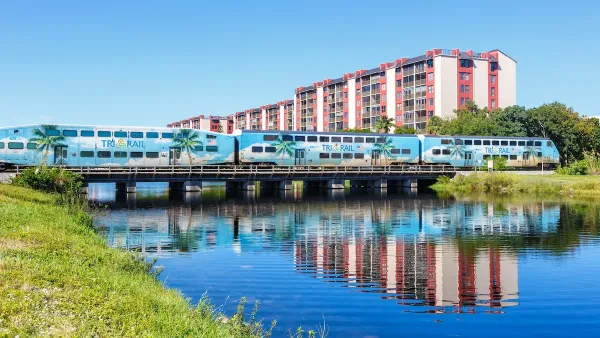
Florida’s Successful Commuter Rail Could Cease Operations in Two Years
After FDOT abruptly decreased its annual subsidy of Tri-Rail from $42 million to $15 million in July, the 80-mile rail line announced that without additional funding, it could cease operations by July 2027.

Florida to Provide Toll Relief for Frequent Commuters
It will be cheaper to drive around Florida, starting January 1.

Deadline for Brightline Plan Comes With Strings Attached
Officials from Brightline recently signed an agreement that dictates terms for the study of an extension of the private rail system between Orlando and Tampa.

Planetizen Federal Action Tracker
A weekly monitor of how Trump’s orders and actions are impacting planners and planning in America.

Eastern Nebraska is running out of electricity
Data centers and electrification are straining eastern Nebraska’s grid, throttling economic development.

Move over, LA: St. Louis gears up for Olympics, invests millions in downtown redevelopment
The Missouri city will host the 2028 Olympic soccer group stage and knockout matches.

Dallas releases zoning code overhaul to officials
The drafted overhaul is over 400 pages long.

NYC renovations for dangerous, ‘mercilessly crammed’ street delayed until 2027
Construction was supposed to begin this fall.

San Diego’s Midway Rising project gets greenlight from city council
The project looks to become the largest affordable housing development in California's history.

FREE Course: Walkable City 1: Why Walkability?
After describing his path towards focusing on walkability as the essence of good planning, Jeff Speck marches through his five principal reasons for making more walkable places.
Reinventing Malls: Planning Alchemy—Turning Gray Fields Into Gold
The course focuses on the opportunities and imperatives that shape reinvention of mall sites.

City of Rosemead
Rutgers University, Edward J. Bloustein School of Planning and Public Policy
One Hundred Miles
University of Michigan School for Environment and Sustainability (SEAS)
Hunter College, City University of New York (CUNY)
The Architects Foundation
City of Cambridge
The Pocatello Development Authority
The Urban Renewal Agency of the City of Pocatello