Juno, a new transportation network company launching to a small group of testers in New York this month, is hoping to shake up the business model adopted by its predecessors in the field.


"Juno, yet another ride-sharing app eager to take on Uber, is expecting to begin a soft launch early this month in New York City, reports Fredrick Kunkle.
The company will roll out its service first to family and friends and a small circle of passengers to test its transportation network. Once it hits the streets at a larger scale, Juno is expected to provide a noticeably different ethos as an alternative to Uber. "Juno’s betting that riders will prefer its service over Uber and other competitors because of better service and superior treatment of its workers," according to Kunkle.
Although that superior treatment is only a pledge at this point, Kunkle cites Juno chief executive and co-founder Talmon Marco through the article. Drivers will receive equity in the company relative to how much they drive, a key characteristic of Juno's business model that should benefit both drivers and users, according to Marco's rationale.
Read the full story: Juno to soft launch this month as the anti-Uber service

Ride-Hailing Prices Skyrocket as the U.S. Emerges From the Pandemic
A shortage of drivers and spiking demand are driving Uber and Lyft prices higher than ever as the companies struggle to achieve profitability.
New Regulations Grind Hiring to a Halt for Uber and Lyft
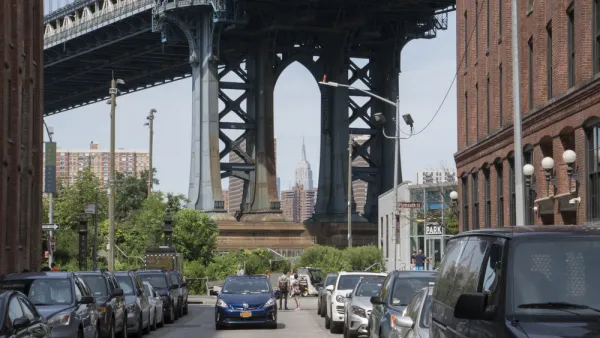
The New York City set standards for transportation network companies, and now those companies are being a lot more selective about who they hire as drivers.
Uber Drivers and Taxi Drivers Agree: Cap the Number of Ride-Hailing Vehicles in New York
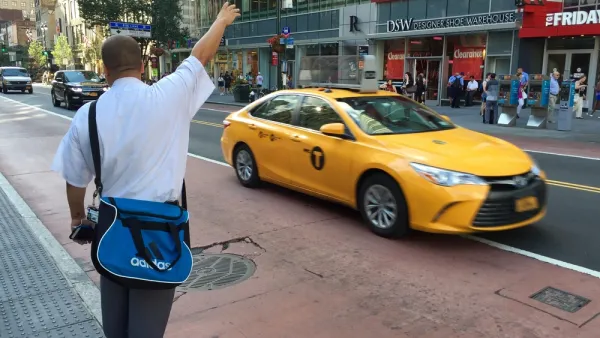
Uber (and Lyft, of course) drivers and taxi drivers hope a cap on the number of ride-hailing vehicles would improve wages and reduce congestion.

Desperate measures: Advocates weigh draining Lake Powell to fill Colorado River
Draining the reservoir could reduce evaporation losses by a couple hundred thousand acre-feet.

Eastern Nebraska is running out of electricity
Data centers and electrification are straining eastern Nebraska’s grid, throttling economic development.

Malls are becoming the midtowns of the future
Mall and office park redevelopments are a generational opportunity to create new nodes of urbanity.

NYC breaks ground on anti-flooding infrastructure project
New York City's new system will reduce stormwater flows to local sewers by 90%.

One Kentucky town’s secret to affordable housing
The Smoketown Community Land Trust has already built seven affordable homes for community members.

Houston gains petal-shaped cooling infrastructure to make streets more ‘delightful’
The city has installed the pavilions along 15 blocks in Houston.

FREE Course: Walkable City 1: Why Walkability?
After describing his path towards focusing on walkability as the essence of good planning, Jeff Speck marches through his five principal reasons for making more walkable places.
Reinventing Malls: Planning Alchemy—Turning Gray Fields Into Gold
The course focuses on the opportunities and imperatives that shape reinvention of mall sites.

City of Rosemead
Rutgers University, Edward J. Bloustein School of Planning and Public Policy
One Hundred Miles
University of Michigan School for Environment and Sustainability (SEAS)
Hunter College, City University of New York (CUNY)
The Architects Foundation
City of Cambridge
Montrose County
The Pocatello Development Authority