Seeking new approaches to a growing homelessness problem, Sacramento officials recently toured the "tent cities" of Seattle.


Sacramento City Councilmember Jay Schenirer, who chairs a subcommittee to explore solutions for homelessness, shared his thoughts on the "tent city" model and laid out several factors the city is considering in The Planning Report.
The city is already pursuing a long-term plan for permanent housing, Schenirer says. For right now, they’re looking to mitigate the day-to-day predicament of homeless individuals and families—as they sleep on the street, get ticketed, go through the court system, and end up right back where they started.
That means Sacramento would likely alter the model used in Seattle, where roving encampments appear to house residents on a semi-permanent basis.
"If we were to do something similar in Sacramento—and that’s a big 'if,' still—we would want to make sure it is part of our continuum of care," Schenirer says. "I can imagine either a tiny-house village or a tent encampment that is a triage center, where folks could go for some period of time on their way into permanent housing."
Whatever path Sacramento takes, one essential factor in its success will be regional cooperation. According to Schenirer, the dissolution of the California Redevelopment Agency has severely limited the budget for this issue, and much funding for homelessness and housing comes from the federal and state levels to the county—not to the city directly.
Sacramento's deliberations are resonant with the challenges faced by urban centers around the state and country. Read the interview in The Planning Report.
FULL STORY: Are Tent Cities a Solution to Urban Homelessness?

5 Ways to Improve Life in Homeless Encampments
As cities struggle to deal with the persistent challenges of homelessness, one writer suggest there's a better way to address the problem than by simply clearing out homeless encampments and tent cities.
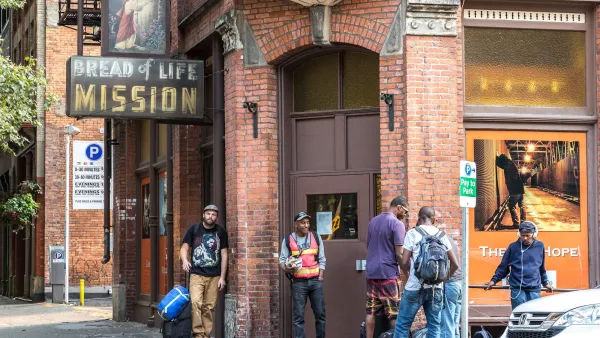
Seattle mayor pledges to build 500 shelter units by June
The Seattle Times editorial board expresses cautious optimism about the mayor's ambitious supportive housing plan.
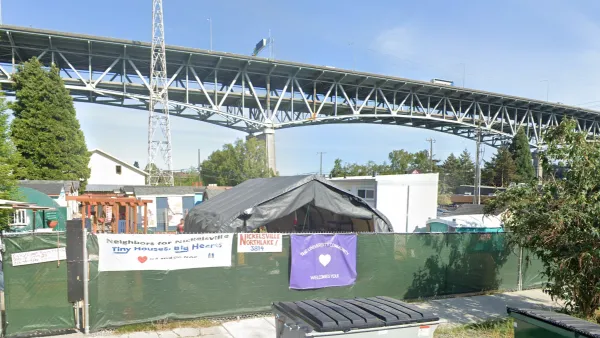
Tiny Home Village to Close Amid Controversy in Seattle
The situation at the tiny home village in the Seattle neighborhood of Northlake has been deteriorating since April.

The state-sanctioned urbicide of Austin
People don’t kill cities. Freeways do.

US to reduce Colorado River water deliveries to Mexico
A new Colorado Treaty amendment reduces Mexico’s Colorado River water allocation by 250,000 acre feet.

New Jersey’s second-largest city bans standalone data centers
Jersey City will continue to allow co-location facilities, such as those meant for research institutions that store their own data.

Amtrak not solely to blame for New Jersey commuter rail's unreliability, report finds
A new study from the Garden State Initiative found that NJ Transit’s budget grew 20% across a 4 year period, but reliability declined significantly over the same period.

EPA erases limits on planet-warming pollution from power plants
Under Monday’s plan, power plants would still have some limits on how much mercury, arsenic and other contaminants they can emit.

Phoenix announces new on-demand transit service, more frequent RAPID buses
Both new services will launch in October, and are part of Phoenix's Project Effective Access Solutions for Easing Congestion.

FREE Course: Walkable City 1: Why Walkability?
After describing his path towards focusing on walkability as the essence of good planning, Jeff Speck marches through his five principal reasons for making more walkable places.
Reinventing Malls: Planning Alchemy—Turning Gray Fields Into Gold
The course focuses on the opportunities and imperatives that shape reinvention of mall sites.

Eagle County Government
Harvard University Graduate School of Design
Nashville Planning Department
The Architects Foundation
University of Cincinnati Online
The Pocatello Development Authority
The Urban Renewal Agency of the City of Pocatello
Journal of the American Planning Association