The U.S. and Canada have come to an agreement that it's time to renegotiate a treaty that governs the management of dams and water along the Columbia River—one of the largest rivers on the continent.


"A spokesman for Canada's department of international affairs, Global Affairs Canada, confirms it is ready to renegotiate the 52-year-old treaty that governs the Columbia River," reports Chris Wood.
"The treaty controls management of the Mica, Keenleyside and Duncan dams, which were built on Canadian stretches of the river during the 1960s by the W.A.C. Bennett government to maximize flood control and power generation downstream in the United States," according to Wood, but critics decry the treaty's obsolescence. A 2014 book on the subject reported that Canada was owed millions of dollars in return for downstream benefits.
Although the treaty has no expiration date, it can be "amended or ended, on 10 years' notice, any time after 2024," according to Wood. The article includes more details about the terms of the current treaty and what a future treaty could potentially change from the current arrangement.
FULL STORY: Renegotiation of Cross-border Columbia River Treaty Planned

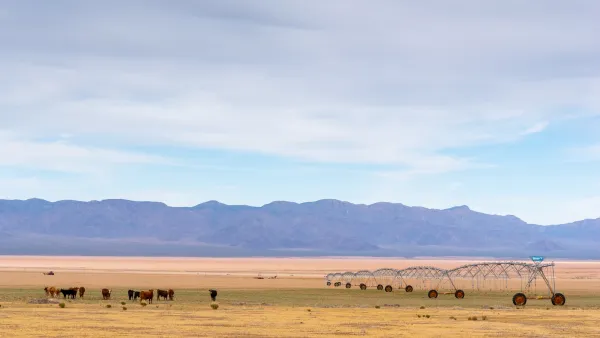
Arizona Tightens Groundwater Restrictions to Rein in Agribusinesses
The state is creating an ‘active management area’ in the western part of the state, where agribusinesses including a Saudi alfalfa exporter have practically free rein over water supplies.
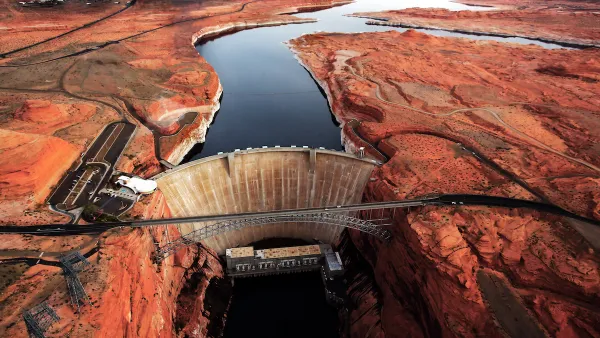
Calls Grow for ‘One-Dam Solution’ on Colorado River
California growers and others in the river’s Lower Basin want the federal government to consider draining Lake Powell to conserve more water downstream.

How Cities Can Manage Drought Risk and Conserve Water
As climate change and population growth strain fresh water resources, tactics from around the world provide universal lessons for building water-smart cities.

Planetizen Federal Action Tracker
A weekly monitor of how Trump’s orders and actions are impacting planners and planning in America.

The state-sanctioned urbicide of Austin
People don’t kill cities. Freeways do.

US to reduce Colorado River water deliveries to Mexico
A new Colorado Treaty amendment reduces Mexico’s Colorado River water allocation by 250,000 acre feet.

5 New England states march closer to 800 megawatt wind energy project
Securing federal approval for the project may be complicated under the Trump administration, which has historically been hostile towards domestic wind power.

Baltimore to break ground on $50 million Transit Priority Project
The project will bring faster bus trips, safer streets and better bike connections to Baltimore.

Airbnb launches $250 million 'last-dollar financing' housing accelerator, makes first investment in Austin
The company will put $6.4 million towards affordable housing development in Texas’ capital.

FREE Course: Walkable City 1: Why Walkability?
After describing his path towards focusing on walkability as the essence of good planning, Jeff Speck marches through his five principal reasons for making more walkable places.
Reinventing Malls: Planning Alchemy—Turning Gray Fields Into Gold
The course focuses on the opportunities and imperatives that shape reinvention of mall sites.

Eagle County Government
Harvard University Graduate School of Design
Nashville Planning Department
The Architects Foundation
University of Cincinnati Online
The Pocatello Development Authority
The Urban Renewal Agency of the City of Pocatello
Journal of the American Planning Association