As cars become more and more technologically advanced, a trio of federal agencies this week put out a public service announcement about the dangers of car hacking.


Andrew Blake reports: "The growing number of high-tech cars that connect to the Internet is making Americans increasingly at risk of being hacked behind the wheel, the FBI warned Thursday."
"In a public service announcement put out in conjunction with the Department of Transportation and the National Highway Traffic and Safety Administration, the FBI this week advised consumers to be aware of the cybersecurity risks involved with cars that use Wi-Fi, Bluetooth and other platforms to send and receive data," adds Blake.
Richard Read also reported on the public service announcement, surveying the advancements made by hackers in recent years in accessing and wreaking havoc on cars:
By last summer, however, things had changed dramatically. Hackers had found ways to hijack dongles plugged into onboard diagnostics ports, auto-related smartphone apps, and most importantly, telematics networks like Uconnect and OnStar.
Read also notes that the public service announcement included a list of tips to keep drivers and their cars safe.
Read the full story: FBI and NHTSA say car hacking is real, offer tips to keep you safe
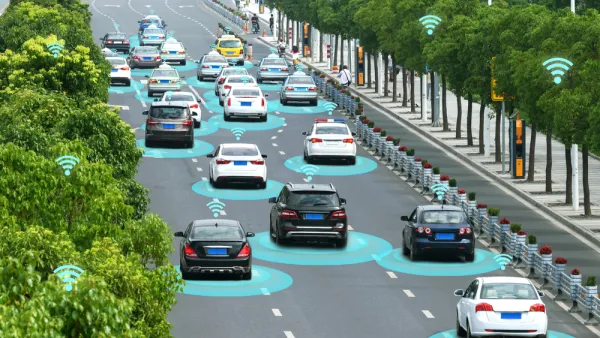
FCC Wants to Shift WiFi Bandwidth Away From the Transportation Sector
The scalability of vehicle-to-vehicle Internet technology hangs in the balance of a proposed rulemaking under consideration at the Federal Communication Commission.
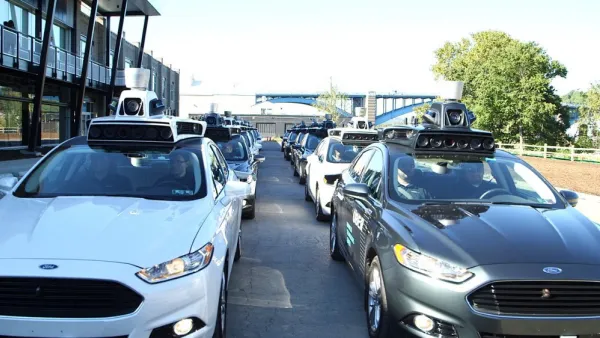
Connected and Autonomous Cars Are Using More Power and Fuel
A study by researchers at the University of Michigan and the Ford Motor Innovation Center shows that autonomous cars could have a substantial energy toll, effectively making them more polluting than current manually driven vehicles.
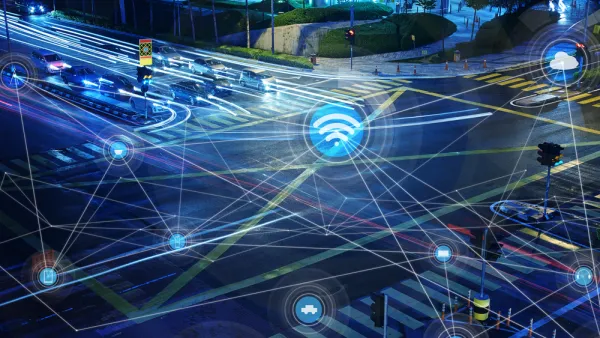
'Smart Road' Pilot Project Coming to Kansas City
The infrastructure to support a future of connected cars and automated vehicles is one step closer to reality.

Planetizen Federal Action Tracker
A weekly monitor of how Trump’s orders and actions are impacting planners and planning in America.

Washington state to charge fee to drivers with fuel-efficient cars
Revenue from the fee will go towards supporting the state’s highways.

Study reveals best places in the U.S. for cycling, walking
New research from Streetlight Data examines bicycle and pedestrian miles per capita in the 100 largest U.S. cities by population.

Mamdani unveils his ‘most ambitious bus lane project’ so far
The city has added two new bus lanes, which it expects to speed up tens of thousands of bus riders’ commutes.

New Jersey and New York suggest $10.3 billion budget for transit
Some of the budget is dedicated to replacing Manhattan's Midtown Bus Terminal.

States split over EPA’s proposal to drop greenhouse gas rules for power plants
The proposed rule drew over 165K comments, including from officials, health and environmental groups, and private citizens.

FREE Course: Walkable City 1: Why Walkability?
After describing his path towards focusing on walkability as the essence of good planning, Jeff Speck marches through his five principal reasons for making more walkable places.
Reinventing Malls: Planning Alchemy—Turning Gray Fields Into Gold
The course focuses on the opportunities and imperatives that shape reinvention of mall sites.

City of Charlotte
City of Rosemead
Rutgers University, Edward J. Bloustein School of Planning and Public Policy
University of Michigan School for Environment and Sustainability (SEAS)
Hunter College, City University of New York (CUNY)
The Architects Foundation
University District Partnership
City of Cambridge
The Pocatello Development Authority