The planning process has revealed a "select bus service" proposal for Queens to require a lot more time and funding than originally thought.


"Mayor Bill de Blasio's plans to build the city's most ambitious fast bus service in southeastern Queens have grown a good deal more expensive than anticipated," reports Dana Rubinstein. "The project once was estimated to cost $200 million but now is expected to cost $400 million," adds Rubinstein.
The jump in price also brought a lengthening timeline, with construction now expected to last until the middle of the next decade.
Rubinstein describes more of the details of "select bus service," as New York calls its version of bus rapid transit (which "lacks elements (like physically separated bus lanes) that have enabled bus rapid transit programs in other cities to approximate surface-level subway systems"), as well as the intended benefit of the new transit route for the Queens neighborhoods it would serve.
Read the full story: Price tag for fast bus project in Queens doubles

Bus Rapid Transit Proposed for Queens to Rockaways Route
New York implemented bus rapid transit with the Select Bus Service, but has yet to develop the kind of busways found in Bogota or Guangzhou. Will a route in Queens deliver the full BRT experience?
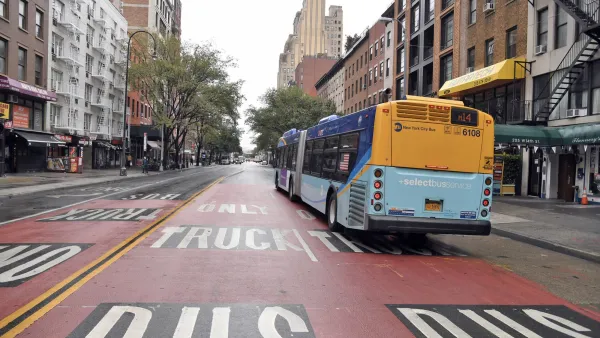
Judge Clears the Obstacles for Queens Busway Project
One piece of New York City's Better Buses Action Plan has been relieved of legal resistance.
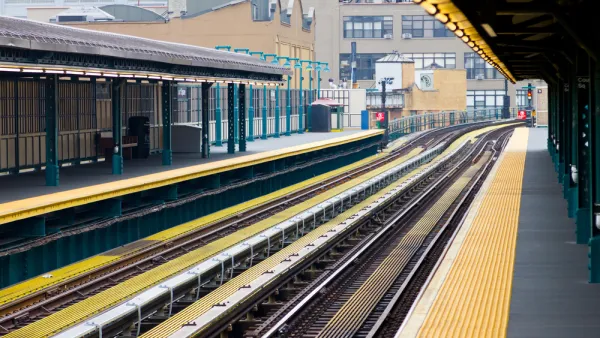
How the Triboro Line Could Improve Transit for Boroughs Not Named Manhattan
The Regional Plan Association presents the details of a plan to build a rail line connecting the Bronx, Queens, and Brooklyn: the Triboro Line.

Planetizen Federal Action Tracker
A weekly monitor of how Trump’s orders and actions are impacting planners and planning in America.

Amtrak, CN end decades-long dispute with eight-year agreement
The new operating agreement establishes an updated framework for the companies to work together, including processes to resolve disputes.

Judges permit Denver to divert 77,000 acre feet from the Colorado River for reservoir expansion
Overuse and climate change have caused the Colorado River’s water levels to plummet.

NYC DOT wants faster, more permanent street upgrades
The city is examining ways to build more concrete infrastructure without getting entangled in 'decades-long' projects.

'Something we’ve never seen before:' rising utility rates could strain city finances nationwide
Data centers, climate change and other factors have caused utility rates in the United States to increase by 38% since 2020.

Trump to overrule local leaders, lease millions of acres of America’s Pacific Island territories’ seafloors to mining companies
International law says that the Indigenous people of America’s territories have a right to prior and informed consent regarding projects that impact their countries.

FREE Course: Walkable City 1: Why Walkability?
After describing his path towards focusing on walkability as the essence of good planning, Jeff Speck marches through his five principal reasons for making more walkable places.
Reinventing Malls: Planning Alchemy—Turning Gray Fields Into Gold
The course focuses on the opportunities and imperatives that shape reinvention of mall sites.

Harvard University Graduate School of Design
KFH Group Inc.
Greater Baltimore Committee
The Architects Foundation
University of Cincinnati Online
The Pocatello Development Authority
The Urban Renewal Agency of the City of Pocatello