Three major American cities this week—San Francisco, Dallas, and Los Angeles—responded to the growing number of homeless living on the streets with sweeps, arrests, and seizures, respectively.


It's been hard to avoid evidence of the criminalization of homelessness around the country over the past week.
First came the news, reported by Gale Holland for the Los Angeles Times, that the city of Los Angeles had confiscated several tiny homes donated to homeless living on the streets of that city.
A few days later, Tasha Tsiaperas reported that Dallas had arrested more than 200 people in Downtown for violations of the city's panhandling ordinance. The arrests came after "Downtown residents and workers have complained for months that they are routinely asked for money," writes Tsiaperas.
Finally, in a move that attracted national attention, San Francisco swept away a homeless camp located on Division Street, citing health concerns. Phillip Matier and Andrew Ross reported, via City Hall sources, that "[h]aving the health department take the lead on declaring Division Street uninhabitable was intended in part to deflect criticism that Lee’s administration is criminalizing homelessness."
Writing for Governing magazine, J.B. Wogan describes the actions of San Francisco as doing just that—maybe even skirting federal guidelines about what not to do when relocating homeless populations. Wogan also includes a list of cities, including Baltimore and Honolulu, that have recently struggled to deal with homeless encampments.
For more on the San Francisco homeless sweep, see earlier coverage from C.W. Nevius about the neighborhood outcry over the homeless encampment and an op-ed by Jennifer Friedenback, who presents a withering critique of how the city handled the people living in the camp on Division Street.
Read the full story: SF moves to clear Division Street homeless encampment

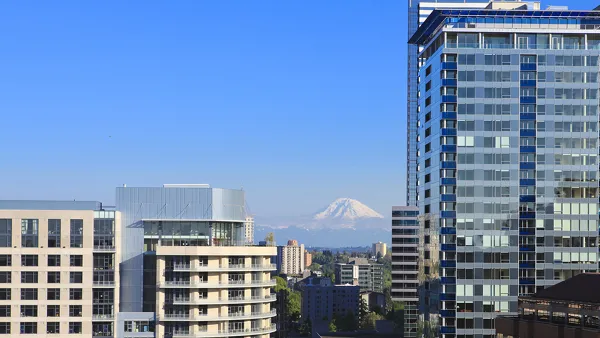
2020 Population Growth Rates for the 50 Biggest U.S. Cities
The Census Bureau released new data on May 27 that includes the first four months of the pandemic. Seattle tops the growth rate at 2.2% from July 1, 2019, to July 1, 2020, while Baltimore and San Francisco land at the bottom with -1.4%.
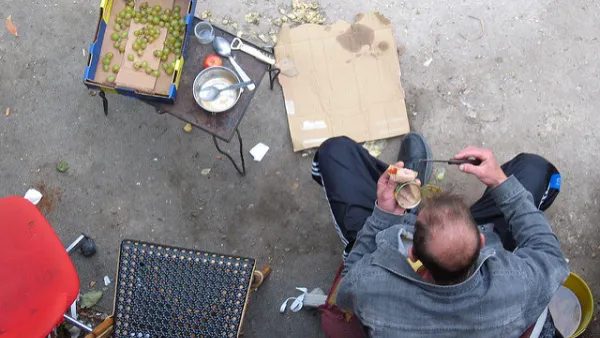
Will Appeal of Landmark Appeals Court Ruling Allow for Clearing of Tent Cities?
If the Supreme Court hears an appeal of a landmark U.S. Ninth Circuit Court case settled in April, the ruling would have widespread implications for dealing with homeless encampments throughout the West, perhaps nowhere more so than Los Angeles.
New Transit Systems of 2010
Garrett Bradford of TheCityFix reviews some of the most innovative and sustainable transit systems from around the globe that made their debut over the last twelve months.

Planetizen Federal Action Tracker
A weekly monitor of how Trump’s orders and actions are impacting planners and planning in America.

‘Going backwards:’ Baltimore mayor, students rally against state's transit funding plan
Maryland's proposed six-year plan provides no funding for Baltimore’s BMORE bus program and reduces its road maintenance funding.

Detroit to transform waterfront with $2.2 billion investment
Developers will convert about 18 acres of unused parking lot space into civic spaces.

This Boston neighborhood is filling its roads with obstacles — intentionally
Somerville is embracing ‘extreme street makeovers’ to make its roads safer for pedestrians and cyclists.

Planned $2 billion courthouse in MA sparks tension with local government
Springfield owns an essential piece of the land developers intend to build on, and some city officials do not want to see the project come to fruition.

Californians can now transform balconies into power generators
Gov. Gavin Newsom has legalized plug-in solar technology, which allows residents to plug solar panels directly into their outlets

FREE Course: Walkable City 1: Why Walkability?
After describing his path towards focusing on walkability as the essence of good planning, Jeff Speck marches through his five principal reasons for making more walkable places.
Reinventing Malls: Planning Alchemy—Turning Gray Fields Into Gold
The course focuses on the opportunities and imperatives that shape reinvention of mall sites.

City of Thousand Oaks
City of Wisconsin Rapids
Harvard University Graduate School of Design
The Architects Foundation
University of Cincinnati Online
Northern Illinois Transit Authority (NITA)
The Pocatello Development Authority
The Urban Renewal Agency of the City of Pocatello