Demolition of the Western Avenue viaduct will begin on March 1. An at-grade intersection will replace the old structure.


"The Chicago Department of Transportation (CDOT) announced that the Western Avenue viaduct, which opened in 1961, will be permanently closed on March 1," according to a press release on the City of Chicago website. "The viaduct will be demolished and replaced by a new five-leg at-grade intersection at Western, Belmont and Clybourn and is expected to be substantially complete by summer 2017."
The press release explains the significance of the removal of the viaduct:
By removing the viaduct and building the intersection at grade, the project will re-establish the fabric of the neighborhood grid and will create new opportunities for economic development and job creation in this northwest side area that borders on Lakeview and Roscoe Village. The project will boost the commercial viability of the area, improve traffic safety and enhance quality of life for the surrounding community.
The press release also includes a lot of technical detail about the project, including its impacts on traffic during demolition and construction.
Read the full story: CDOT: Western Avenue Improvement Project To Begin March 1, Western Avenue And Belmont Intersection Closed For First Weekend
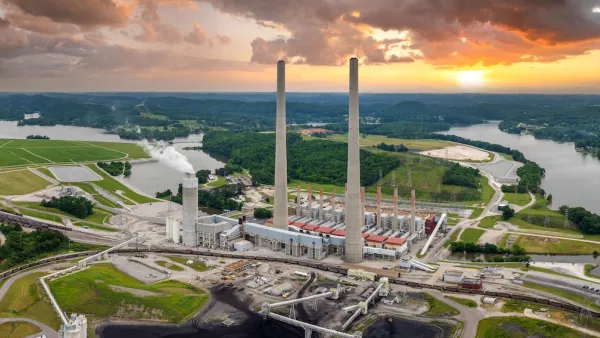
States split over EPA’s proposal to drop greenhouse gas rules for power plants
The proposed rule drew over 165K comments, including from officials, health and environmental groups, and private citizens.

Illinois considers spending $1 billion in taxpayer money on data center
A quantum computing campus and data center are currently under construction in Chicago.

Chicago cuts ribbon on $300,000, self-cleaning public toilet
The public toilet is the city’s first, and may pave the way for a rollout of similar facilities.

Planetizen Federal Action Tracker
A weekly monitor of how Trump’s orders and actions are impacting planners and planning in America.

Washington state to charge fee to drivers with fuel-efficient cars
Revenue from the fee will go towards supporting the state’s highways.
Illinois considers spending $1 billion in taxpayer money on data center
A quantum computing campus and data center are currently under construction in Chicago.

Senate passes bill overhauling permitting
The bill still needs to pass the House.

Did data centers change how voters cast their ballots?
Texas, Ohio, and Georgia all flipped party control. But in rural counties, the effect of local data centers was mixed.

Amtrak invests in eight new Airo trainsets
The new trainsets will begin serving passengers in 2031.

FREE Course: Walkable City 1: Why Walkability?
After describing his path towards focusing on walkability as the essence of good planning, Jeff Speck marches through his five principal reasons for making more walkable places.
Reinventing Malls: Planning Alchemy—Turning Gray Fields Into Gold
The course focuses on the opportunities and imperatives that shape reinvention of mall sites.

City of Charlotte
City of Rosemead
Rutgers University, Edward J. Bloustein School of Planning and Public Policy
University of Michigan School for Environment and Sustainability (SEAS)
Hunter College, City University of New York (CUNY)
The Architects Foundation
University District Partnership