Gas taxes and road and bridge tolls are not very popular, but important nonetheless. Gov. Matt Bevin (R) will sign a bill that prohibits tolls on a new Ohio River bridge, and might also endanger federal funding.


Like Gov. Matt Bevin's promise to roll back the Medicaid expansion under the Affordable Care Act that occurred under his Democratic predecessor, Governor Steve Beshear, this decision will undoubtedly prove popular as a political move, but like the roll back of Medicaid, it could prove dire from a financial perspective.
"Gov. Matt Bevin will support legislation his predecessor, Gov. Steve Beshear (D), had vetoed for its ban on tolls to help build a new Ohio River bridge" known as the Brent Spence Bridge project, writes Scott Wartman for the Cincinnati Enquirer. The bill is in the Senate having cleared the House on Feb. 11
The prohibition on Ohio River bridge tolls are contained in House Bill 309, sponsored by Rep. Leslie Combs, D-Pikeville, and Majority Caucus Chair Sannie Overly, D-Paris, known as the public-private partnership (P3) bill.
"The bill would expressly prohibit the authorization of tolls 'for any project involving the interstate highway system that connects the Commonwealth with State of Ohio,' which would include the proposed $2.6 billion replacement of the Brent Spence Bridge connecting Northern Kentucky and Ohio," according to the Lane Report. "Opposition to tolls for the bridge project hampered the passage of P3 legislation in 2015."
"If tolls would be enacted, it would be both on the current bridge, which would be rehabilitated, and the new bridge built alongside it," clarifies Wartman.
The bill stood no chance during the Beshear administration. Beshear insisted tolls needed to be part of the discussion in renovating and building a new Brent Spence.
"It is imprudent to eliminate any potential means of financing construction of such a vital piece of infrastructure that serves not only the Commonwealth and the state of Ohio but also the eastern United States," Beshear wrote in his veto of the bill.
So, if not tolls, where will funding come from? That's the question the Kentucky Legislature, and the new governor, will have to answer if they want to get federal funds for the $2.6 billion project.
"The toll ban might delay the Brent Spence project but does not kill it, said Mark Policinski, chief executive officer of the Ohio-Kentucky-Indiana Regional Council of Governments," adds Wartman.
Bevin will need to come up with an alternative source of money, he said, and soon. If the region wants to win any federal money, Ohio and Kentucky will need to come up with a financing plan to beat out other states, Policinski said. That's because competition is steep for federal money.
Perhaps Bevin will change his mind, as he did with the Medicaid roll back, instead agreeing to a "Medicaid overhaul." However, if the P3 bill passes with the no-toll clause in and he doesn't veto it, there's no going back.
Hat tip to AASHTO Daily Journal Update
Read the full story: Bevin: I'll sign bill banning tolls for new bridge

Kentucky Governor Signs No-Toll Bill, Likely Sets Back Ohio River Bridge 10 Years
As promised, Gov. Matt Bevin signed the P3 bill that allows private funding, but bans tolls, to pay for the $2.6 billion Brent Spence Bridge project over the Ohio River that connects Covington, Ky. to Cincinnati. Now he needs to find the funding.
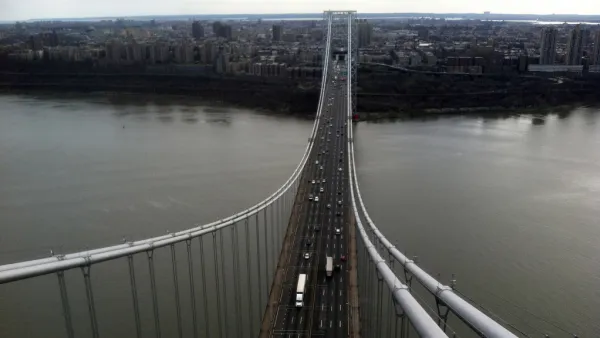
New Jersey Wants an Exemption from Manhattan Congestion Charge
With cordon pricing coming to Manhattan in 2021, New Jersey motorists who pay up to $15 in bridge or tunnel tolls don't want to have to pay another $10 to $14 to drive into the Central District Business tolling zone, but exemptions come with a price.
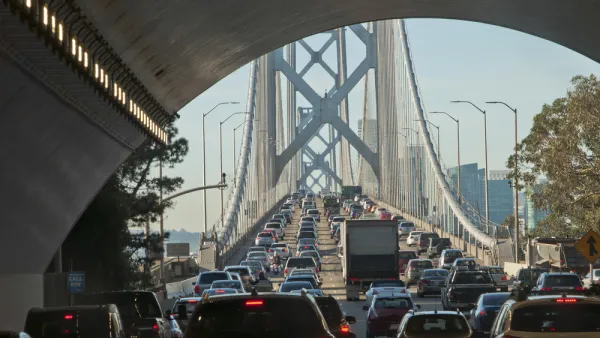
Bay Area Transportation Planners Breathing Easier After Court Ruling
A total of $4.5 billion in road and transit projects was at stake in a state taxpayer group's lawsuit against a regional ballot measure approved by voters in June 2018.

Planetizen Federal Action Tracker
A weekly monitor of how Trump’s orders and actions are impacting planners and planning in America.

California plans to bury El Niño’s downpour
If the state plays its cards right, it may be able to store a billion acre-feet of El Niño’s water in aquifers.

Desperate measures: Advocates weigh draining Lake Powell to fill Colorado River
Draining the reservoir could reduce evaporation losses by a couple hundred thousand acre-feet.

Non-stop party: Chicago voters weigh permanent festival grounds
A stable place for bleachers, stages and drainage may streamline the setup and teardown of large events.

Metra may invest $9.1 billion in regional rail
The agency released a draft of a study examining potential ways to offer more frequent train service.

California city breaks ground on transit connector
The project includes three mobility hubs and a pedestrian bridge.

FREE Course: Walkable City 1: Why Walkability?
After describing his path towards focusing on walkability as the essence of good planning, Jeff Speck marches through his five principal reasons for making more walkable places.
Reinventing Malls: Planning Alchemy—Turning Gray Fields Into Gold
The course focuses on the opportunities and imperatives that shape reinvention of mall sites.

City of Rosemead
Rutgers University, Edward J. Bloustein School of Planning and Public Policy
One Hundred Miles
Hunter College, City University of New York (CUNY)
The Architects Foundation
University of Cincinnati Online
City of Cambridge
Montrose County
The Pocatello Development Authority