Perhaps the most remarkable aspect of the 1,066-foot building is what distinguishes it from other high rises of its size across the East River—it will be residential.


"Two developers have submitted plans in recent weeks for a 1,066-foot building in Downtown Brooklyn, which would be almost twice as high as anything surrounding it," writes Matt Chaban, metro reporter and columnist at The New York Times. "The complex, at 9 DeKalb Avenue [see rendering], would also bring the current surge in supertall towers across the East River from Manhattan."
A residential high rise, with possibly 20 percent affordable units
Unlike the Manhattan towers rising more than 1,000 feet, the Brooklyn structure, with nearly 500 units, is planned as a rental apartment building, according to a person familiar with the plans who was not authorized to discuss them publicly. The developers also applied for the 421-a program, which provides tax breaks for including subsidized apartments in luxury buildings, before it expired last year, and would set aside at least 20 percent of the units as affordable housing.
"For this project, the architects say they drew inspiration from the limestone-columned Brooklyn Dime Savings Bank, which sits next door to the site of the tower and would be incorporated into the property," writes Chaban. The sale of the bank for $90 million and the use of its air rights was the subject of a post last August.
They plan to use its soaring Beaux-Arts spaces for shops as well as incorporating roughly 300,000 square feet of air rights that would make the tower’s spire possible,
Part of the tower would rest on a rear portion of the bank, which the developer hopes to demolish; this could become a sticking point, since the bank is a New York City landmark.
The first hurdle for the proposed high rise, which will be the borough's tallest, would be a hearing before the Landmarks Preservation Commission scheduled for March 15 "since the exterior and interior of the [Dimes Savings] bank building — opened in 1908 and expanded in 1932 — are protected," writes Chaban.
Community reaction
Members of the land-use committee for Brooklyn Community Board 2 were impressed with the project. "It’s a beautiful project and a great opportunity to save the bank," member Hazra Ali told The Times.
"Yes, the city planned this for a new Brooklyn," Gina Pollara, the newly appointed president of the Municipal Art Society, said. "But does the public really understand what the cumulative effect of all these towers will be on the public realm?"
Last comment goes to the developer, Michael Stern, the founder and managing partner of JDS Development Group:
“We’re really excited to give Brooklyn a building that isn’t bashful, that isn’t shy,” Stern said in a statement. “We want this project to encapsulate everything that is great about Brooklyn’s past and everything that is great about Brooklyn’s future.
FULL STORY: 73-Story Tower Would Be Brooklyn’s Tallest by Far


The myth of the 'first skyscraper:' How a clever PR campaign duped the world
The lie that laid claim to the skyscraper’s origins is well documented. Why do we still believe it?
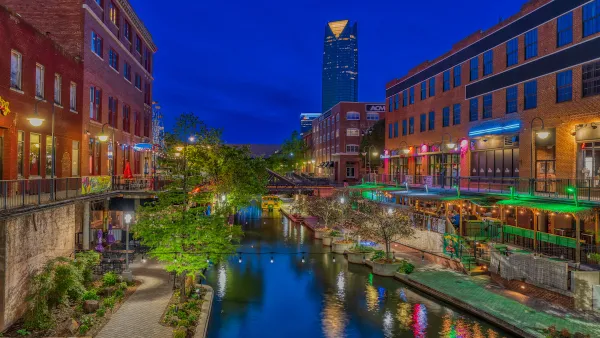
Tallest Building in US Proposed for OKC
The building would stand 1,907 feet high, twice as tall as any other building in the Oklahoma City skyline.

Austin’s Changing Skyline
Multiple proposed skyscrapers are changing the shape of once low-slung downtown Austin, signaling the growth of the city as a technology and manufacturing hub.

Planetizen Federal Action Tracker
A weekly monitor of how Trump’s orders and actions are impacting planners and planning in America.

The state-sanctioned urbicide of Austin
People don’t kill cities. Freeways do.

US to reduce Colorado River water deliveries to Mexico
A new Colorado Treaty amendment reduces Mexico’s Colorado River water allocation by 250,000 acre feet.

Mamdani overhauls NYC's Vision Zero plan with 100 new policy goals
The overhaul aims to reduce traffic deaths and make streets safer for pedestrians, cyclists and drivers through lower speed limits, new safety infrastructure and more.

Amtrak not solely to blame for New Jersey commuter rail's unreliability, report finds
A new study from the Garden State Initiative found that NJ Transit’s budget grew 20% across a 4 year period, but reliability declined significantly over the same period.

EPA erases limits on planet-warming pollution from power plants
Under Monday’s plan, power plants would still have some limits on how much mercury, arsenic and other contaminants they can emit.

FREE Course: Walkable City 1: Why Walkability?
After describing his path towards focusing on walkability as the essence of good planning, Jeff Speck marches through his five principal reasons for making more walkable places.
Reinventing Malls: Planning Alchemy—Turning Gray Fields Into Gold
The course focuses on the opportunities and imperatives that shape reinvention of mall sites.

Eagle County Government
Harvard University Graduate School of Design
Nashville Planning Department
The Architects Foundation
University of Cincinnati Online
The Pocatello Development Authority
The Urban Renewal Agency of the City of Pocatello
Journal of the American Planning Association