Census data shows that Seattle jumped Baltimore to become the country's tenth most densely populated city. Is Seattle on the cusp of a changing of the guard when it comes to density and population growth?


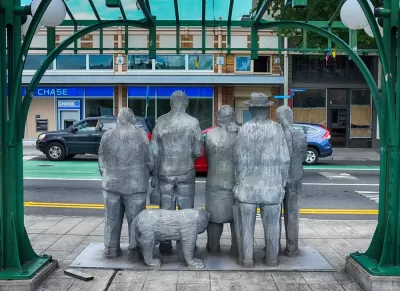
"Analysis of census data shows that Seattle — for the first time in its history — ranks among the top 10 most densely populated big cities in the U.S.," according to an article by Gene Balk.
"With 7,962 people per square mile in 2014, Seattle leapfrogged Baltimore into the No. 10 spot among the 50 most populous cities in the country. Seattle’s population density has increased by nearly 10 percent since the 2010 Census. And if current growth rates continue, we’ll bypass No. 9 Los Angeles within five years," adds Balk.
Balk places the new density figures in context of the city's ongoing development controversies, which erupted most publicly with the Housing Affordability and Livability Agenda (HALA) last year. Balk speaks extensively with Branden Born, associate professor of urban design and planning at the University of Washington, about the "D" word (density)—how the public perceives it and how they misperceive it. Born looks around the city and notes examples of density done right, as well as some example of how new development has changed the character of neighborhoods. Born predicts "a changing of the guard is under way when it comes to density and growth."
Read the full story: Seattle among top 10 most densely populated big cities in the U.S. for first time ever

Beware of Energy Rankings for Cities
In a special "Energy for Tomorrow" report, The New York Times looks at "clean city rankings" of energy efficiency and land use. But ranking cities is no easy task—"winners on one list may appears as sinners on another."
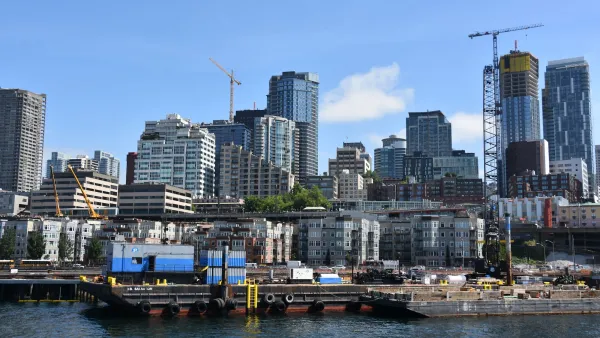
Seattle upzoning proposal seeks to boost density, support eco-friendly building materials
A city committee advanced the plan to target areas already open to multifamily development for additional density and encourage passive house and mass timber construction.
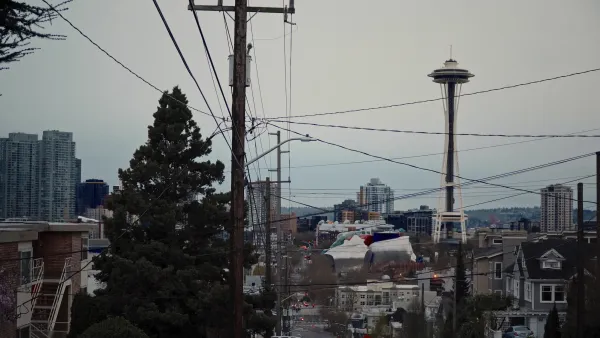
Seattle Density Increase Stymied by Underground Power Line Requirement
A new policy that requires buildings with four or more units to bury their electrical lines is making housing development more costly and causing months-long delays.

Planetizen Federal Action Tracker
A weekly monitor of how Trump’s orders and actions are impacting planners and planning in America.

Amtrak, CN end decades-long dispute with eight-year agreement
The new operating agreement establishes an updated framework for the companies to work together, including processes to resolve disputes.

Judges permit Denver to divert 77,000 acre feet from the Colorado River for reservoir expansion
Overuse and climate change have caused the Colorado River’s water levels to plummet.

NYC DOT wants faster, more permanent street upgrades
The city is examining ways to build more concrete infrastructure without getting entangled in 'decades-long' projects.

'Something we’ve never seen before:' rising utility rates could strain city finances nationwide
Data centers, climate change and other factors have caused utility rates in the United States to increase by 38% since 2020.

Trump to overrule local leaders, lease millions of acres of America’s Pacific Island territories’ seafloors to mining companies
International law says that the Indigenous people of America’s territories have a right to prior and informed consent regarding projects that impact their countries.

FREE Course: Walkable City 1: Why Walkability?
After describing his path towards focusing on walkability as the essence of good planning, Jeff Speck marches through his five principal reasons for making more walkable places.
Reinventing Malls: Planning Alchemy—Turning Gray Fields Into Gold
The course focuses on the opportunities and imperatives that shape reinvention of mall sites.

Harvard University Graduate School of Design
KFH Group Inc.
Greater Baltimore Committee
The Architects Foundation
University of Cincinnati Online
The Pocatello Development Authority
The Urban Renewal Agency of the City of Pocatello