The critically lauded Plan El Paso hasn’t yet spurred the kind of urban revitalization it was designed to achieve. Some say its evidence that people still want sprawl, other say changes are still coming.


Alana Samuels takes a deep look at El Paso's current state, after years of progressive planning initiatives and political controversies have moved the direction of the city between conflicting visions.
First Samuels notes the award-winning pedigree of the city's planning efforts over the course of the decade: "The National Resources Defense Council has said that El Paso has 'America’s Best Smart Growth Plan' and—perhaps more surprisingly—in 2011 the city won a Smart Growth award for its Plan El Paso, a 800-plus page comprehensive plan that aimed to make the city more compact, walkable, and transit-friendly."
Despite all the awards, Samuels takes a critical look at the results of the 2012 Plan El Paso that attracted all the attention, noting a very slow adoption of the densisity and mixed-use focus of the goals set forth by the plan, while sprawling developments continue on the periphery of the city. El Paso's reluctance to adopt more urban principals, according to Samuels, raises the question: "Does El Paso, or indeed, the Southwest, really want to make a shift to more walkable neighborhoods and apartment-style buildings?"
Samuels details the political debate and planning initiatives that preceded the adoption of Plan El Paso, in addition to the political fallout for some of the plan's lead proponents. Sameuls also details the projects that have developed in the city since the adoption of the plan, as well as the plan's many visions that are still unfulfilled.
Read the full story: El Paso Is Learning That Not Everyone Hates Sprawl

A Form-Based Code For Cincinnati
Cincinnati City Council has approved $50,000 in funding for the development of neighborhood-based form-based codes. The funding is the first step of 'Smart Code' implementation throughout several Cincinnati neighborhoods.

Deconstructing Saint Jane
The iconic urban thinker has influenced generations of planners, but how do her ideas hold up in an age of massive upheaval and economic inequality?
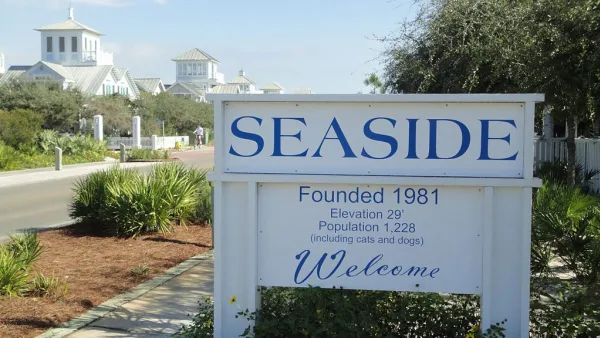
Reassessing New Urbanism
A thematic issue of the peer reviewed journal Urban Planning provides a framework for reassessing New Urbanism.

Planetizen Federal Action Tracker
A weekly monitor of how Trump’s orders and actions are impacting planners and planning in America.

HUD modernizes 50-year-old manufactured housing framework
The Next Generation Manufactured Housing Action Plan establishes new energy-efficiency standards for manufactured homes, and new guidelines for anchoring them.

Data reveals that NYC’s bet on congestion pricing has paid off
After almost two years of the program, reports show positive impacts on traffic and air quality and no disruptions to parking.

How Chicago, New York and Seattle are funding transit project amid tough times
Notes from the American Public Transportation Association's TransForm conference in Chicago.

Transport for London tackles hate crime spike with free bystander training
Recorded hate crime offences on the London's transport network have increased by 36 per cent.

Denver is solving homelessness. Why aren't the rest of us?
Since 2023, Denver's street homeless population has decreased by 64%, proving that effective tools exist to support those in need of housing.

FREE Course: Walkable City 1: Why Walkability?
After describing his path towards focusing on walkability as the essence of good planning, Jeff Speck marches through his five principal reasons for making more walkable places.
Reinventing Malls: Planning Alchemy—Turning Gray Fields Into Gold
The course focuses on the opportunities and imperatives that shape reinvention of mall sites.

One Hundred Miles
County of Mendocino
planning NEXT
The Architects Foundation
University of Cincinnati Online
Montrose County
Northern Illinois Transit Authority (NITA)
The Pocatello Development Authority