Ever have questions about the homeless? Here's a fact filled outline you can use to dispel some common notions about the country's largest homeless population—and some solutions—by affordable housing adviser Michael P. Russell.


In a fact-packed article, intentionally written during the holiday of good will toward others and organized like an outline for quick scanning, real estate and affordable housing adviser Michael P. Russell offers knowledge about L.A.'s homeless population, the country's largest. He also offfers facts and opinions about the obstacles and the politics of homelessness. Finally, he lays out fundamentals for what is needed to "un-homeless" L.A.'s homeless population, or at least provide a more humane and healthy environment.
For example he lists "five mind blowing facts about the profile of homeless people":
- One third are children (National Coalition for the Homeless)
- 50% are women and children fleeing domestic violence (multiple studies)
- Most people are homeless for two months (In fact, two-thirds are off the streets in two months.) (National Symposium on Homelessness Research)
- 25% of homeless people are employed (National Coalition for the Homeless)
- Many people become addicts after becoming homeless, not before. (Substance Abuse and Mental Health Services Administration study) The study found that of the homeless:
- 38% are alcoholics
- 26% are addicted to other substances
- 25% suffer from mental illness
Russell doesn't shy away from laying blame. Included on that list are Mayor Garcetti and the Veterans Administration. He says:
To date, candidly, the response of politicians and bureaucrats has been less than underwhelming.
Jim Mangia [head of St. John's Well Child & Family Center in South Los Angeles, which runs 10 health clinics] shares the growing sentiment of many in the City of Los Angeles. "There's not a serious response on the part of the city leadership."
The solution?
In addition to naming one person to be responsible for homelessness in the City of Los Angeles, like they do in New York City, the following is a recap of the financial commitment that is needed by the City of Los Angeles ($ Millions):
Cleaning, trash receptacles, showers and toilets: 3
Temporary shelter: 28
Permanent Housing (Annual): 200
Annual Cost $228
Russell concludes:
I am not sure that the City of Los Angeles has the will or the skill to deal with the homeless problem. If they cannot muster up both, Los Angeles will remain the homeless capital of America. No amount of political spin will change this.
Read the full story: Mind Blowing Facts about LA's Homeless People and How to Un-homeless Them

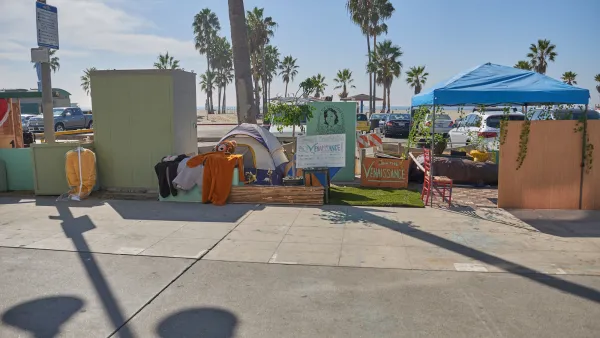
LA Proposal Would Forcibly Remove Unhoused People Near Olympic Venues
Los Angeles County sent city officials a report outlining strategies for clearing homeless encampments, but advocates point out that the report itself notes there are not enough shelte resources to accommodate all unhoused residents.

LA Housing Authority Buys 30-Unit Apartment Building for Supportive Housing
The Koreatown building will offer housing as well as healthcare services and case management.
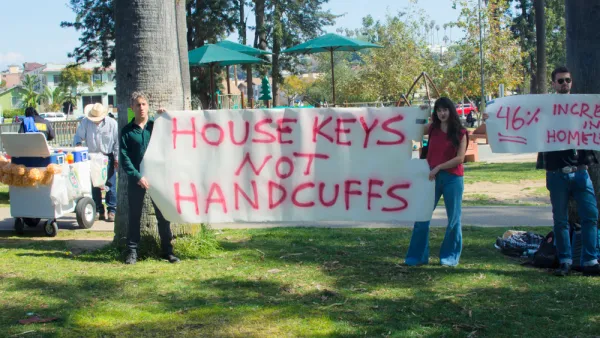
Los Angeles Tightens Restrictions on Encampments
During a city council meeting that had to pause while police cleared the room of activists opposing the measure, the council voted to ban public sleeping within 500 feet of schools, making one-fifth of city sidewalks off-limits to unhoused people.

Planetizen Federal Action Tracker
A weekly monitor of how Trump’s orders and actions are impacting planners and planning in America.

The state-sanctioned urbicide of Austin
People don’t kill cities. Freeways do.

US to reduce Colorado River water deliveries to Mexico
A new Colorado Treaty amendment reduces Mexico’s Colorado River water allocation by 250,000 acre feet.

Nation's most wind-powered state turns to coal as data centers increase energy demand
For the first time in decades, Iowa has increased its generation of coal power.

NYC cools commuters with city's first rain garden above a bus stop
New York City officials say the plants in the rain garden can absorb 16 gallons of rainwater during heavy storms.

Brightline West’s future may rely on $6 billion federal loan
The company has until Nov. 2 to make a $400 million equity investment into its proposed high-speed rail line.

FREE Course: Walkable City 1: Why Walkability?
After describing his path towards focusing on walkability as the essence of good planning, Jeff Speck marches through his five principal reasons for making more walkable places.
Reinventing Malls: Planning Alchemy—Turning Gray Fields Into Gold
The course focuses on the opportunities and imperatives that shape reinvention of mall sites.

Eagle County Government
Harvard University Graduate School of Design
Nashville Planning Department
The Architects Foundation
University of Cincinnati Online
The Pocatello Development Authority
The Urban Renewal Agency of the City of Pocatello
Journal of the American Planning Association