Can wind power gain the popularity of rooftop solar? A Brooklyn start-up is betting it can with the leasing of turbines, particularly to farmers and rural residents.


"(A) start-up called United Wind is applying the rooftop solar model to wind, installing and maintaining systems at little to no upfront cost to the customer," writes Diane Cardwell, a Business Day reporter for The New York Times covering energy.
As with the solar systems from companies like SolarCity and Sunrun, customers sign long-term agreements to buy the electricity the systems produce at prices set below those from their local utility.
Most of the company’s customers, including the [farmers in Tully (Onondaga County), N.Y) described in the onset of the article], are in rural areas like central and western New York, but the the firm is rapidly expanding its reach.
These are not industrial size turbines. They are small and medium-size wind turbines defined as anything under 500 kilowatts.
Their spread has been slow, although there are signs that may be changing [...] in part spurred by the development of the lease model. Still, the United States is expected to remain far behind leaders like Britain, China and Italy, with only $216 million in revenue by 2023.
United Wind received $13.5 million in October from the NY Green Bank, a state-sponsored investment fund, adds Cardwell.
"In December 2013, New York launched its first-ever 'green bank,' an ambitious state-run $1 billion investment fund meant to help finance the kinds of local energy-efficiency and clean-energy projects that bigger financial institutions typically overlook," wrote Nancy Cook for National Journal.
With President Obama's signing of the Omnibus Spending Bill and accompanying package of tax credits on Friday, medium-size wind turbine leases might increase as the production tax credit (PTC) for wind energy was extended for five years (along with the lifting of the crude oil export ban).
The PTC could help for projects that produce over 250 kW, per Windustry, an industry-support group.
Cardwell writes here on the uneven effect of the extension of many types of renewable energy credits enabled by the Omnibus bill.
FULL STORY: ENERGY & ENVIRONMENT: Wind Power Spreads Through Turbines for Lease

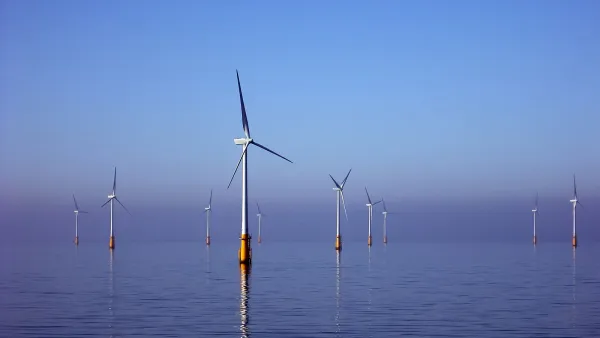
Offshore Wind Energy Faces Challenges on West Coast
Unique geography and high costs have stymied offshore wind energy production in California, but new incentives and innovations could soon make it more accessible.
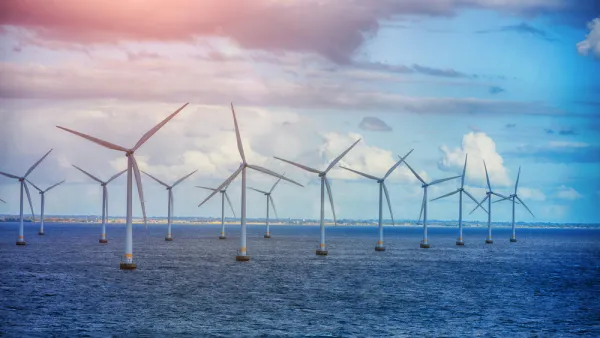
Proposed Offshore Wind Project Could Be the West Coast’s Largest
If approved, the plan to build a 2,000-megawatt facility off the coast of Washington State would be a milestone for floating offshore wind production in the United States.
Northern California Port Seeks Offshore Wind Lease
The Port of Humboldt has proposed a plan to modernize its facilities to accommodate offshore wind energy production, hoping to stimulate the local economy and create sustainable jobs.

Planetizen Federal Action Tracker
A weekly monitor of how Trump’s orders and actions are impacting planners and planning in America.

The state-sanctioned urbicide of Austin
People don’t kill cities. Freeways do.

US to reduce Colorado River water deliveries to Mexico
A new Colorado Treaty amendment reduces Mexico’s Colorado River water allocation by 250,000 acre feet.

5 New England states march closer to 800 megawatt wind energy project
Securing federal approval for the project may be complicated under the Trump administration, which has historically been hostile towards domestic wind power.

Baltimore to break ground on $50 million Transit Priority Project
The project will bring faster bus trips, safer streets and better bike connections to Baltimore.

Airbnb launches $250 million 'last-dollar financing' housing accelerator, makes first investment in Austin
The company will put $6.4 million towards affordable housing development in Texas’ capital.

FREE Course: Walkable City 1: Why Walkability?
After describing his path towards focusing on walkability as the essence of good planning, Jeff Speck marches through his five principal reasons for making more walkable places.
Reinventing Malls: Planning Alchemy—Turning Gray Fields Into Gold
The course focuses on the opportunities and imperatives that shape reinvention of mall sites.

Eagle County Government
Harvard University Graduate School of Design
Nashville Planning Department
The Architects Foundation
University of Cincinnati Online
The Pocatello Development Authority
The Urban Renewal Agency of the City of Pocatello
Journal of the American Planning Association