The traditional functions of planning are going to look a lot different in Seattle when the calendar changes to 2016.


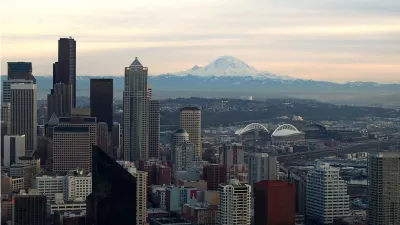
Stephen Fessler reports on the impending changes at the Seattle Department of Planning and Development (DPD), scheduled to take effect in the new year.
As reported earlier in June, Mayor Ed Murray directed the department to split into two. Fessler describes the departmental shuffling:
"Comprehensive, long-range, and code development planning work will be housed in the newly created Office of Planning and Community Development (OPCD), a new unit within the Mayor's Office. Meanwhile, the Seattle Department of Construction and Inspections (SDCI) will be formed from the permitting and development review, construction and rental housing inspections, code compliance, and tenant protection competencies of today's DPD."
The reorganization has already proven tricky, however, with some changes of focus for the newly constituted OPCD:
"The Mayor had intended the OPCD to be a broad planning group with experts from nearly all current City departments and offices. The Mayor's stated goal in the organizational change was to integrate all city priorities and enhance coordination on how the city grows and invests. However, the initial direction has changed, and now the group will essentially consist of current staffers within the City Planning Division of DPD."
Fessler also details the personnel holes that have yet to be filled, including two division director positions. Along those lines, after leading the transition DPD Director Diane Sugimura will likely retire in 2016, after 38 years of service to the city, with 14 of those as director.
Read the full story: THE FACE OF SEATTLE PLANNING WILL CHANGE IN 2016
Seattle Mayor to Create New 'Office of Planning and Community Development'
Seattle Mayor Ed Murray announced the creation of a cabinet-level Office of Planning and Community Development to address the city's explosive growth.
Yet again, Seattle’s density zoning update is hit with delays
The city must now examine the ‘maximum possible development’ under a future zoning scenario, rather than the ‘maximum likely development.’

Seattle Ponders a New Approach to Zoning for its Comprehensive Plan Update
The city of Seattle will have an updated comprehensive plan by the end of 2024, with zoning changes to follow by 2025.

Planetizen Federal Action Tracker
A weekly monitor of how Trump’s orders and actions are impacting planners and planning in America.

Eastern Nebraska is running out of electricity
Data centers and electrification are straining eastern Nebraska’s grid, throttling economic development.

Study reveals best places in the U.S. for cycling, walking
New research from Streetlight Data examines bicycle and pedestrian miles per capita in the 100 largest U.S. cities by population.

DSA members accuse Mamdani of 'abandoning values' over housing redevelopment
New York City's mayor plans to replace about 2,000 units of public housing with private, mixed-income housing.

All sides of BRT debate unhappy with CDOT’s most recent move
The Colorado Department of Transportation is no longer considering center-running bus lanes for Colorado Boulevard.

Massachusetts bogs generate both power, and cranberries
Putting solar panels above farmland is one way Massachusetts is advancing toward its goal of net-zero carbon emissions by 2050.

FREE Course: Walkable City 1: Why Walkability?
After describing his path towards focusing on walkability as the essence of good planning, Jeff Speck marches through his five principal reasons for making more walkable places.
Reinventing Malls: Planning Alchemy—Turning Gray Fields Into Gold
The course focuses on the opportunities and imperatives that shape reinvention of mall sites.

City of Rosemead
Rutgers University, Edward J. Bloustein School of Planning and Public Policy
One Hundred Miles
University of Michigan School for Environment and Sustainability (SEAS)
Hunter College, City University of New York (CUNY)
The Architects Foundation
City of Cambridge
The Pocatello Development Authority
The Urban Renewal Agency of the City of Pocatello