Having the right mix of jobs in a local economy might be a predictor for future growth.


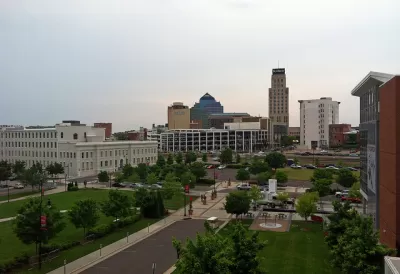
Writing on his blog, economist Jed Kolko looks at what the recently released Bureau of Labor Statistics' ten year projection for occupational growth means for cities. Essentially, the jobs most commonly found in large urban areas (i.e., actors, economists, elevator installers, medical scientists) are likely to see faster growth than those jobs concentrated in less dense areas. So, those metro areas that have a mix of jobs expected to grow in demand are likely to see their population growth continue. For those areas, with a concentration of less in demand jobs, you’ll grow a little slower.
Among all metropolitan areas with at least half a million people, Durham-Chapel Hill, NC, has the most favorable job mix for future growth, followed by New Haven and San Jose. Several of these top ten have large local tech industries, including Durham-Chapel Hill, San Jose, Boston, and Washington, DC. Many are among America’s most expensive markets.
Kolko does make a caveat that his analysis does not consider the specific economic intricacies of each market, nor does the analysis consider potential barriers to the future population growth of communities, such as the high cost of housing.
Read the full story: Where the Fast-Growing Jobs Are


North Carolina’s Triangle Faces Growing Pains
The region’s rapid growth and high housing costs are prompting a contentious debate over zoning changes that would boost density.
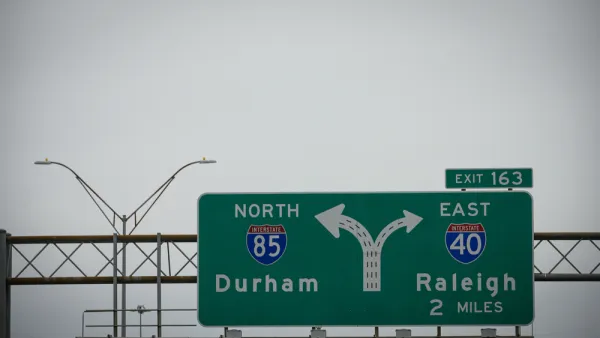
Research Triangle Region Cuts Back Highway Widening Plans
The Durham-Chapel Hill-Carrboro Metropolitan Planning Organization accomplished a major shift in transportation planning priorities.
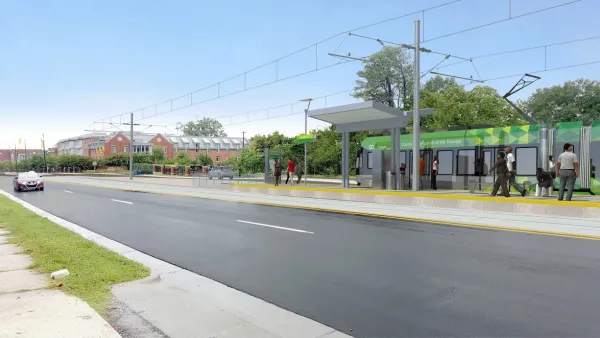
Duke Faculty Support N.C. Rail Project; University Opposes It
Duke University will not sign an agreement for a regional rail project that has widespread support from the campus community.

Planetizen Federal Action Tracker
A weekly monitor of how Trump’s orders and actions are impacting planners and planning in America.

‘Going backwards:’ Baltimore mayor, students rally against state's transit funding plan
Maryland's proposed six-year plan provides no funding for Baltimore’s BMORE bus program and reduces its road maintenance funding.

Detroit to transform waterfront with $2.2 billion investment
Developers will convert about 18 acres of unused parking lot space into civic spaces.

SF residents can no longer use potential shadows to block housing developments
The SHADE act also halves the allotted time for certain appeals before projects can progress.

HUD, USDA agree on framework to simplify housing environmental review standards
Their agreement is a requirement of the 21st Century ROAD to Housing Act.

Cost of water rising at a faster pace than inflation, median household income
California and Maryland residents have seen their water bills grow especially high.

FREE Course: Walkable City 1: Why Walkability?
After describing his path towards focusing on walkability as the essence of good planning, Jeff Speck marches through his five principal reasons for making more walkable places.
Reinventing Malls: Planning Alchemy—Turning Gray Fields Into Gold
The course focuses on the opportunities and imperatives that shape reinvention of mall sites.

planning NEXT
City of Thousand Oaks
City of Wisconsin Rapids
The Architects Foundation
University of Cincinnati Online
Northern Illinois Transit Authority (NITA)
The Pocatello Development Authority
The Urban Renewal Agency of the City of Pocatello