London is the stage for one of the problems that arises when encountered with a dearth of accommodations for housing and offices.


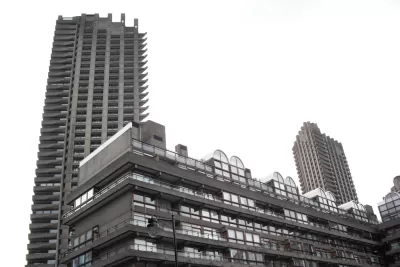
Elli Thomas explains the embarrassment of riches pressuring London: growing demand for housing is creating competition for the commercial and offices spaces that drive the city's economy.
While adding additional supply is critical to the affordability of the city, Thomas acknowledges, existing office space is critical for long-term economic growth. Calling on research by the Centre for Cities, Thomas picks a side in this contest, arguing that "as a result of specific national policies, the ability of cities to maintain an appropriate balance between residential and commercial space is under threat."
The policies in question relate to country's Permitted Development Rights (PDRs), which allows changes of use without full planning permission. "In May 2013," explains Thomas, "[PDRs were] extended to include the conversion of underused office space to residential..." Despite reassurances that the policy change wouldn't lead to a spike in planning applications, London's PDR applications shot up in 2014, and local authorities are having trouble resisting the loss of commercial space to new housing.
The problem, according to Thomas, is that the PDR policy will be beneficial to many parts of Britain, but now a fast-growing, high-demand city like London.
Read the full story: Cities need the flexibility to decide between housing and office space


New Jersey affordable housing requirements spur infill development across the state
A 50-year-old law continues to reshape development around housing goals.

Office conversion is picking up steam in San Francisco
The city spent five years streamlining approval processes and reducing fees to encourage more adaptive reuse of vacant office buildings.

Vacant downtown LA office building will be transformed into 512 affordable homes
The World Trade Center will create hundreds of new apartments with rents starting as low as $937.

Planetizen Federal Action Tracker
A weekly monitor of how Trump’s orders and actions are impacting planners and planning in America.

Amtrak, CN end decades-long dispute with eight-year agreement
The new operating agreement establishes an updated framework for the companies to work together, including processes to resolve disputes.

Judges permit Denver to divert 77,000 acre feet from the Colorado River for reservoir expansion
Overuse and climate change have caused the Colorado River’s water levels to plummet.

Boston has spent millions making the Green Line more accessible — and there’s no end in sight
While the city has invested millions into expanding and adding platforms to the Green Line to make it more accessible, new train cars set to arrive next year will be too tall for disabled passengers to board without raising the current platforms.

Idaho may see an 18% drop in federal surface transit funding — the largest estimated cut in the US
Transit systems in rural communities are much more reliant on federal funding to provide their services.

How ‘post-disaster gentrification’ alters neighborhoods after natural calamities
After hurricanes, fires or other calamities, the original residents of a community are often replaced by younger, wealthier residents.

FREE Course: Walkable City 1: Why Walkability?
After describing his path towards focusing on walkability as the essence of good planning, Jeff Speck marches through his five principal reasons for making more walkable places.
Reinventing Malls: Planning Alchemy—Turning Gray Fields Into Gold
The course focuses on the opportunities and imperatives that shape reinvention of mall sites.

City of Wisconsin Rapids
Harvard University Graduate School of Design
KFH Group Inc.
The Architects Foundation
University of Cincinnati Online
The Pocatello Development Authority
The Urban Renewal Agency of the City of Pocatello