A look back at a controversy from this month's Virginia State Senate election, which produced some seriously misleading rhetoric about "toll roads" (i.e., the proposal was for HOT lanes, not a toll road).


Dylan Matthews elucidates the details behind a controversy that erupted during the Virginia statewide election earlier this month. Leading up the election, Hal Parrish, the Republican state Senate candidate for Virginia's 29th District, campaigned in opposition to a proposal to add HOT lanes to I-66, which runs from northern Virginia (including Prince William, Manassas, Fairfax, and Arlington) to Washington, DC.
Parrish, who would go on to lose the election, claimed that the HOT lanes would require a $17-a-day toll.
The claim, however, makes several mistakes in assessing how HOT lanes work: neglecting that single-occupancy vehicles are currently prohibited from entering the lanes, and that drivers would essentially be paying a voluntary toll to enter the lane. That's far from a $4,250 annual fee for someone driving the corridor 250 times a year for a work commute.
Although the election that gave rise to what the post calls the "great northern Virginia toll controversy" is now in the past, Matthews's explanation of HOT lanes clarifies the concept in ways that might be helpful in regions yet to consider the idea, and offers an opportunity to survey some of the transportation experts that favor the idea.
FULL STORY: The great northern Virginia toll controversy, explained

High-Occupancy Toll Lanes on the Table for I-66 Inside the Beltway
The Virginia Department of Transportation is underway with public outreach on a proposed project to add HOT lanes on 1-66 inside the Beltway.
Construction of I–66 Toll Lanes Outside the Capital Beltway Begins this Weekend
Widening of Interstate 66 for 22.5 miles in Northern Virginia will accommodate two toll lanes in each direction, accessible to trucks. The $3.7 billion project, to be built by public-private partnership at no cost to the state, will open in 2022.
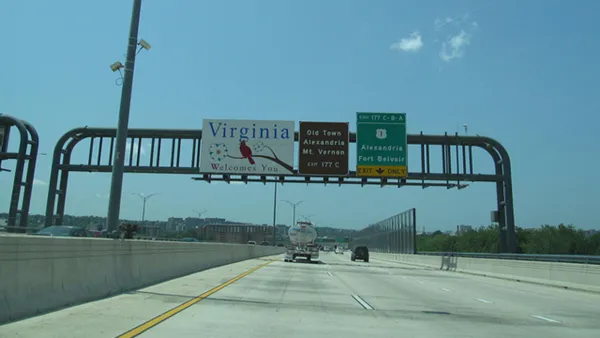
Popularity of Express Lanes Spreads Beyond Virginia
Dan Vock of Governing takes a broad look at congestion pricing, beginning with the success of Virginia's 66 Express Lanes, the ones where tolls initially topped $40. Notwithstanding complaints, managed lanes are spreading, but challenges remain.

The state-sanctioned urbicide of Austin
People don’t kill cities. Freeways do.

US to reduce Colorado River water deliveries to Mexico
A new Colorado Treaty amendment reduces Mexico’s Colorado River water allocation by 250,000 acre feet.

New Jersey’s second-largest city bans standalone data centers
Jersey City will continue to allow co-location facilities, such as those meant for research institutions that store their own data.

Amtrak not solely to blame for New Jersey commuter rail's unreliability, report finds
A new study from the Garden State Initiative found that NJ Transit’s budget grew 20% across a 4 year period, but reliability declined significantly over the same period.

EPA erases limits on planet-warming pollution from power plants
Under Monday’s plan, power plants would still have some limits on how much mercury, arsenic and other contaminants they can emit.

Phoenix announces new on-demand transit service, more frequent RAPID buses
Both new services will launch in October, and are part of Phoenix's Project Effective Access Solutions for Easing Congestion.

FREE Course: Walkable City 1: Why Walkability?
After describing his path towards focusing on walkability as the essence of good planning, Jeff Speck marches through his five principal reasons for making more walkable places.
Reinventing Malls: Planning Alchemy—Turning Gray Fields Into Gold
The course focuses on the opportunities and imperatives that shape reinvention of mall sites.

Eagle County Government
Harvard University Graduate School of Design
Nashville Planning Department
The Architects Foundation
University of Cincinnati Online
The Pocatello Development Authority
The Urban Renewal Agency of the City of Pocatello
Journal of the American Planning Association