St. Petersburg will overhaul its bus system in early 2016, expecting improved efficiency from operating on the downtown city grid as well as upgrades to the area that serves as the current hub of the system.


According to an article by Kate Bradshaw, the city of St. Petersburg has approved changes to the "hub and spokes" model for operating buses in its downtown. "The move, which officials said was decades in the making, comes just over a year after voters rejected a sales tax proposal that would have funded a dramatic enhancement and overhaul of the county's bus system," writes Bradshaw.
Instead of the hub and spokes, the buses will now operate more along the framework laid out by the city's grid. The implications of that change include a new role for Williams Park—the former hub in the system. "It would clear downtown's William's Park, the current bus hub, of multiple bus shelters and the smog and heavy traffic that accompany them."
The city council members on hand to announce the new system noted that cities around the country have moved away from the hub and spokes model. The city of Houston has made perhaps the most ambitious effort to implement a high frequency grid system in recent years. The article also notes that the changes, scheduled to be in place by February 14, 2016, will only affect are only downtown.
Read the full story: It's official: come Valentine's Day next year, Williams Park won't be a bus hub anymore

St. Petersburg To Offer Free Bus Rides to Low-Income Residents
Eligible riders must reside within the city and lack alternate forms of transportation.

Double First: The First Station on Tampa Bay's First BRT Line Complete
The first of 15 bus rapid transit stations in St. Petersburg was unveiled last week.
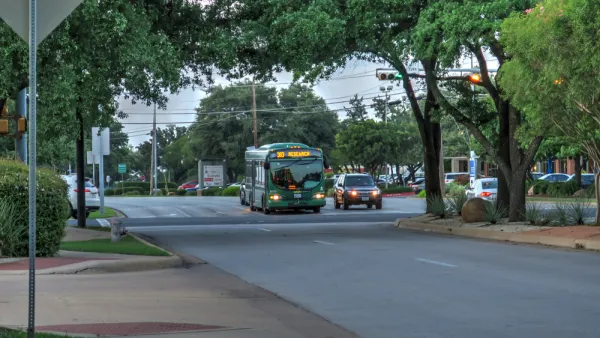
Bus System Redesign Boosts Ridership in Austin
Over a year after Capital Metro in Austin overhauled its bus system design, the system is bucking national trends and achieving growth in its ridership numbers.

Planetizen Federal Action Tracker
A weekly monitor of how Trump’s orders and actions are impacting planners and planning in America.

California plans to bury El Niño’s downpour
If the state plays its cards right, it may be able to store a billion acre-feet of El Niño’s water in aquifers.

Desperate measures: Advocates weigh draining Lake Powell to fill Colorado River
Draining the reservoir could reduce evaporation losses by a couple hundred thousand acre-feet.

Chicago voters approve permanent festival grounds, penalty for vacant property owners
Currently, major summer and fall festivals take over public parks for weeks at a time, drawing criticism from nearby residents

NYC votes to cut outdoor dining red tape, speed up permitting
New York City also voted to allow the Department of Transportation to begin work on urgent projects before notifying elected officials.

California appears to reject Prop. 45
The proposition would have expanded the projects that qualify for a streamlined environmental review, effectively paring down the California Environmental Quality Act.

FREE Course: Walkable City 1: Why Walkability?
After describing his path towards focusing on walkability as the essence of good planning, Jeff Speck marches through his five principal reasons for making more walkable places.
Reinventing Malls: Planning Alchemy—Turning Gray Fields Into Gold
The course focuses on the opportunities and imperatives that shape reinvention of mall sites.

City of Rosemead
Rutgers University, Edward J. Bloustein School of Planning and Public Policy
One Hundred Miles
Hunter College, City University of New York (CUNY)
The Architects Foundation
University of Cincinnati Online
City of Cambridge
Montrose County
The Pocatello Development Authority