Nielsen Scarborough released new market data this week that revealed the cities with the highest percentage of single women who live along with at least one cat.



It's the kind of news that even the number two city on the list will announce with a feature article and full-scale infographic: a ranking of cities with the highest percentage of single women living alone with at least one cat. To put it a little less kindly, perhaps: the cities with the most cat ladies.
Topping the list is Portland, where 9.9 percent of all single women living alone have a cat. Seattle follows, with 9.3 percent. Pittsburgh places third, with 8.7 percent.
Before anyone goes to jumps to any conclusions about the implications of this data, Gene Kelly, who reported the study's findings, had only one "kernel of truth" to share about the cat-lady stereotype: "Women are much more likely to have a pet cat than are men. Nationally, single-person cat households skew nearly 2-to-1 in favor of women, and that pattern holds true for Seattle."
Read the full story: Are you a cat lady? Seattle area has 2nd-highest number in U.S.

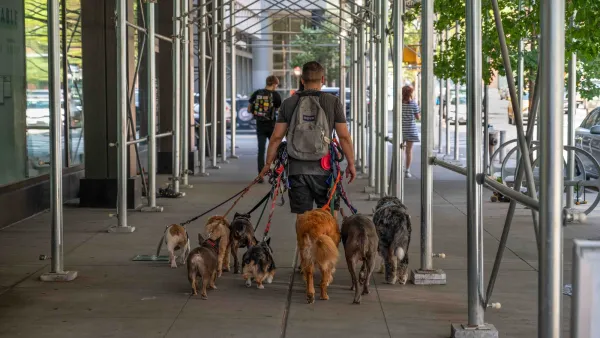
NYC to open city-funded pet food pantry
The 2027 budget agreed on by the mayor and city council includes $750,000 for a city-funded food pantry for struggling pet owners.
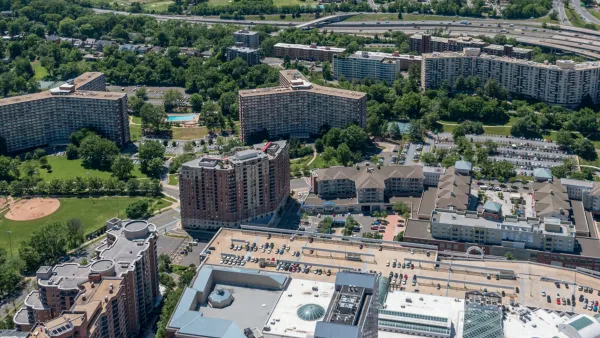
How one Arlington YIMBY used 'homebrew econometrics' to lobby for density
An upzoning proposal for Pentagon City could bring in an additional $8 million to $11 million in tax revenue.
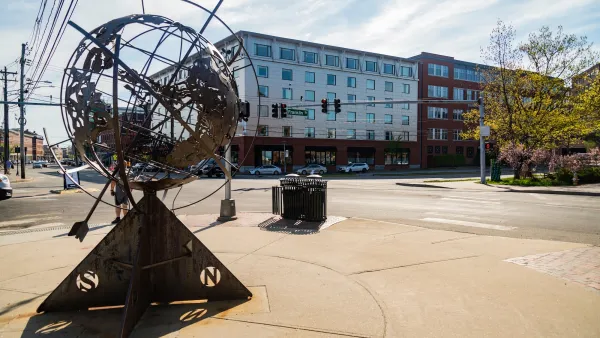
New Maine Database Will Track Housing Growth
A new state law requires municipalities to submit records comparing housing permits and completed units for each year since 2010.

Planetizen Federal Action Tracker
A weekly monitor of how Trump’s orders and actions are impacting planners and planning in America.

‘Going backwards:’ Baltimore mayor, students rally against state's transit funding plan
Maryland's proposed six-year plan provides no funding for Baltimore’s BMORE bus program and reduces its road maintenance funding.

Detroit to transform waterfront with $2.2 billion investment
Developers will convert about 18 acres of unused parking lot space into civic spaces.

Central Park has seen three deadly crashes since June. It banned cars 8 years ago.
100,000 bikers, pedestrians and horseback riders compete for space on the loop daily, sometimes resulting in deadly collisions.

SF residents can no longer use potential shadows to block housing developments
The SHADE act also halves the allotted time for certain appeals before projects can progress.

HUD, USDA agree on framework to simplify housing environmental review standards
Their agreement is a requirement of the 21st Century ROAD to Housing Act.

FREE Course: Walkable City 1: Why Walkability?
After describing his path towards focusing on walkability as the essence of good planning, Jeff Speck marches through his five principal reasons for making more walkable places.
Reinventing Malls: Planning Alchemy—Turning Gray Fields Into Gold
The course focuses on the opportunities and imperatives that shape reinvention of mall sites.

planning NEXT
City of Thousand Oaks
City of Wisconsin Rapids
The Architects Foundation
University of Cincinnati Online
Northern Illinois Transit Authority (NITA)
The Pocatello Development Authority
The Urban Renewal Agency of the City of Pocatello