Cities and neighborhoods looking to locate and support breweries and brew pubs should look to Philadelphia as an example of a beer-friendly regulatory environment.


Craig LaBan, restaurant critic at the Philadelphia Inquirer, provides local insight into a trend that has national scope: the growth in popularity of breweries. "With the craft-beer movement doubling its share of the U.S. market over the last five years," writes LaBan, "most Americans now live within 10 miles of a brewery."
Philadelphia offers a perfect example of the trend—the city's brewpubs have quadrupled in the past four years. According to LaBan, in both the city and its suburbs, brewpubs are an attractive local amenity: "Many of the best are quirky and creative, serving thoughtfully prepared menus that, in the suburbs, offer a handcrafted alternative to the chain food culture, and in the city, capture the diverse character of emerging neighborhoods bristling with youthful energy."
The growth in the number of beer-focused establishments around Philadelphia, according to LaBan, has "liberalized regulations" to thank:
"While brewpub activity has been sparse in New Jersey because projects must acquire both brewery licenses and prohibitively expensive liquor licenses, the trend in Pennsylvania has been startling growth. In 2011, there were 24 licensed brewpubs in the state, according to the Liquor Control Board. Just four years later there are 99, with applications for 10 more pending. Over the same period, Pennsylvania's licensed breweries more than doubled from 102 in 2011 to 233 in 2015."
The article offers more details about the different types of licenses available in Philadelphia making all of these beer businesses possible.
Read the full story: Brewpubs blossom in city and suburbs, plus a guide to the newest crop


Philadelphia lawmakers fight to save 'Chinatown Stitch' from Trump cuts
The freeway cap project, approved and funded under the Biden administration, is now in jeopardy after the federal government rescinded all but $8 million in funding.
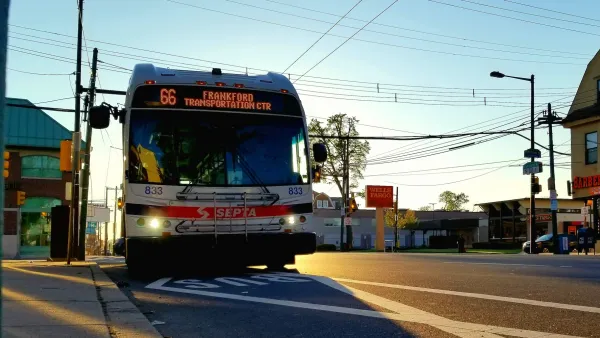
SEPTA's bus-mounted lane enforcement cameras cut travel times by up to 6%
The AI-assisted cameras have issued nearly 200,000 citations to drivers blocking bus lanes.
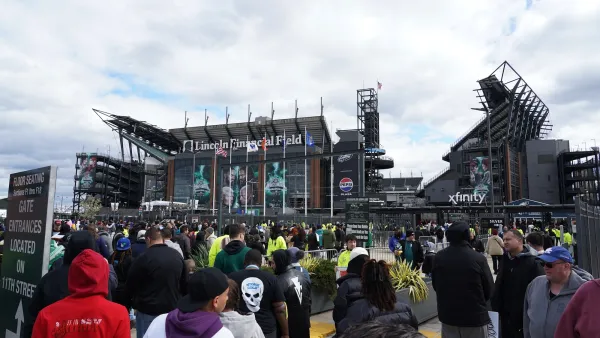
Philadelphia officials say city is ready for World Cup
The city touted its plans to ensure security and accessibility during FIFA World Cup events.

Planetizen Federal Action Tracker
A weekly monitor of how Trump’s orders and actions are impacting planners and planning in America.

Amtrak, CN end decades-long dispute with eight-year agreement
The new operating agreement establishes an updated framework for the companies to work together, including processes to resolve disputes.

Northwest rail fans eager for Sept. 30 debut of Amtrak’s Airo fleet
Get ready for that new train smell and more seats. But they won’t go faster or run more frequently on the Cascades route in Washington and Oregon.

Caltrain may slash over one-third of its stations
If Bay Area voters reject two transit tax measures, Caltrain, BART and AC Transit will see steep service cuts.

A 'dangerous' precedent: North Carolina successfully pressures communities into voting for toll roads
Two mayors resigned from the Charlotte Regional Transportation Planning Organization after it voted in favor of the toll roads.

Austin landlords only need to address mold when it covers 25 sqft. A resolution looks to change that
The city manager will propose updates to the city code regarding regulations around mold in May.

FREE Course: Walkable City 1: Why Walkability?
After describing his path towards focusing on walkability as the essence of good planning, Jeff Speck marches through his five principal reasons for making more walkable places.
Reinventing Malls: Planning Alchemy—Turning Gray Fields Into Gold
The course focuses on the opportunities and imperatives that shape reinvention of mall sites.

City of Thousand Oaks
City of Wisconsin Rapids
Harvard University Graduate School of Design
The Architects Foundation
University of Cincinnati Online
The Pocatello Development Authority
The Urban Renewal Agency of the City of Pocatello