The Viaduct Rail Park could one day become a version of the High Line in Philadelphia's Center City.


"Backers of a plan to transform unused rail lines north of Center City [in Philadelphia] into an elevated park say it will draw private investment to blighted areas," according to an article by Jacob Adelman. That argument in support of plans for Viaduct Rail Park, as it's called, might already be gaining proof in the form of an adaptive reuse project at 990 Spring Garden, which, according to Adelman, " sits near a stretch of the planned Viaduct Rail Park that runs through a rundown industrial district along Callowhill Street east of Broad."
"Owners of the 88-year-old building, now mostly home to city offices, are turning it into loft-style suites to attract creatively minded companies and technology firms," writes Adelman, who adds that the project is only one example of the real estate activity around the planned elevated park.
The plans for the park owe an obvious debt to the High Line in New York, and the development community has noticed, even while backers of the park continue to pursue its fundraising goals. "The Viaduct Rail Park's backers have raised about 60 percent of the $9.6 million needed for the project's first quarter-mile phase, which would lay gravel and boarded paths on a section from near Broad and Noble Streets to a junction just past 12th and Callowhill Streets," reports Adelman.
FULL STORY: Before Viaduct Rail Park is born, it nurtures area investment

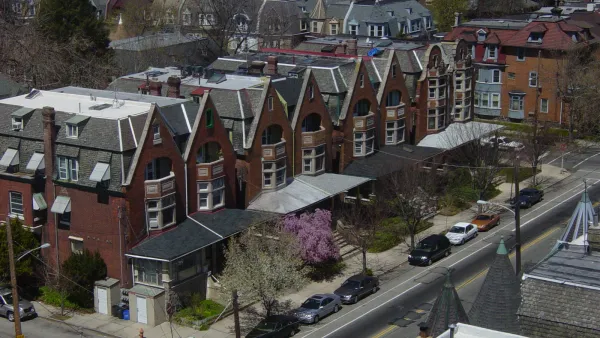
Philadelphia on Track to Build Record Number of Apartments in 2022
A researcher from the Lindy Institute for Urban Innovation at Drexel University tells a tale of two housing markets—rental and for-sale—in the City of Brotherly Love.
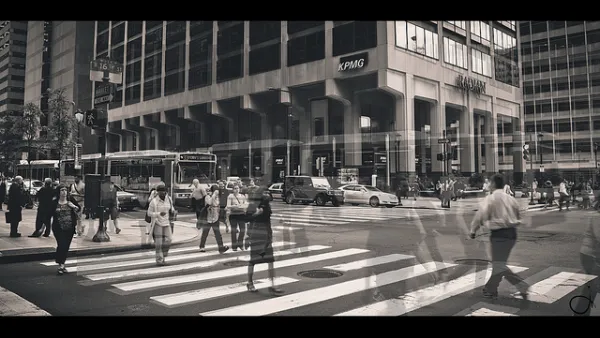
The Future of Downtowns Still Hangs in the Balance
Center City in Philadelphia offers a case study for one of the largest and potentially most consequential contingencies of the pandemic: What happens to downtowns is most workers never come back to the office?
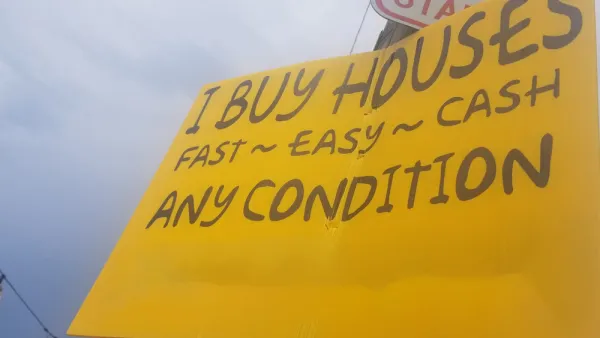
New Law Protects Homeowners From Wholesale Buyers in Philly
The new law won't stop the forces of gentrification, but it should stop one of gentrification's most pernicious symptoms.

Planetizen Federal Action Tracker
A weekly monitor of how Trump’s orders and actions are impacting planners and planning in America.

The state-sanctioned urbicide of Austin
People don’t kill cities. Freeways do.

US to reduce Colorado River water deliveries to Mexico
A new Colorado Treaty amendment reduces Mexico’s Colorado River water allocation by 250,000 acre feet.

5 New England states march closer to 800 megawatt wind energy project
Securing federal approval for the project may be complicated under the Trump administration, which has historically been hostile towards domestic wind power.

Baltimore to break ground on $50 million Transit Priority Project
The project will bring faster bus trips, safer streets and better bike connections to Baltimore.

Airbnb launches $250 million 'last-dollar financing' housing accelerator, makes first investment in Austin
The company will put $6.4 million towards affordable housing development in Texas’ capital.

FREE Course: Walkable City 1: Why Walkability?
After describing his path towards focusing on walkability as the essence of good planning, Jeff Speck marches through his five principal reasons for making more walkable places.
Reinventing Malls: Planning Alchemy—Turning Gray Fields Into Gold
The course focuses on the opportunities and imperatives that shape reinvention of mall sites.

Eagle County Government
Harvard University Graduate School of Design
Nashville Planning Department
The Architects Foundation
University of Cincinnati Online
The Pocatello Development Authority
The Urban Renewal Agency of the City of Pocatello
Journal of the American Planning Association