Car ownership is far from "a thing of the past," as Uber's CEO plans on making it, but a new survey shows that a substantial number of people who have tried transportation network companies are forgoing the purchase of a car.


"In a recent survey of 2,000 adults ages 18 to 64 conducted by Frank N. Magid Associates, 18% of respondents said they had used Uber in the past year, and of those people, 22% said they are likely to hold off on buying," writes Tracey Lien, technology reporter for the Los Angeles Times working in the San Francisco Bay Area.
“It’s rare that a brand transforms the way we live in such a short amount of time, but that’s exactly what Uber has done,” said the study’s author and director of digital research at Magid, Andrew Hare. “Even if only a modest number of consumers begin to prioritize [rideshare] over ownership, the car industry is in trouble.”
The disruption could affect more than just auto manufacturing. Fewer car owners means less auto insurance purchased, fewer car repairs and maintenance purchased by individual owners.
Prior posts noted the disruption of transportation network companies not only to taxi service but to transit as well.
Hat tip: Heather Caygle and Lauren Gardner, Politico Morning Transportation (Oct. 07).
Read the full story: Who needs a new car when there's Uber? Riders hold off on upgrading wheels

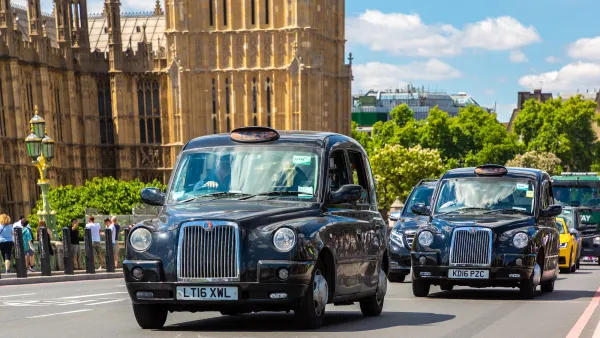
Can Robotaxis Handle London's Famously Tangled Streets?
Black Cab drivers say autonomous cars won’t be able to handle London’s unique conditions.
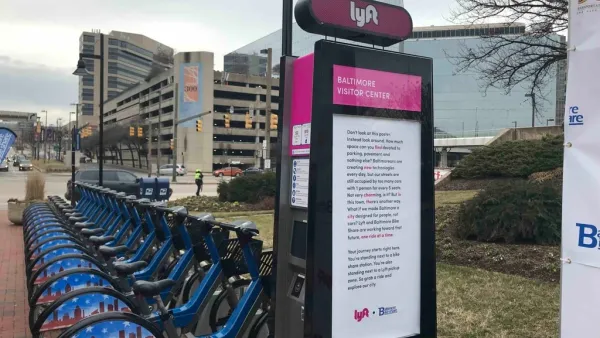
Uber and Lyft: A Tale of Two Companies
After years of resisting efforts by cities to regulate their business and constant—but unprofitable—growth, Uber and Lyft are homing in on their unique strengths.
Study: Uber and Lyft Trips Cost the Planet More Than Trips in Personal Vehicles
The cost of 'deadheading'–the time ride-hailing drivers spend looking for fares–offsets any environmental benefits created by the industry, despite early claims that the apps would reduce congestion and air pollution.

Planetizen Federal Action Tracker
A weekly monitor of how Trump’s orders and actions are impacting planners and planning in America.

California plans to bury El Niño’s downpour
If the state plays its cards right, it may be able to store a billion acre-feet of El Niño’s water in aquifers.

Desperate measures: Advocates weigh draining Lake Powell to fill Colorado River
Draining the reservoir could reduce evaporation losses by a couple hundred thousand acre-feet.

In Texas, data centers are swallowing promised parkland
Residents who moved to Taylor, Texas for a rural community now have to contend with three data centers in their backyard.

How a Chicago-sized wind farm beat the odds and powered on
The project spanned five presidential administrations and a standoff with a U.S. military base.

MTA gives itself 30 days to transform pit into basketball court
The site has been under construction since 2022; the city originally estimated it would finish the court in 2024.

FREE Course: Walkable City 1: Why Walkability?
After describing his path towards focusing on walkability as the essence of good planning, Jeff Speck marches through his five principal reasons for making more walkable places.
Reinventing Malls: Planning Alchemy—Turning Gray Fields Into Gold
The course focuses on the opportunities and imperatives that shape reinvention of mall sites.

City of Rosemead
Rutgers University, Edward J. Bloustein School of Planning and Public Policy
One Hundred Miles
Hunter College, City University of New York (CUNY)
The Architects Foundation
University of Cincinnati Online
City of Cambridge
Montrose County
The Pocatello Development Authority