24/7 Wall Street created an index to measure the most racially segregated cities in the United States.


Alexander Kent and Thomas C. Frolich summarize the narrative behind a recent post: "Large metropolitan areas are among the nation’s most segregated regions, and while none are meaningfully integrated, some are divided far more along racial lines than others."
Writing for 24/7 Wall Street, the two authors set out to identify the most segregated neighborhoods in the United States. To do so, they "constructed an index based on the share of a metro area’s population living in racially homogeneous zip codes — areas where more than 80% of the population is of a single race or ethnicity. In metro areas with complete integration, every zip code has the same racial/ethnic distribution as the area’s whole population. In areas with the worst segregation, no one lives in a zip code with anyone of a different race/ethnicity."
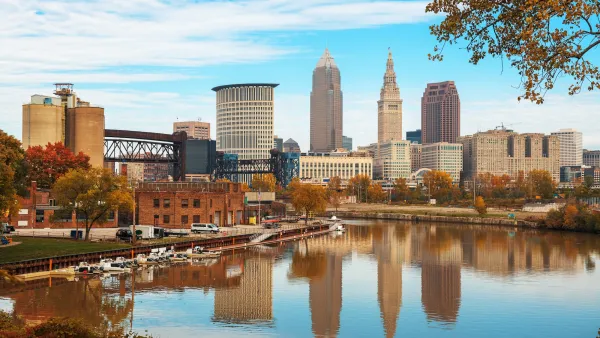
The index producesCleveland-Elyria, OH as the most segregated city in the United States, with"more than 55% of its population living in homogeneous zip codes." Moreover, "[o]f the roughly 100 zip codes in the area, 63 are predominantly white and are home to nearly 70% of Cleveland’s white population. The metro area’s black population is similarly segregated, with 30.9% concentrated in just six zip codes."Detroit-Warren-Dearborn, MI took the second spot on the list.
Read the full story: America’s Most Segregated Cities

Learning loss and urban schools, part 2
Did test scores in progressive cities drop more post-COVID than test scores in moderate ones?
Cleveland is turning abandoned real estate into ‘housing innovation district,’ jobs
The city’s housing innovation district will bring pro-housing policies to disinvested neighborhoods.
Cleveland program has housed 200 people since 2024
The A Home For Every Neighbor initiative successfully moves people into housing in under two weeks.

Planetizen Federal Action Tracker
A weekly monitor of how Trump’s orders and actions are impacting planners and planning in America.

California plans to bury El Niño’s downpour
If the state plays its cards right, it may be able to store a billion acre-feet of El Niño’s water in aquifers.

Desperate measures: Advocates weigh draining Lake Powell to fill Colorado River
Draining the reservoir could reduce evaporation losses by a couple hundred thousand acre-feet.

Los Angeles just elected an urban planner as its mayor
Transportation analysts are optimistic that Raman will be more aggressive in addressing transit issues than Bass.

Mamdani’s pied-à-terre tax survives legal challenge
A panel of judges found that the plaintiffs failed to demonstrate injury as a result of New York City's implementation of the tax.

Eastern Nebraska is running out of electricity
Data centers and electrification are straining eastern Nebraska’s grid, throttling economic development.

FREE Course: Walkable City 1: Why Walkability?
After describing his path towards focusing on walkability as the essence of good planning, Jeff Speck marches through his five principal reasons for making more walkable places.
Reinventing Malls: Planning Alchemy—Turning Gray Fields Into Gold
The course focuses on the opportunities and imperatives that shape reinvention of mall sites.

City of Rosemead
Rutgers University, Edward J. Bloustein School of Planning and Public Policy
One Hundred Miles
University of Michigan School for Environment and Sustainability (SEAS)
Hunter College, City University of New York (CUNY)
The Architects Foundation
City of Cambridge
Montrose County
The Pocatello Development Authority