Steep views command steep prices in other big cities, but they can't seem to work in San Francisco, where there are plenty of beautiful views available for free.


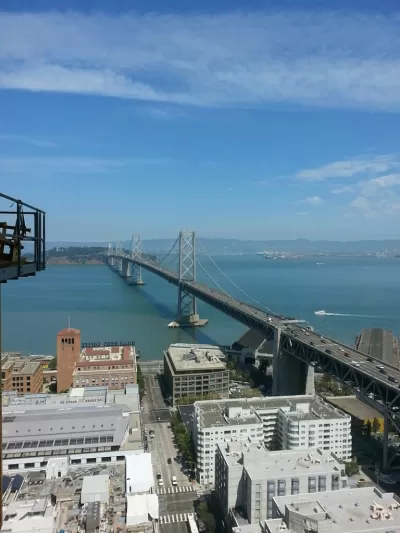
Architecture critic John King chronicles the rise and fall of observation decks in San Francisco. He argues that the city has so much to offer at ground level that tourists aren't interested in paying for the towering vistas that are so popular in cities like New York and Chicago. "All it really does it whet your appetite to return downstairs and begin to explore the terrain on your own two feet," King writes.
Buildings like the Empire State Building and Sears Tower command high prices, and visitors brave long lines and cramped conditions to take pictures from their decks. But in San Francisco, observation floors in high-rise buildings can't sustain a profit. "Most big cities make their own geography, hanging their visual images on architectural peaks that demand to be scaled. Here? Not so."
King counts "only three remaining top-floor venues where you can buy a drink, at least in the districts east of Van Ness Avenue," and finds no prospects in the plethora of high-rises being built downtown.
Read the full story: S.F. doesn’t suffer from lack of high-rise observation decks
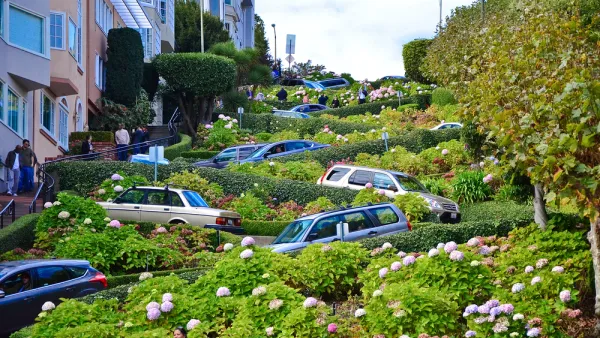
Crowds of Pedestrians Prompt Lombard Street Study
San Francisco is looking for ways to manage—and protect—the masses of tourists who want to walk "the World's Crookedest Street."
Airbnb Draws Tourists Off the Beaten Path
Airbnb connects travelers from around the world to unique rentable spaces. With the recent launch of a "Neighborhoods" feature, Airbnb has the potential to redirect tourist spending to often overlooked areas.
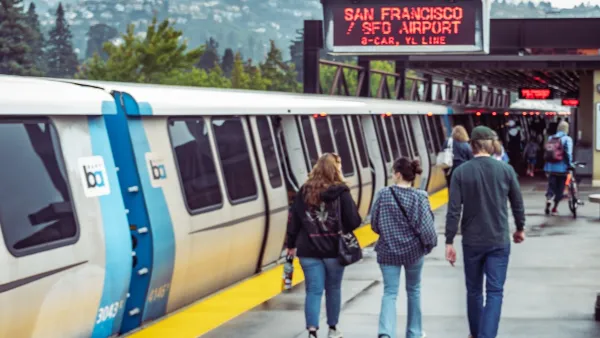
Bay area voters pass ‘crucial lifeline’ for transit
Proposition RTM, which will fund Bay Area transit, has approval from 61% of voters as of 9:45 p.m. on Nov. 3.

Planetizen Federal Action Tracker
A weekly monitor of how Trump’s orders and actions are impacting planners and planning in America.

California plans to bury El Niño’s downpour
If the state plays its cards right, it may be able to store a billion acre-feet of El Niño’s water in aquifers.

Desperate measures: Advocates weigh draining Lake Powell to fill Colorado River
Draining the reservoir could reduce evaporation losses by a couple hundred thousand acre-feet.

Chicago voters approve permanent festival grounds, penalty for vacant property owners
Currently, major summer and fall festivals take over public parks for weeks at a time, drawing criticism from nearby residents

NYC votes to cut outdoor dining red tape, speed up permitting
New York City also voted to allow the Department of Transportation to begin work on urgent projects before notifying elected officials.

California appears to reject Prop. 45
The proposition would have expanded the projects that qualify for a streamlined environmental review, effectively paring down the California Environmental Quality Act.

FREE Course: Walkable City 1: Why Walkability?
After describing his path towards focusing on walkability as the essence of good planning, Jeff Speck marches through his five principal reasons for making more walkable places.
Reinventing Malls: Planning Alchemy—Turning Gray Fields Into Gold
The course focuses on the opportunities and imperatives that shape reinvention of mall sites.

City of Rosemead
Rutgers University, Edward J. Bloustein School of Planning and Public Policy
One Hundred Miles
Hunter College, City University of New York (CUNY)
The Architects Foundation
University of Cincinnati Online
City of Cambridge
Montrose County
The Pocatello Development Authority