A researcher from the Bill Lane Center for the American West at Stanford University explains how to use interactive maps to track climate change.


Geoff McGhee provides insight and access to two interactive graphics that "track changes in two crucial drought indicators." The graphics, which are intended to better track climatic conditions around the West and the country, are the result of collaboration between the Bill Lane Center for the American West at Stanford University and EcoWest.
According to McGhee, the "Tracking U.S. Drought Severity" interactive map "presents weekly Drought Monitor analyses for all 50 states, going back to January 2000," and allows users to identify regional and state trends. Experts also provide analysis.
For the article, McGhee also provides his own analysis of the some of the recent trends in climate from around the country, including how storms that skipped California spent the winter hammering New England.
Read the full story: Visualizing a Wet, Hot (and Also Very Dry) American Summer

The Equity of Tiered Water Pricing
A tale of two water-parched cities, one in California, the other in New Mexico, and the critical role played by tiered water pricing. Long known as an effective economic strategy to reduce consumption, tiered pricing also influences equity.

Desperate measures: Advocates weigh draining Lake Powell to fill Colorado River
Draining the reservoir could reduce evaporation losses by a couple hundred thousand acre-feet.
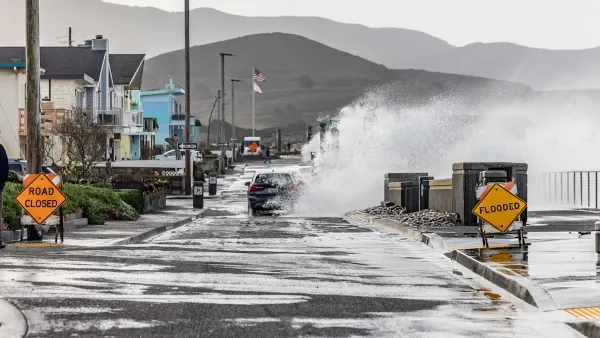
California plans to bury El Niño’s downpour
If the state plays its cards right, it may be able to store a billion acre-feet of El Niño’s water in aquifers.
Planetizen Federal Action Tracker
A weekly monitor of how Trump’s orders and actions are impacting planners and planning in America.

Eastern Nebraska is running out of electricity
Data centers and electrification are straining eastern Nebraska’s grid, throttling economic development.
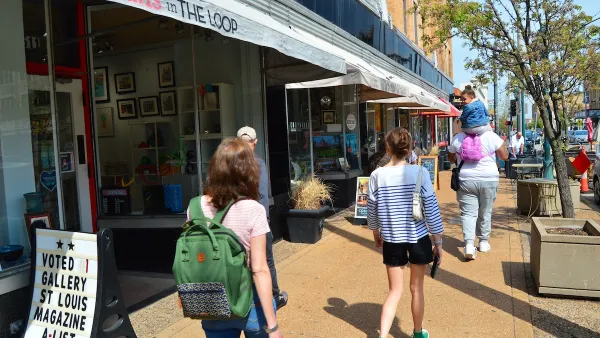
Move over, LA: St. Louis gears up for Olympics, invests millions in downtown redevelopment
The Missouri city will host the 2028 Olympic soccer group stage and knockout matches.

Dallas releases zoning code overhaul to officials
The drafted overhaul is over 400 pages long.

NYC renovations for dangerous, ‘mercilessly crammed’ street delayed until 2027
Construction was supposed to begin this fall.

San Diego’s Midway Rising project gets greenlight from city council
The project looks to become the largest affordable housing development in California's history.

FREE Course: Walkable City 1: Why Walkability?
After describing his path towards focusing on walkability as the essence of good planning, Jeff Speck marches through his five principal reasons for making more walkable places.
Reinventing Malls: Planning Alchemy—Turning Gray Fields Into Gold
The course focuses on the opportunities and imperatives that shape reinvention of mall sites.

City of Rosemead
Rutgers University, Edward J. Bloustein School of Planning and Public Policy
One Hundred Miles
University of Michigan School for Environment and Sustainability (SEAS)
Hunter College, City University of New York (CUNY)
The Architects Foundation
City of Cambridge
The Pocatello Development Authority
The Urban Renewal Agency of the City of Pocatello