With the highest levels of construction in over a decade, the city is working to reduce traffic congestion.


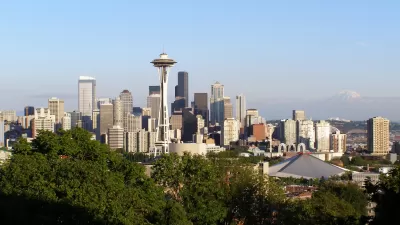
According to the Downtown Seattle Association, Seattle’s residential and commercial construction activity is at its highest level since the group began tracking it ten years ago. And with over 11,000 new rental units expected downtown by 2018, the record pace of growth is expected to continue.
To accommodate so many new residents and businesses, Josh Cohen reports, the city’s 20-year plan focuses on alternatives to solo driving. "It sets the goal of reducing solo driving for downtown work trips to 25 percent of mode share and reducing it to 10 percent of non-work trips by 2035." This plan includes major infrastructural changes to the transportation system, including extension of the light rail system and removal of the Alaskan Way viaduct.
The development boom dominates political dialogue, according to Cohen. With the passage of Prop 1 last year, voters approved a plan to improve the reliability of the city’s bus service and add service on busy routes. "Depending on whom you ask, these are either exciting times in a burgeoning city or a harbinger of a city that will soon be a homogenous playground for the rich," Cohen writes.
Read the full story: As Seattle Booms, City Works to Cut Driving Downtown

Philadelphia Leads the Largest Cities in America for Bicycle Mode Share
A new report from The Bicycle Coalition of Greater Philadelphia shows that Philadelphia's bicycle mode share is more than double that of Chicago's (the big city with the second-greatest share).
Seattle Mayor Raises Transportation Levy by $100 Million
The proposal sent to City Council includes more funding for multimodal transportation and road safety.
Study: Seattle Vision Zero Projects Not Bad for Business
An analysis of seven road safety project sites showed no negative economic impact on surrounding businesses.

Planetizen Federal Action Tracker
A weekly monitor of how Trump’s orders and actions are impacting planners and planning in America.

California plans to bury El Niño’s downpour
If the state plays its cards right, it may be able to store a billion acre-feet of El Niño’s water in aquifers.

Chicago breaks ground on $3 billion megadevelopment
The new neighborhood, titled Foundry Park, will one day host 3,700 residences.

Desperate measures: Advocates weigh draining Lake Powell to fill Colorado River
Draining the reservoir could reduce evaporation losses by a couple hundred thousand acre-feet.

This road in NYC is infamously dangerous — and Mamdani can't fix it
New York City's Ocean Parkway is known for reckless driving, but the power to implement safety measures lies with the state rather than the city.

One of Denver’s busiest corridors to gain BRT
The project will span 18 miles and contain 74 bus rapid transit stations.

FREE Course: Walkable City 1: Why Walkability?
After describing his path towards focusing on walkability as the essence of good planning, Jeff Speck marches through his five principal reasons for making more walkable places.
Reinventing Malls: Planning Alchemy—Turning Gray Fields Into Gold
The course focuses on the opportunities and imperatives that shape reinvention of mall sites.

City of Rosemead
Rutgers University, Edward J. Bloustein School of Planning and Public Policy
One Hundred Miles
Hunter College, City University of New York (CUNY)
The Architects Foundation
University of Cincinnati Online
City of Cambridge
Montrose County
The Pocatello Development Authority