A rule proposed by the Obama Administration has been criticized for attempting to build an "unrealistic utopia." The Affirmatively Furthering Fair Housing would require cities to fund affordable housing in a broader spectrum of neighborhoods.


"A final Department of Housing and Urban Development (HUD) rule due out this month is aimed at ending decades of deep-rooted segregation around the country," according to Tim Devaney.
"The regulations would use grant money as an incentive for communities to build affordable housing in more affluent areas while also taking steps to upgrade poorer areas with better schools, parks, libraries, grocery stores and transportation routes as part of a gentrification of those communities."
The Affirmatively Furthering Fair Housing rule has met staunch resistance from House Republicans, including at a hearing last week of the House Financial Services Committee, where HUD Secretary Julián Castro got an earful. All of this prior to a highly anticipated Supreme Court ruling that will weigh in on the concept of disparate impact in a case accusing the Texas Department of Housing and Community Affairs of focusing affordable housing in low income areas and thereby perpetuating poverty and lack of socioeconomic mobility.
Read the full story: Obama making bid to diversify wealthy neighborhoods

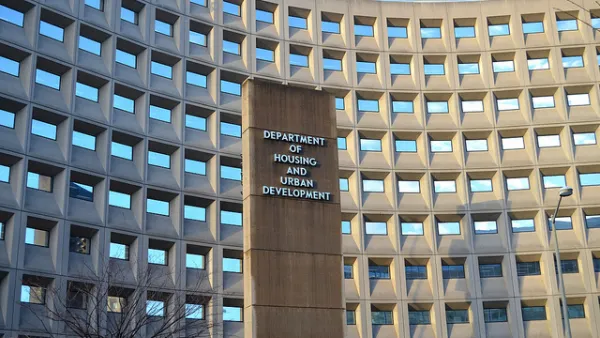
Trump Deals a Blow to Fair Housing Rules
The Trump Administration is gutting a key requirement of the Affirmatively Furthering Fair Housing Rule enacted by the Department of Housing and Urban Development under the Obama Administration.
Why 'Affirmatively Furthering Fair Housing' Matters
An interview with a leading academic on the subject of fair housing offers perspective on the new Affirmatively Furthering Fair Housing rule created by the Department of Housing and Urban Development.
Obama Administration Adds New Clout to Fair Housing
The Department of Housing and Urban Development has released the details of the final rule for Affirmatively Furthering Fair Housing, which will give new strength to the goals set forth by the Fair Housing Act of 1968.

Planetizen Federal Action Tracker
A weekly monitor of how Trump’s orders and actions are impacting planners and planning in America.

California plans to bury El Niño’s downpour
If the state plays its cards right, it may be able to store a billion acre-feet of El Niño’s water in aquifers.

Chicago breaks ground on $3 billion megadevelopment
The new neighborhood, titled Foundry Park, will one day host 3,700 residences.

Satanic place names
From streams and lakes to valleys and canyons, I mapped more than 1,000 places named after the Devil.

California High-Speed Rail Authority CEO resigns after $600,000 scandal
Under Ian Choudri, the authority used taxpayer dollars to fund first class flights and trips to nightclubs.

Want to study the Missouri River? Soon, you may need unanimous approval from 10 states
Legislation would require 10 governors’ permission to study or build projects moving water outside the basin.

FREE Course: Walkable City 1: Why Walkability?
After describing his path towards focusing on walkability as the essence of good planning, Jeff Speck marches through his five principal reasons for making more walkable places.
Reinventing Malls: Planning Alchemy—Turning Gray Fields Into Gold
The course focuses on the opportunities and imperatives that shape reinvention of mall sites.

City of Rosemead
Rutgers University, Edward J. Bloustein School of Planning and Public Policy
One Hundred Miles
Hunter College, City University of New York (CUNY)
The Architects Foundation
University of Cincinnati Online
City of Cambridge
Montrose County
The Pocatello Development Authority