Although city growth continues to outpace the suburbs, the nation's three largest cities are experiencing a growth slowdown. Sunbelt cities like Austin and Orlando are picking up the slack.


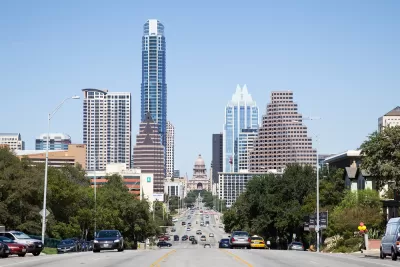
New Census data tracking urban populations through July 2014 shows a steady rise in city populations, countering the suburban spike of 2000-2010. While New York, Los Angeles, and Chicago continue to grow, gains are not as rapid as they were several years ago. From the article: "Seven of the 10 largest cities and 53 of the 81 cities with over a quarter of a million population experienced reduced growth levels in the most recent year, though they still mostly exhibited growth well above their average of 2000-2010."
On the other hand, the Sunbelt appears to be back in the growth business. Among the fastest recent gainers were Austin, Texas; Orlando, Fla.; Durham, N.C.; Henderson, Nevada; Denver, Colorado; and Fort Worth, Texas.
In a sharp deviation from the early 2000s, primary city growth is almost on par with suburban growth this decade. In the Sunbelt, however, suburban areas have experienced larger gains than central neighborhoods.
Read the full story: New Census data: Selective city slowdowns and the city-suburb growth gap
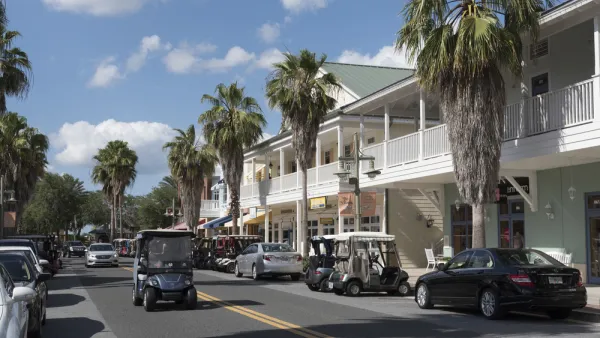
What Central Florida's Population Growth Reveals About U.S. Real Estate Trends
Big trends—a geographic shift back to the suburban and exurban areas and a "silver tsunami"—are apparent in population figures for two Florida locations.
Population Decline in the Latest Census Estimates
Not only are suburbs growing, many of the larger, older cities that had reversed decades of population decline, are now losing population, again. The biggest losers: counties with the greatest population densities.

Leaving Chicago
Why are folks fleeing from the city and the state in record numbers? Is domestic migration to blame for the Chicago region's population loss last year of over 6,000 and the state's loss of over 22,000 people?

Planetizen Federal Action Tracker
A weekly monitor of how Trump’s orders and actions are impacting planners and planning in America.

Eastern Nebraska is running out of electricity
Data centers and electrification are straining eastern Nebraska’s grid, throttling economic development.

Study reveals best places in the U.S. for cycling, walking
New research from Streetlight Data examines bicycle and pedestrian miles per capita in the 100 largest U.S. cities by population.

Next-generation nuclear reactors are coming to Texas
The reactors will not require towering containment structures thanks to new safety features.

California distributes $1.3 billion to prevent transit service cuts, bolster projects
Twenty-eight projects across California received a portion of the funding.

Pennsylvania Democrats have 15 affordability, clean energy bills for flipped state Senate
Bills in consideration include a bill supporting geothermal energy and a bill supporting solar on warehouses.

FREE Course: Walkable City 1: Why Walkability?
After describing his path towards focusing on walkability as the essence of good planning, Jeff Speck marches through his five principal reasons for making more walkable places.
Reinventing Malls: Planning Alchemy—Turning Gray Fields Into Gold
The course focuses on the opportunities and imperatives that shape reinvention of mall sites.

City of Charlotte
City of Rosemead
Rutgers University, Edward J. Bloustein School of Planning and Public Policy
University of Michigan School for Environment and Sustainability (SEAS)
Hunter College, City University of New York (CUNY)
The Architects Foundation
City of Cambridge
The Pocatello Development Authority
The Urban Renewal Agency of the City of Pocatello