Big trends—a geographic shift back to the suburban and exurban areas and a "silver tsunami"—are apparent in population figures for two Florida locations.


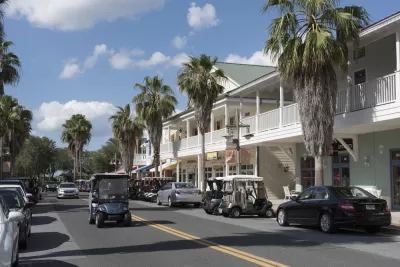
Patrick Sisson provides analysis of the 2018 populations estimates released but the U.S. Census Bureau earlier this week and produces a perhaps surprising angle: Florida is the model for the country's real estate trends.
After noting the usual suspects of fast growing cities in Texas, Idaho, and Utah, Sisson finds two informative case studies in Florida as snapshots of U.S. demographic and development trends.
The first, Lakeland-Winter Haven, a more remote, exurban, and rural area of former citrus groves between Tampa and Orlando, represents a geographic shift. Despite urban growth, especially in mid-tier cities, suburban and even exurban growth has bounced back since the Great Recession.
Second is a planned community called The Villages.
Arguably the country’s most successful and influential planned community, The Villages is a rapidly expanding senior living center that is already as large geographically as the island of Manhattan, with plans to expand after buying 8,300 more acres earlier this month. It’s indicative of the “silver tsunami” soon to sweep the country, and its housing market.
Sisson digs into each of these examples in much greater detail about each of the specific locations, while connecting to larger points about the Central Florida region, buoyed by Tampa and Orlando.
Read the full story: Central Florida’s boom shows true picture of U.S. real estate trends

The 15 Fastest-Growing Cities in the US
The U.S. Census Bureau released new 2023 population estimates on May 16 showing a slew of data for cities of all sizes and regions. Do you know the population change last year for the 15 largest cities in your state?
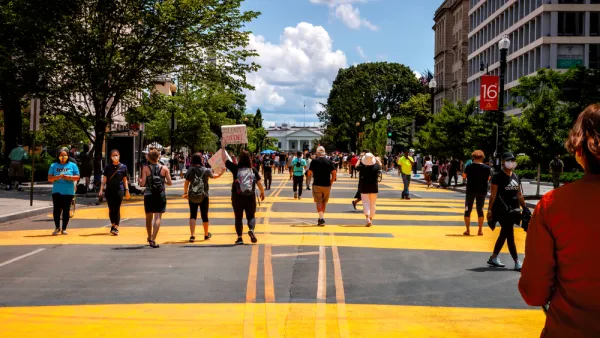
Census: 'Race-Ethnic Minorities' Responsible for U.S. Growth in the 2010s
The U.S. Census Bureau dropped a whole bunch of population estimates at the end of June, revealing details about the rapid demographic evolution of the country.

The 2010s Didn't Live Up to Potential as the 'Decade of the City'
The renaissance predicted for urban areas in the United States started strong during the 2010s but slowed in the years leading up to a potentially generation defining pandemic.

Planetizen Federal Action Tracker
A weekly monitor of how Trump’s orders and actions are impacting planners and planning in America.

California plans to bury El Niño’s downpour
If the state plays its cards right, it may be able to store a billion acre-feet of El Niño’s water in aquifers.

Desperate measures: Advocates weigh draining Lake Powell to fill Colorado River
Draining the reservoir could reduce evaporation losses by a couple hundred thousand acre-feet.

US buildings threatened, destroyed by fires set to triple by 2060
Researchers found a high fire risk for socioeconomically vulnerable neighborhoods in the American West.

LA residents may be allowed to paint their own crosswalks
Councilwoman Katy Yaroslavsky put out a motion instructing the Los Angeles Department of Public Transportation to study the feasibility of allowing volunteers to paint crosswalks.

Dallas moves to overhaul its zoning code
The city's zoning reform will allow more multi-family and mixed-use developments.

FREE Course: Walkable City 1: Why Walkability?
After describing his path towards focusing on walkability as the essence of good planning, Jeff Speck marches through his five principal reasons for making more walkable places.
Reinventing Malls: Planning Alchemy—Turning Gray Fields Into Gold
The course focuses on the opportunities and imperatives that shape reinvention of mall sites.

City of Rosemead
Rutgers University, Edward J. Bloustein School of Planning and Public Policy
One Hundred Miles
Hunter College, City University of New York (CUNY)
The Architects Foundation
University of Cincinnati Online
City of Cambridge
Montrose County
The Pocatello Development Authority