With its eclectic music scene, Asheville, North Carolina is a popular spot for street musicians. They can bring a vibrancy the town might suffer without. But some residents fear a rise in panhandling and homelessness.


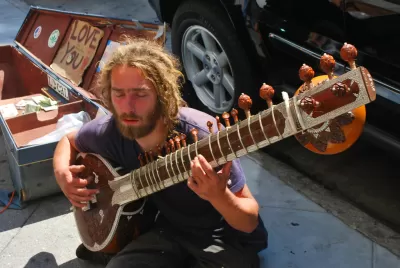
In the late 1980s, street life in Asheville, North Carolina was "negligible." Since then, the town has found itself "in the midst of a remarkable renaissance, one fueled by a burgeoning arts scene and a certain freewheeling, neo-'60s sensibility."
For the New York Times, Richard Fausset writes, "Itinerant musicians soon discovered a city that was tolerant of iconoclasts, full of strolling tourists, thick with the musical traditions of Appalachia and relatively safe."
Asheville's countercultural trajectory has its perks and its problems. "Critics say the crowds who pool around the most talented performers block downtown business entrances and spill dangerously into the narrow streets. And they say less-talented buskers are often little more than panhandlers with musical props [...]"
Many buskers feel they enable the town's rejuvenation, and are subsequently made to feel unwelcome. "'They ride on the coattails of the people who make it seem like a place worth visiting,' [ragtime guitarist Ali Kafka] said. 'And then they kick them out.'"
"It is a familiar complaint in those American cities lucky enough to enjoy a little hip cachet."
Read the full story: With This Many Buskers in Asheville, a Discordant Note Was Inevitable
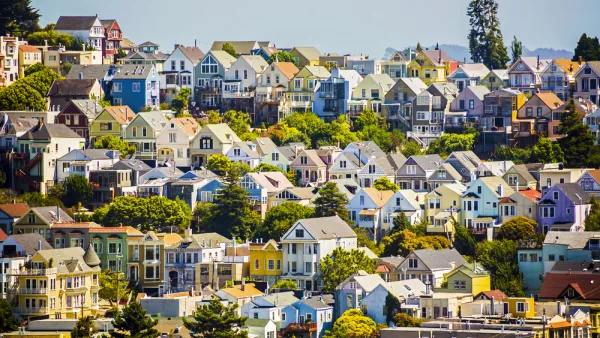
Op-Ed: Only Half of San Francisco is Changing
Using a mid 20th-century painting as his point of reference, Benjamin Schneider points out that the vast, disruptive changes we often associate with San Francisco are only affecting the city's eastern side.
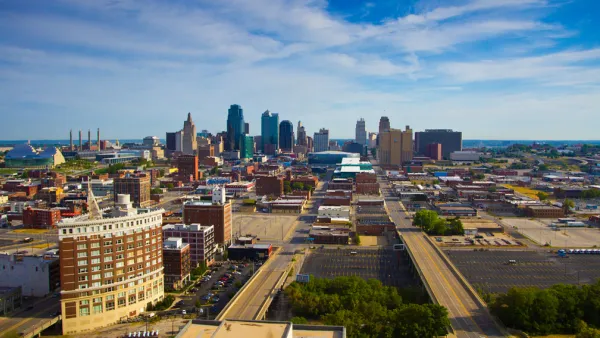
Kansas City Star Editorial Board Laments 'Denverization'
The Kansas City Star Editorial Board has concerns about gentrification and affordable housing.
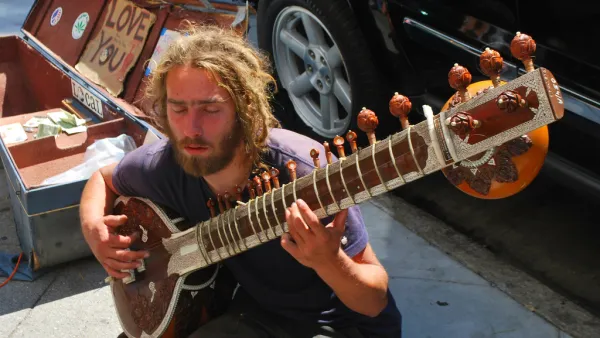
Buskers Welcome at Select Sound Transit Stations
A popular program to allow street performers (aka, buskers) into station areas on the Seattle region's Sound Transit system has been expanded.

Planetizen Federal Action Tracker
A weekly monitor of how Trump’s orders and actions are impacting planners and planning in America.

California plans to bury El Niño’s downpour
If the state plays its cards right, it may be able to store a billion acre-feet of El Niño’s water in aquifers.

Desperate measures: Advocates weigh draining Lake Powell to fill Colorado River
Draining the reservoir could reduce evaporation losses by a couple hundred thousand acre-feet.

Mamdani’s pied-à-terre tax survives legal challenge
A panel of judges found that the plaintiffs failed to demonstrate injury as a result of New York City's implementation of the tax.

Eastern Nebraska is running out of electricity
Data centers and electrification are straining eastern Nebraska’s grid, throttling economic development.

Seattle passes record-breaking transit services expansion
Proposition 1 will double the city’s transit tax to add 95,000 more bus trips and preserve 180,000 bus trips annually.

FREE Course: Walkable City 1: Why Walkability?
After describing his path towards focusing on walkability as the essence of good planning, Jeff Speck marches through his five principal reasons for making more walkable places.
Reinventing Malls: Planning Alchemy—Turning Gray Fields Into Gold
The course focuses on the opportunities and imperatives that shape reinvention of mall sites.

City of Rosemead
Rutgers University, Edward J. Bloustein School of Planning and Public Policy
One Hundred Miles
University of Michigan School for Environment and Sustainability (SEAS)
Hunter College, City University of New York (CUNY)
The Architects Foundation
City of Cambridge
Montrose County
The Pocatello Development Authority