An already controversial project got bad news earlier this week, as substantial increases in the expected cost of the Southwest LRT extension added more fuel to the fire for opponents of the project.


"What was once a $1.66 billion price tag to extend light rail from Target Field Station to Eden Prairie is now a nearly $2 billion price tag," reports Peter Callaghan.
The increased cost is due to newly discovered engineering challenges posed by conditions of the ground along the route, according to Callaghan. The news comes at a bad time, with the project's draft environmental impact report expected for release next month. The report could include more increases in the cost of completing the project.
Callaghan also reports that Minnesota Governor Mark Dayton is "shocked and appalled" at the new costs. Callaghan quotes Governor Dayton directly to raise the possibility that the new costs could spell the doom of the extension project: "The continuing escalation of the costs to design and build this line raise serious questions about its viability and affordability," said Governor Dayton.
The article includes more details about the engineering requirements that led to the increased costs, and some speculation about what happens next for the project.
Read the full story: Southwest LRT price tag jumps to $2 billion


Minneapolis LRT Facing Delays, Cost Increases
Construction on the Kenilworth Tunnel has been plagued by problems and threatens the foundation of a nearby condo complex.
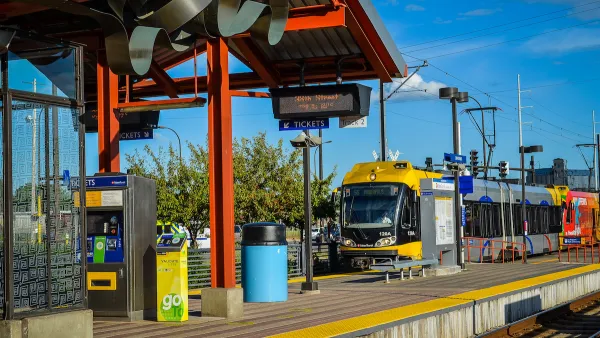
Twin Cities Trains Move to Fewer Cars, Higher Frequency
Headways will drop from 15 minutes to 12 minutes.
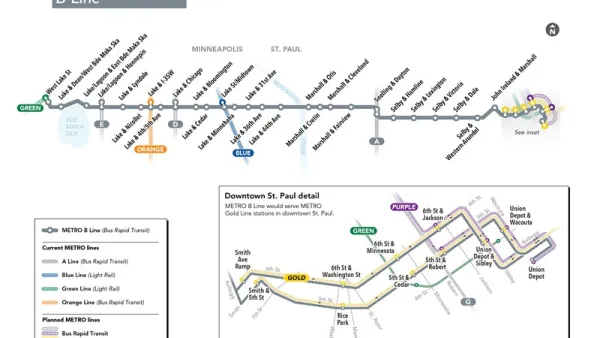
New Bus Rapid Transit Route Breaks Ground in the Twin Cities
The Twin Cities are on a mission to become the bus rapid transit capital of the United States. The latest improvement to advance that ambition broke ground earlier this week.

Planetizen Federal Action Tracker
A weekly monitor of how Trump’s orders and actions are impacting planners and planning in America.

California plans to bury El Niño’s downpour
If the state plays its cards right, it may be able to store a billion acre-feet of El Niño’s water in aquifers.

Chicago breaks ground on $3 billion megadevelopment
The new neighborhood, titled Foundry Park, will one day host 3,700 residences.

California High-Speed Rail Authority CEO resigns after $600,000 scandal
Under Ian Choudri, the authority used taxpayer dollars to fund first class flights and trips to nightclubs.

Want to study the Missouri River? Soon, you may need unanimous approval from 10 states
Legislation would require 10 governors’ permission to study or build projects moving water outside the basin.

Desperate measures: Advocates weigh draining Lake Powell to fill Colorado River
Draining the reservoir could reduce evaporation losses by a couple hundred thousand acre-feet.

FREE Course: Walkable City 1: Why Walkability?
After describing his path towards focusing on walkability as the essence of good planning, Jeff Speck marches through his five principal reasons for making more walkable places.
Reinventing Malls: Planning Alchemy—Turning Gray Fields Into Gold
The course focuses on the opportunities and imperatives that shape reinvention of mall sites.

City of Rosemead
Rutgers University, Edward J. Bloustein School of Planning and Public Policy
One Hundred Miles
Hunter College, City University of New York (CUNY)
The Architects Foundation
University of Cincinnati Online
City of Cambridge
Montrose County
The Pocatello Development Authority