The state that bears the same name as the river that provides water for much of the western United States is also the last state in the country to ban the use of residential water barrels.


"Despite passing out of the Colorado House with bipartisan support, the popular legislation legalizing residential use of rain barrels in Colorado is currently being held hostage by Senate Agriculture, Natural Resources and Energy Committee Chairman, Jerry Sonnenberg," reports Alexander Funk. "With only days left in the Colorado legislative session, the fate of the bill remains unclear."
The rain barrel ban in Colorado is the last of its kind in the country. According to Funk, "[o]pponents of the bill argue that allowing rain barrels would initiate a “sea change” in western water law and harm irrigators, but there is little evidence supporting these claims." The rest of the article is devoted to an appeal for the Colorado State Senate, led by Senate President Bill Cadman, to show leadership on the issue by passing the bill to repeal the ban.
Past coverage of the bill and the issue includes work by Joey Bunch for The Denver Post, Jeff Guo for The Washington Post, and the Associated Press.
Read the full story: Release the Rain Barrel!

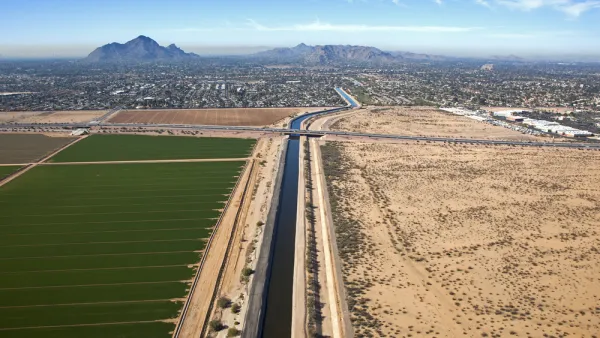
Arizona Water Rights No Longer 'Use it or Lose it'
A bill approved with bipartisan support by the Arizona State Legislature offers new incentives for water conservation.
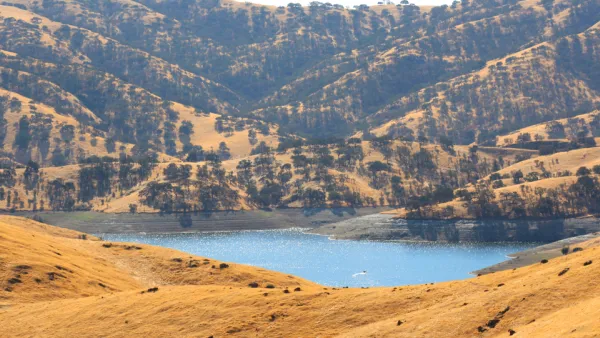
Surface Storage Skepticism
California has used all its good dam sites, according to this column. And dams are unaffordable.
The Greening of California's Republicans?
One finding from a new statewide survey, "Californians and the Environment," suggests that the environment is becoming a more bipartisan issue, but that finding is still subject to interpretation. What isn't is the top environmental issue: water.

Planetizen Federal Action Tracker
A weekly monitor of how Trump’s orders and actions are impacting planners and planning in America.

‘Going backwards:’ Baltimore mayor, students rally against state's transit funding plan
Maryland's proposed six-year plan provides no funding for Baltimore’s BMORE bus program and reduces its road maintenance funding.

Detroit to transform waterfront with $2.2 billion investment
Developers will convert about 18 acres of unused parking lot space into civic spaces.

Newsom vetoes high-speed rail supervision bill after agency receives condemnatory audit
The audit found the CHSRA approved almost $600,000 in unallowable travel expenses.

Nation sees first electric plane-boat hybrid take off in public demo
The Viceroy Seaglider can fly at speeds of 180mph for up to 180 miles.

One of nation’s poorest counties to receive $6 billion data center
The developers estimate the project will create 200 permanent jobs and 1,000 temporary construction jobs.

FREE Course: Walkable City 1: Why Walkability?
After describing his path towards focusing on walkability as the essence of good planning, Jeff Speck marches through his five principal reasons for making more walkable places.
Reinventing Malls: Planning Alchemy—Turning Gray Fields Into Gold
The course focuses on the opportunities and imperatives that shape reinvention of mall sites.

City of Thousand Oaks
City of Wisconsin Rapids
Harvard University Graduate School of Design
The Architects Foundation
University of Cincinnati Online
Northern Illinois Transit Authority (NITA)
The Pocatello Development Authority
The Urban Renewal Agency of the City of Pocatello