A Five Thirty Eight article reveals the data on the ubiquity, and relative lack thereof in certain populations, of the ability to ride a bike.


According to post by Mona Cahlibi, and based on the responses of 1,196 U.S. adults for a YouGov survey, "6 percent of Americans don’t know how to ride a bike."
The results of the survey (broken down in an Excel spreadsheet available for download) are also broken down regionally. So, in the Northeast, 12 percent of Americans don't know how to ride a bike, 3 percent in the Midwest, 5 percent in the South, and 6 percent in the West.
The survey results are also broken down by demographics:
"White Americans are the most likely to know how to ride a bike. Only 4 percent said they don’t know how, compared to 7 percent of Hispanic Americans and 10 percent of black Americans. Married Americans were half as likely as single Americans to not know how to ride a bike (4 percent compared to 8 percent)…"
The post also notes surprises in the amount of young Americans who know how to ride a bike, which reveals a cognitive bias that makes bike riders think that everyone knows how to ride a bike.
Read the full story: How Many Americans Don’t Know How To Ride A Bike?

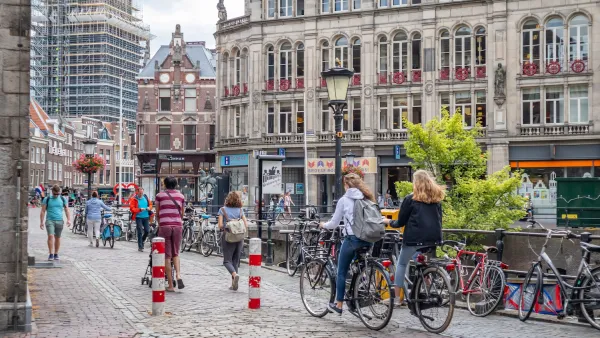
2025's 30 Most Bike-friendly Cities
Copenhagenize has released its list of top cities for cyclists. Spoiler alert: the United States doesn’t make the list.
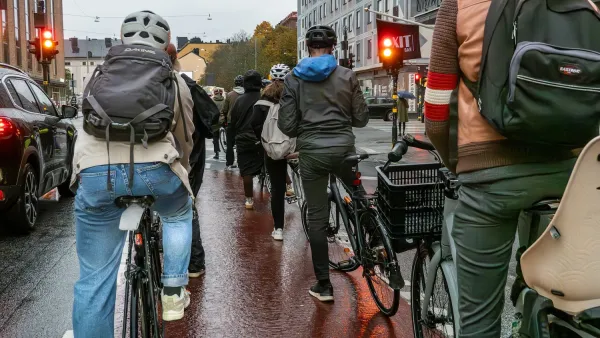
Cyclists may be Right to run Stop Signs and Red Lights. Here’s why
One researcher argues that the Idaho stop might not be such a bad idea after all.

Utah Unveils 'Ambitious' 3,100-mile Bike Network
The complete network would put a paved bike trail within one mile of 95% of Utah residents.

Planetizen Federal Action Tracker
A weekly monitor of how Trump’s orders and actions are impacting planners and planning in America.

Amtrak, CN end decades-long dispute with eight-year agreement
The new operating agreement establishes an updated framework for the companies to work together, including processes to resolve disputes.

Northwest rail fans eager for Sept. 30 debut of Amtrak’s Airo fleet
Get ready for that new train smell and more seats. But they won’t go faster or run more frequently on the Cascades route in Washington and Oregon.

Brightline Florida files for bankruptcy
The transit company is over $5 billion in debt.

St. Louis Metro to test if single-car trains can reduce operating costs, maintain rider satisfaction
The pilot program will run from October to spring 2027, and begin with one single-car train operating on Metrolink’s Red and Blue lines.

Pennsylvania is building data centers in abandoned mines
Housing data centers in mines provides an alternative to destroying local forests and may spare residents from data centers’ noise and air pollution.

FREE Course: Walkable City 1: Why Walkability?
After describing his path towards focusing on walkability as the essence of good planning, Jeff Speck marches through his five principal reasons for making more walkable places.
Reinventing Malls: Planning Alchemy—Turning Gray Fields Into Gold
The course focuses on the opportunities and imperatives that shape reinvention of mall sites.

City of Thousand Oaks
City of Wisconsin Rapids
Harvard University Graduate School of Design
The Architects Foundation
University of Cincinnati Online
The Pocatello Development Authority
The Urban Renewal Agency of the City of Pocatello