Explaining how planning and building for resilience reconciles with Conservative politics.


Aaron Renn acknowledges that recent efforts to plan and build for resilience around the country, spurred by the effects of climate change, might, at first blush, be off-putting to Conservatives:
"Among those who study cities, 'resilience' has become a hot topic, in part because of a major push from the left-leaning Rockefeller Foundation. This association with the Left, and with climate-change rhetoric, may prompt eye-rolls from some conservatives. But conservatism has its own emerging concept of resilience."
Renn details some of the source material for the Rockefeller Foundation's efforts, namely The Resilience Dividend, authored by Rockefeller President Judith Rodin, finding examples where individuals rather than government proved powerful instruments in responses to natural disasters. As Renn also states, "disasters do strike cities, and disaster preparedness is a core function of government."
Concluding a number of examples to back his argument, Renn makes the following conclusion:
"A healthy society requires resilient individuals and resilient systems. But true resilience is only developed by making contact with stressful disruption. Better to make a habit of doing that regularly—on our own terms—before events force us into a confrontations for which we and our communities are not ready."
Read the full story: Strong People, Strong Cities
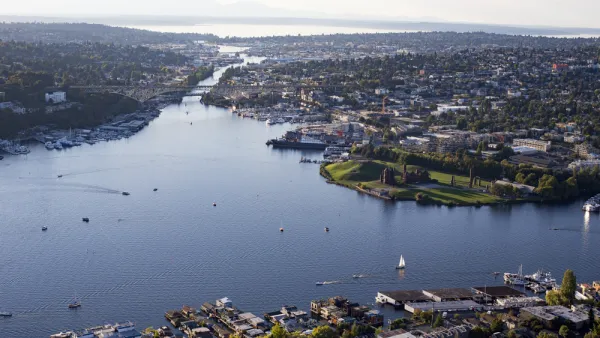
Op-Ed: Seattle Resilience Roadmap Feels 'Retrospective'
Natalie Bicknell notes several deficiencies in the roadmap that resulted from Seattle's participation in the Rockefeller Foundation's now-defunct 100 Resilient Cities program.
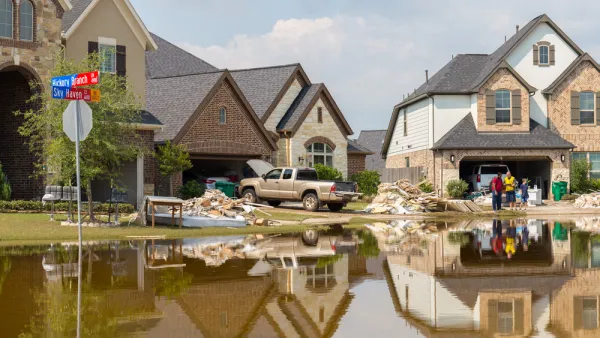
More Detail on What Happened to 100 Resilient Cities
The Rockefeller Foundation has cited costs and a new strategic direction to explain why it abruptly cut off the program this year. While the work may live on in some form, the move underscores the risks of relying on private funding.
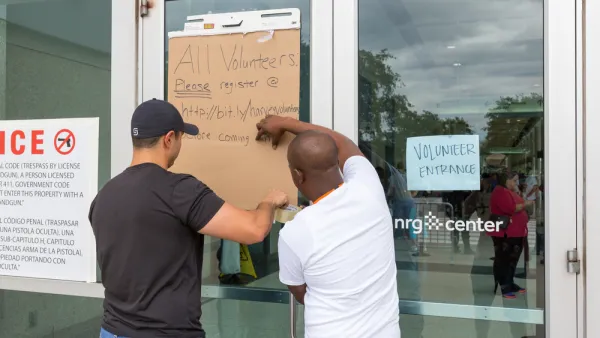
New Resilience Center to Replace 100 Resilient Cities
The new Adrienne Arsht-Rockefeller Foundation Resilience Center will build on the earlier work of the 100 Resilient Cities program.

Planetizen Federal Action Tracker
A weekly monitor of how Trump’s orders and actions are impacting planners and planning in America.

California plans to bury El Niño’s downpour
If the state plays its cards right, it may be able to store a billion acre-feet of El Niño’s water in aquifers.

Desperate measures: Advocates weigh draining Lake Powell to fill Colorado River
Draining the reservoir could reduce evaporation losses by a couple hundred thousand acre-feet.

Housing is the top priority of Seattle’s sole new councilmember
Jenks campaigned on building 1,000 new units of affordable housing.

New tax cuts may slash $1.5 billion in funding for Miami transit, public parks
Amendment 3 will save Miami-Dade homeowners $2,700 in 2028.

Arizona, Wisconsin, Pennsylvania hope to finally advance climate goals post-midterms
The three states have spent years under Republican or divided control.

FREE Course: Walkable City 1: Why Walkability?
After describing his path towards focusing on walkability as the essence of good planning, Jeff Speck marches through his five principal reasons for making more walkable places.
Reinventing Malls: Planning Alchemy—Turning Gray Fields Into Gold
The course focuses on the opportunities and imperatives that shape reinvention of mall sites.

City of Rosemead
Rutgers University, Edward J. Bloustein School of Planning and Public Policy
One Hundred Miles
University of Michigan School for Environment and Sustainability (SEAS)
Hunter College, City University of New York (CUNY)
The Architects Foundation
City of Cambridge
Montrose County
The Pocatello Development Authority