A new subterranean turbine technology is now generating enough electricity to power 150 homes in the city of Portland.


"In Portland, Oregon, the city installed four of these pipe turbines along a single water pipe earlier this year, and this week announced that they're successfully generating enough power for about 150 homes," reports CityMetric.
Keely Chalmers originally broke the news of the accomplishment, also noting that Portland is the first city to find a commercial application for the turbine technology, created by Portland-based Lucid Energy. Lucid funded the deployment of the turbines (at the cost of $1.5 million) and will share the revenue from the electricity sold to the Pacific Gas and Electric Company (PGE) by the Portland Water Bureau.
CityMetric's coverage of the new technology includes a caveat about the electricity generating capacity of the technology, which can also be found in the video below.
Read the full story: Portland is powering homes using underground water turbines

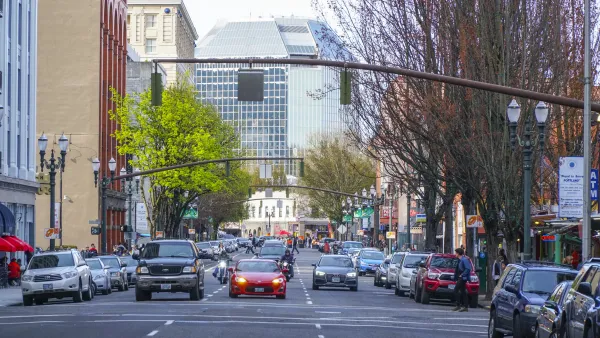
In two U.S. cities, new technology is rewarding slower driving with a quicker commute
Albuquerque, New Mexico and Portland, Oregon have introduced traffic lights that are red by default, and turn green faster if drivers approach while going at or below the speed limit.

Portland unveils Maine’s first affordable housing complex for LGBTQ+ seniors
The building earmarks 11 units for people with disabilities or living with HIV/AIDS.
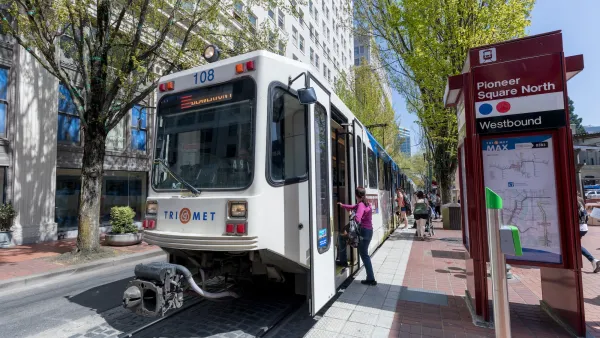
TriMet will eliminate 'Hand-to-Hand' paratransit service for half of its users
Roughly 300 Portland-area paratransit riders will lose access to a program that lets drivers escort them into their destination.

Planetizen Federal Action Tracker
A weekly monitor of how Trump’s orders and actions are impacting planners and planning in America.

Amtrak, CN end decades-long dispute with eight-year agreement
The new operating agreement establishes an updated framework for the companies to work together, including processes to resolve disputes.

Northwest rail fans eager for Sept. 30 debut of Amtrak’s Airo fleet
Get ready for that new train smell and more seats. But they won’t go faster or run more frequently on the Cascades route in Washington and Oregon.

Brightline Florida files for bankruptcy
The transit company is over $5 billion in debt.

St. Louis Metro to test if single-car trains can reduce operating costs, maintain rider satisfaction
The pilot program will run from October to spring 2027, and begin with one single-car train operating on Metrolink’s Red and Blue lines.

Pennsylvania is building data centers in abandoned mines
Housing data centers in mines provides an alternative to destroying local forests and may spare residents from data centers’ noise and air pollution.

FREE Course: Walkable City 1: Why Walkability?
After describing his path towards focusing on walkability as the essence of good planning, Jeff Speck marches through his five principal reasons for making more walkable places.
Reinventing Malls: Planning Alchemy—Turning Gray Fields Into Gold
The course focuses on the opportunities and imperatives that shape reinvention of mall sites.

City of Thousand Oaks
City of Wisconsin Rapids
Harvard University Graduate School of Design
The Architects Foundation
University of Cincinnati Online
The Pocatello Development Authority
The Urban Renewal Agency of the City of Pocatello