Dueling op-eds argue the controversial Trinity Toll Road proposal.


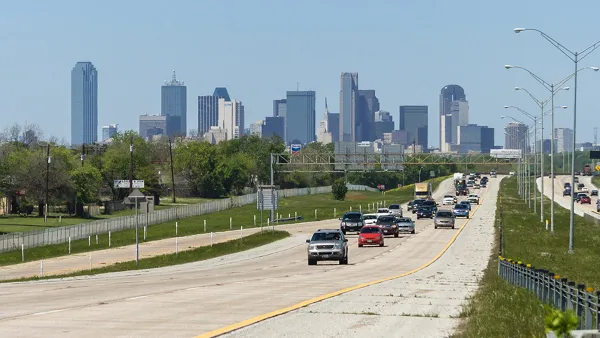
The Dallas Morning News offered its editorial pages to opposing views on a proposal that would build a six-lane, tolled bypass to the west and south of the Downtown Dallas central business district, connecting Interstate 35E to U.S. 175.
Voicing support for the project are Ron Kirk and Lee Jackson. Ambassador Ron Kirk is the former U.S. trade representative and former mayor of Dallas. Lee Jackson is chancellor of the University of North Texas and a former Dallas County judge and Texas state legislator. The supporting argument details three major points:
- The Dallas core's congestion problem is worsening and will continue to worsen.
- It's possible to build the toll road while creating and protecting open space opportunities along the Trinity River floodplain.
- A "balanced plan" approved by voters is the right plan to move forward with the project.
The opposing view is expressed by Robert Meckfessel, an architect with DSGN Associates, "actively involved" with the Trinity Corridor since 1998. Meckfessel argues that trends in mobility, demographics, and technology have rendered the transportation paradigms of the 20th century obsolete. According to Meckfessel, arguments in favor of the Trinity Toll Road assume that "our future will be very much like our past, with ever-increasing demand for automobile capacity on our roads."
Read the full story: Ron Kirk and Lee Jackson: Congestion will worsen without Trinity toll road
Breaking: Controversial Trinity Toll Road Officially a No-Go
Dallas has ended decades of debate about a highway project proposed to run along the Trinity River.

Is This the Trinity Park Plan of Dallas' Dreams?
Architecture critic Mark Lamster finally sees a proposal worth cheering for in Dallas' plans for a new park along the Trinity River.
Critic Sees 'Dallas Logic' in Latest Trinity River Plans
Mark Lamster has eviscerated the city of Dallas for its plans to build the Trinity Toll Road before—and he'll probably do it again.

Planetizen Federal Action Tracker
A weekly monitor of how Trump’s orders and actions are impacting planners and planning in America.

California plans to bury El Niño’s downpour
If the state plays its cards right, it may be able to store a billion acre-feet of El Niño’s water in aquifers.

Desperate measures: Advocates weigh draining Lake Powell to fill Colorado River
Draining the reservoir could reduce evaporation losses by a couple hundred thousand acre-feet.

Housing is the top priority of Seattle’s sole new councilmember
Jenks campaigned on building 1,000 new units of affordable housing.

New tax cuts may slash $1.5 billion in funding for Miami transit, public parks
Amendment 3 will save Miami-Dade homeowners $2,700 in 2028.

Arizona, Wisconsin, Pennsylvania hope to finally advance climate goals post-midterms
The three states have spent years under Republican or divided control.

FREE Course: Walkable City 1: Why Walkability?
After describing his path towards focusing on walkability as the essence of good planning, Jeff Speck marches through his five principal reasons for making more walkable places.
Reinventing Malls: Planning Alchemy—Turning Gray Fields Into Gold
The course focuses on the opportunities and imperatives that shape reinvention of mall sites.

City of Rosemead
Rutgers University, Edward J. Bloustein School of Planning and Public Policy
One Hundred Miles
University of Michigan School for Environment and Sustainability (SEAS)
Hunter College, City University of New York (CUNY)
The Architects Foundation
City of Cambridge
Montrose County
The Pocatello Development Authority