Architecture critic Mark Lamster finally sees a proposal worth cheering for in Dallas' plans for a new park along the Trinity River.


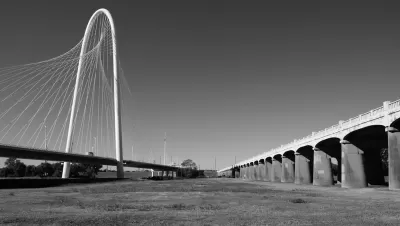
"After more than two decades of infighting, foot-dragging, false starts, and recrimination, Dallas finally has a serious plan for a park between the Trinity levees," according to an editorial from Dallas Morning News architecture critic Mark Lamster.
After setting aside some of the "ill-conceived" fantasies of past iterations of the park plan, Lamster identifies the good stuff from the most recent proposal, which includes "a two-part scheme that brings a stepped riverine ecology to the Trinity flood plain, and places a series of overlook parks on the tops and sides of the levee walls."
New York-based landscape architecture firm Michael Van Valkenburgh Associates produced the new proposal. The firm's urban park résumé includes Hudson River Park and Brooklyn Bridge Park, in New York, and the landscape at the George W. Bush Presidential Center in Dallas.
The proposal is still conceptual—the result of an action by Dallas Mayor Mike Rawlings "in response to public feedback to the so-called Dream Team’s proposals for the Trinity toll road." Lamster has been one of the toll road's most vocal critics, though certainly not its only critic.
Read the full story: Dallas finally gets a serious plan for a park between Trinity River levees

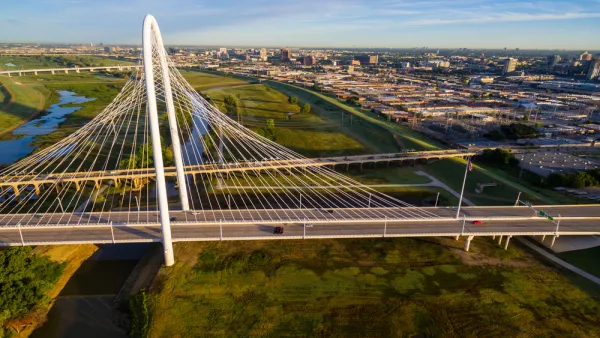
First Look at the Planned Trinity Park in Dallas
Dreams look a lot more like reality this week in Dallas.
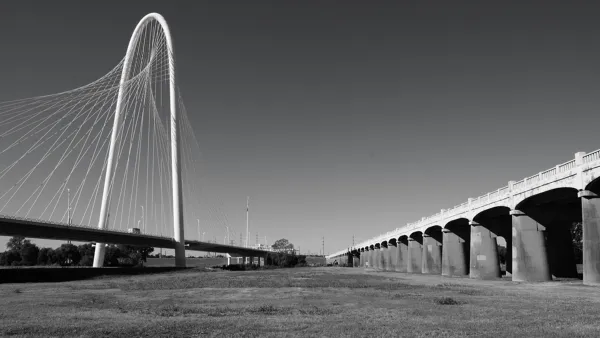
A Closer Look at the Big Park Plans Along Dallas' Trinity River
The Trinity River Project is coming into focus, after years of planning and decades of discussion. A $50 million donation in 2016 provided a big boost for Dallas' ambitious plans.
Critic Sees 'Dallas Logic' in Latest Trinity River Plans
Mark Lamster has eviscerated the city of Dallas for its plans to build the Trinity Toll Road before—and he'll probably do it again.

Planetizen Federal Action Tracker
A weekly monitor of how Trump’s orders and actions are impacting planners and planning in America.

California plans to bury El Niño’s downpour
If the state plays its cards right, it may be able to store a billion acre-feet of El Niño’s water in aquifers.

Chicago breaks ground on $3 billion megadevelopment
The new neighborhood, titled Foundry Park, will one day host 3,700 residences.

California High-Speed Rail Authority CEO resigns after $600,000 scandal
Under Ian Choudri, the authority used taxpayer dollars to fund first class flights and trips to nightclubs.

Want to study the Missouri River? Soon, you may need unanimous approval from 10 states
Legislation would require 10 governors’ permission to study or build projects moving water outside the basin.

Desperate measures: Advocates weigh draining Lake Powell to fill Colorado River
Draining the reservoir could reduce evaporation losses by a couple hundred thousand acre-feet.

FREE Course: Walkable City 1: Why Walkability?
After describing his path towards focusing on walkability as the essence of good planning, Jeff Speck marches through his five principal reasons for making more walkable places.
Reinventing Malls: Planning Alchemy—Turning Gray Fields Into Gold
The course focuses on the opportunities and imperatives that shape reinvention of mall sites.

City of Rosemead
Rutgers University, Edward J. Bloustein School of Planning and Public Policy
One Hundred Miles
Hunter College, City University of New York (CUNY)
The Architects Foundation
University of Cincinnati Online
City of Cambridge
Montrose County
The Pocatello Development Authority