It's been another dry season in California, and the concerns of the state's many water users are not going away. An editorial by one of the state's largest newspapers favors ecosystem protection over the agriculture industry for the year ahead.


A San Jose Mercury News editorial addresses the ongoing, heated controversy over how California should manage the Sacramento-San Joaquin River Delta, also known as the Bay Delta.
"California needs to get serious about protecting the health of the Sacramento-San Joaquin River Delta, one of Silicon Valley's most valuable water sources. The short-term needs of Central Valley farmers are significant. But they pale in comparison with preserving the long-term water quality of the estuary that provides water for two-thirds of the state's residents."
The argument is made in the wake of a decision last year to waiver environmental protections to pump additional water to agricultural uses. According to the editorial, Tom Howard, the executive director of the State Water Resources Control Board, admitted that the state erred in predicting the impacts of the decision on the ecosystem of the Bay Delta.
The editorial notes that the state will have a decision to make in March about how much water to pump this year. "Gov. Jerry Brown needs to demonstrate that he has his priorities straight when it comes to the Delta's delicate ecosystem," argues the editorial.
FULL STORY: Mercury News editorial: Delta's health should take priority over pumping

California Water Suppliers Respond to Drought and Climate Change
Jeff Kightlinger, General Manager of the Metropolitan Water District of Southern California, details the ongoing preparation and response his regional water agency has championed in the face of the driest calendar year in the state's history.
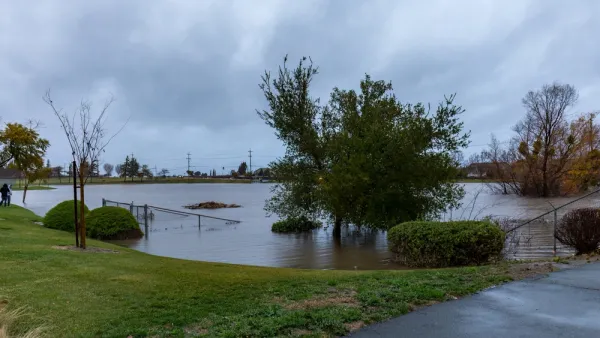
California’s Reservoirs are Filling Up, but For How Long?
Recent storms are bringing plenty of water to parched parts of California, but scientists warn the relief won’t be a long-term solution to longer, drier periods.
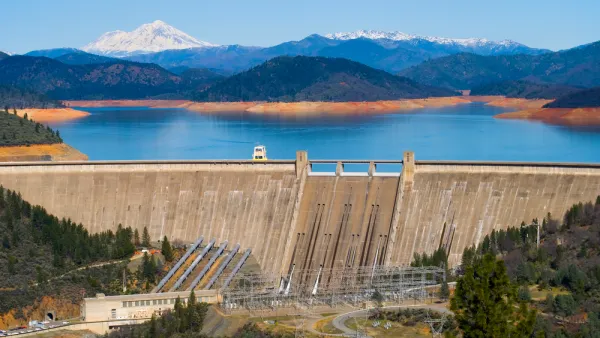
Californians Struggle To Cut Water Use
The state is slowly starting to curb water consumption, but progress has been ‘disappointingly slow’ as water supplies across the West diminish to historic lows.

Planetizen Federal Action Tracker
A weekly monitor of how Trump’s orders and actions are impacting planners and planning in America.

The state-sanctioned urbicide of Austin
People don’t kill cities. Freeways do.

US to reduce Colorado River water deliveries to Mexico
A new Colorado Treaty amendment reduces Mexico’s Colorado River water allocation by 250,000 acre feet.

5 New England states march closer to 800 megawatt wind energy project
Securing federal approval for the project may be complicated under the Trump administration, which has historically been hostile towards domestic wind power.

Baltimore to break ground on $50 million Transit Priority Project
The project will bring faster bus trips, safer streets and better bike connections to Baltimore.

Airbnb launches $250 million 'last-dollar financing' housing accelerator, makes first investment in Austin
The company will put $6.4 million towards affordable housing development in Texas’ capital.

FREE Course: Walkable City 1: Why Walkability?
After describing his path towards focusing on walkability as the essence of good planning, Jeff Speck marches through his five principal reasons for making more walkable places.
Reinventing Malls: Planning Alchemy—Turning Gray Fields Into Gold
The course focuses on the opportunities and imperatives that shape reinvention of mall sites.

Eagle County Government
Harvard University Graduate School of Design
Nashville Planning Department
The Architects Foundation
University of Cincinnati Online
The Pocatello Development Authority
The Urban Renewal Agency of the City of Pocatello
Journal of the American Planning Association