Housing supply is offering up something that looks very different than what today's households want to buy.


"Attainable" housing is replacing "affordable" housing in city planning conversations. And attainable lifestyle—including transportation costs—is in the spotlight. Ben Brown culls insights from the weekend's Seaside Prize:
"The Seaside Prize goes to 'individuals or organizations that have made significant contributions to the quality and character of communities.' Obvious candidates are from the fields of design and planning. But receiving the award this year was a team of residential real estate analysts, Todd Zimmerman and Laurie Volk."
"Since the late 1980s, ZVA, as their firm is called, has helped developers overcome the tendency of supply-demand market research to predict the future by looking at the past. Zimmerman and Volk project potential market opportunities by more closely examining behavioral characteristics of demographic slices, especially the biggest slices of all — Baby Boomers and Millennials."
"At Seaside over the weekend, Zimmerman and Volk led a slightly deeper dive into Boomer/Millennial trends post-Great Recession and encouraged a broader conversation about 'Neighborhood Challenges for a Re-Urbanizing Nation.' Mainly the dilemma linked to rising inequality and community un-affordability."

Read the full story: Here’s to Zimmerman/Volk and to ‘Attainable Housing’

Filling in the 'Missing Middle': No New Wheels, Please
A new crop of developers are delivering fine-grained urbanism. Ben Brown checks into their boot camp and provides an update on the movement.
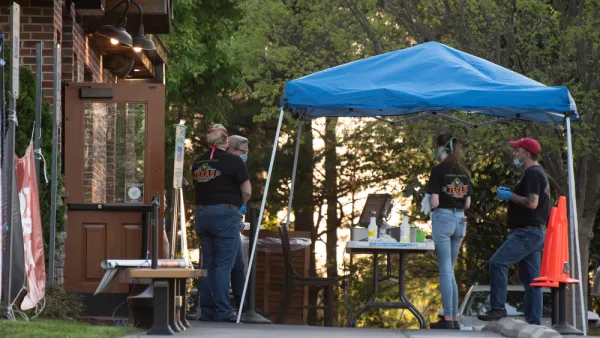
Lessons from the Pandemic: Housing, Retail, Broadband
Second in a series of conversations about what comes next in local government policies and processes, this time between Geoff Koski and Ben Brown on housing, retail, and broadband
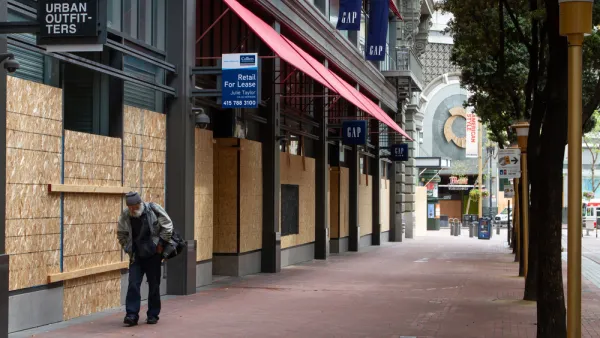
After the Plague: Go Big or Go Backwards?
Among unwelcome lessons of COVID-19 is growing evidence of what was already broken in politics and business. Ben Brown looks at making bold changes in order to improve the lives of the left out and left behind.

Planetizen Federal Action Tracker
A weekly monitor of how Trump’s orders and actions are impacting planners and planning in America.

Amtrak, CN end decades-long dispute with eight-year agreement
The new operating agreement establishes an updated framework for the companies to work together, including processes to resolve disputes.

Judges permit Denver to divert 77,000 acre feet from the Colorado River for reservoir expansion
Overuse and climate change have caused the Colorado River’s water levels to plummet.

Boston has spent millions making the Green Line more accessible — and there’s no end in sight
While the city has invested millions into expanding and adding platforms to the Green Line to make it more accessible, new train cars set to arrive next year will be too tall for disabled passengers to board without raising the current platforms.

Idaho may see an 18% drop in federal surface transit funding — the largest estimated cut in the US
Transit systems in rural communities are much more reliant on federal funding to provide their services.

How ‘post-disaster gentrification’ alters neighborhoods after natural calamities
After hurricanes, fires or other calamities, the original residents of a community are often replaced by younger, wealthier residents.

FREE Course: Walkable City 1: Why Walkability?
After describing his path towards focusing on walkability as the essence of good planning, Jeff Speck marches through his five principal reasons for making more walkable places.
Reinventing Malls: Planning Alchemy—Turning Gray Fields Into Gold
The course focuses on the opportunities and imperatives that shape reinvention of mall sites.

City of Wisconsin Rapids
Harvard University Graduate School of Design
KFH Group Inc.
The Architects Foundation
University of Cincinnati Online
The Pocatello Development Authority
The Urban Renewal Agency of the City of Pocatello