Lines between public and private blur as Flats East Bank takes on the mantle of a special tax district. If the measure goes through to completion, revenue will be used to fund public improvements.


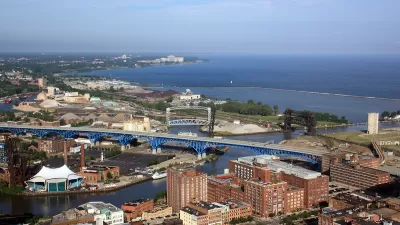
An upscale riverfront property encompassing apartments, restaurants, offices, and a hotel, Flats East Bank symbolizes Cleveland’s rejuvenating downtown. Leila Atassi reports on the City’s Council’s decision to let the developers (The Wolstein Group and Fairmount Properties) tax future patrons. The decision faces a continued state review process.
To dispel council members’ concerns, Adam Fishman of Fairmount maintained that “the money will be spent on improvements to public spaces, such as roads, sidewalks, landscaping, public parking, parks, utility infrastructure, bike paths and a public boardwalk, as well as security in the district […]. It cannot, however, be spent on improving buildings owned by the developer.”
The fees in question would primarily affect visitors, and include sales, bed, and parking taxes over and above what the city levies. A committee of Flats East Bank residents and business owners will determine allocation. The article provides background on the fraught politicking that accompanied the decision.
Read the full story: Cleveland City Council authorizes Flats East Bank developer to tax patrons to pay for improvements
Special Tax District Proposed for Cleveland Riverfront Development
The developers of a high profile, $421 million development in Cleveland are requesting a special tax district that could raise $30 million over three decades.
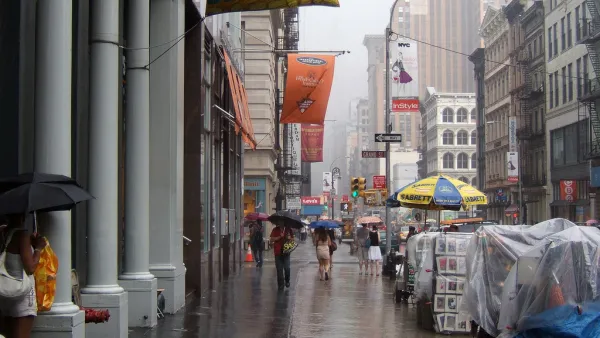
How Cities Can Help Retail Catch Up with Residential
Scott Beyer details the old real estate wisdom of "retail follows rooftops," especially as evidenced by cities like Cleveland in recent years.
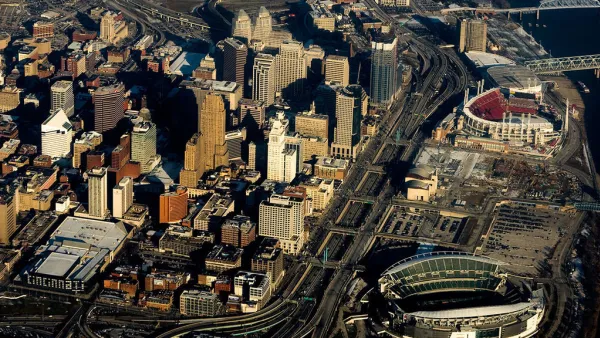
60 Years of Midwestern Urban Renewal
Researchers at the Institute for Quality Communities at the University of Oklahoma prepared a set of images to show the indelible impact of mid-20th century urban renewal on Midwestern cities.

Desperate measures: Advocates weigh draining Lake Powell to fill Colorado River
Draining the reservoir could reduce evaporation losses by a couple hundred thousand acre-feet.

Eastern Nebraska is running out of electricity
Data centers and electrification are straining eastern Nebraska’s grid, throttling economic development.

Move over, LA: St. Louis gears up for Olympics, invests millions in downtown redevelopment
The Missouri city will host the 2028 Olympic soccer group stage and knockout matches.

Mass. votes against statewide minimum lot size for single-family homes
Over 2 million residents voted on Question 7; it was decided by just over 30,000 votes.

Maryland’s $15 billion bridge project gains key approval
The Maryland Transit Authority said the project will create over 60,000 jobs and add $23 billion to the local economy.

‘No clear next steps’ for Chicago's permanent festival grounds
Eleventh Ward Ald. Nicole Lee has suggested Soldier Field as a possible location for the permanent event space.

FREE Course: Walkable City 1: Why Walkability?
After describing his path towards focusing on walkability as the essence of good planning, Jeff Speck marches through his five principal reasons for making more walkable places.
Reinventing Malls: Planning Alchemy—Turning Gray Fields Into Gold
The course focuses on the opportunities and imperatives that shape reinvention of mall sites.

City of Rosemead
Rutgers University, Edward J. Bloustein School of Planning and Public Policy
One Hundred Miles
University of Michigan School for Environment and Sustainability (SEAS)
Hunter College, City University of New York (CUNY)
The Architects Foundation
City of Cambridge
Montrose County
The Pocatello Development Authority