An article by Ben Campkin, Marina Mogilevich, and Rebecca Ross examines how images shape ideas about cities—from "John Snow’s Cholera map to Le Corbusier's plan for a contemporary city and Moose's 'clean graffiti.'"


"Maps, plans, photographs, renders, computer generated images, street art and signage drive physical changes and are central to perceptions of place and claims to territory," write the trio of researchers for Guardian Cities.
"When we make things visible, we make them public and subject to debate. Urban images not only offer insights to help analyse and understand cities, but also point to ways of radically altering their futures."
In addition to the examples cited above, the article also mentions the photojournalism of Jacob Riis and the exhibition sat the Shanghai Urban Panning and Exhibition Centre. The article also introduces the Picturing Place project, hosted by the University College London. The first of the Picturing Place series on Guardian Cities focuses on the iconic images of Brasilia—capital city of Brazil.
FULL STORY: How images shape our cities

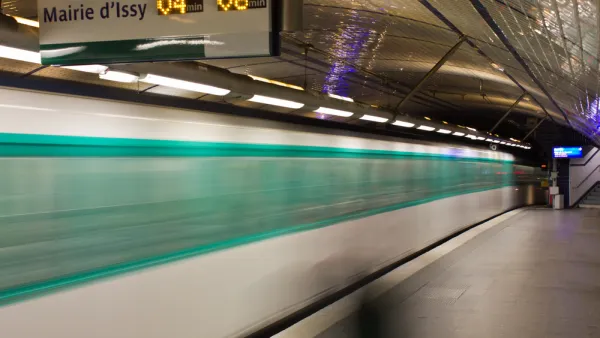
An Animation of the World's Transit Systems
"A German university student has developed a fun new tool for visualizing public transit in a more system-oriented way," according to a post by Sam Sturgis.
Visualizing the Spread of the OpenStreetMap Project
OpenStreetMap has released an animated map to illustrate the impressive growth of the project over the first ten years of its existence.

40 Visualizations of America and its Relationship with Food
A new post by Vox includes 40 maps, charts, and graphs explain that where and how food works in America.

Planetizen Federal Action Tracker
A weekly monitor of how Trump’s orders and actions are impacting planners and planning in America.

The state-sanctioned urbicide of Austin
People don’t kill cities. Freeways do.

US to reduce Colorado River water deliveries to Mexico
A new Colorado Treaty amendment reduces Mexico’s Colorado River water allocation by 250,000 acre feet.

Colorado’s Largest Data Center Could Rise Next to Homes — Without a Public Hearing
The proposed campus would consume 11 times the power of Denver International Airport; as it has across the country, opposition mounts.

5 New England states march closer to 800 megawatt wind energy project
Securing federal approval for the project may be complicated under the Trump administration, which has historically been hostile towards domestic wind power.

Baltimore to break ground on $50 million Transit Priority Project
The project will bring faster bus trips, safer streets and better bike connections to Baltimore.

FREE Course: Walkable City 1: Why Walkability?
After describing his path towards focusing on walkability as the essence of good planning, Jeff Speck marches through his five principal reasons for making more walkable places.
Reinventing Malls: Planning Alchemy—Turning Gray Fields Into Gold
The course focuses on the opportunities and imperatives that shape reinvention of mall sites.

Eagle County Government
Harvard University Graduate School of Design
Nashville Planning Department
The Architects Foundation
University of Cincinnati Online
The Pocatello Development Authority
The Urban Renewal Agency of the City of Pocatello
Journal of the American Planning Association