The use of toll lanes on two of the Los Angeles region's freeways has proven popular enough that county transportation planners are considering expanding the system.


"An overflow of commuters signing up for access to pay-to-ride carpool lanes on the 110 and 10 freeways prompted the county’s transit agency to launch a study Thursday on how to convert more free lanes into pay lanes," reports Steve Scauzillo.
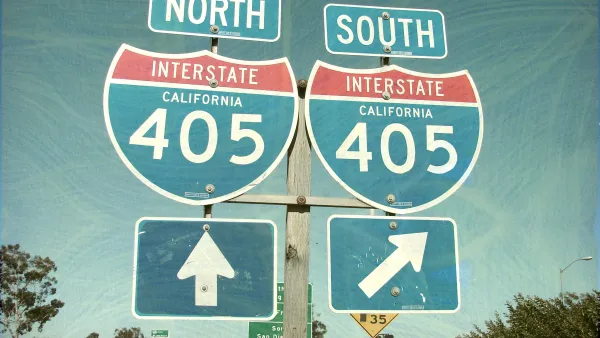
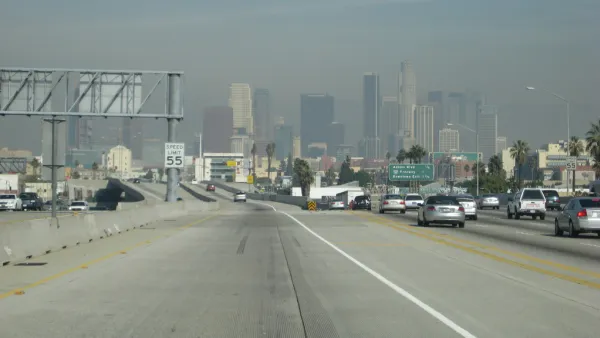
Freeways under consideration for expanded use of the ExpressLanes system: the I-405, )-5, and I-210. The Los Angeles County Metropolitan Transportation Authority is also considering expanding existing ExpressLanes on the I-110 and I-10 freeways. After the existing lanes launched in 2012 and 2013, 260,000 drivers have adopted the system by purchasing the FasTrak transponders that enable the system. Initial goals for the system were set at 100,000 adopters.
Scauzillo also notes that the high rate of use, especially by single-occupant vehicles, is likely impacting the time savings benefits of the lanes, according to a report released by the Federal Highway Administration earlier this year.
Read the full story: Metro will study adding more pay lanes to Southern California freeways

Express Lanes And Transit Headed To LA Freeways
The largest recipient of the U.S. DOT 2008 Urban Partnership Agreement are two freeways in LA County where carpool lanes will be converted to Express Lanes with dynamic pricing with additional, clean fuel buses, all funded by the $210 million grant.
Toll Lane Rebellion Fails to Materialize in Southern California
The 405 Express Lanes will open in Orange County later this year despite the warnings from a former Huntington Beach mayor of a resident-led rebellion in response to road pricing. But will the toll lanes mitigate congestion? Academics weigh in.
If Road Pricing Is Inherently Unfair and Regressive...
Road pricing has its faults as a revenue measure, but it needs to be compared to ten elements of the current system of paying for transportation, including hidden subsidies, says Joe Cortright, an urban economist with Portland-based City Observatory.

Planetizen Federal Action Tracker
A weekly monitor of how Trump’s orders and actions are impacting planners and planning in America.

California plans to bury El Niño’s downpour
If the state plays its cards right, it may be able to store a billion acre-feet of El Niño’s water in aquifers.

Chicago breaks ground on $3 billion megadevelopment
The new neighborhood, titled Foundry Park, will one day host 3,700 residences.

California High-Speed Rail Authority CEO resigns after $600,000 scandal
Under Ian Choudri, the authority used taxpayer dollars to fund first class flights and trips to nightclubs.

Want to study the Missouri River? Soon, you may need unanimous approval from 10 states
Legislation would require 10 governors’ permission to study or build projects moving water outside the basin.

Desperate measures: Advocates weigh draining Lake Powell to fill Colorado River
Draining the reservoir could reduce evaporation losses by a couple hundred thousand acre-feet.

FREE Course: Walkable City 1: Why Walkability?
After describing his path towards focusing on walkability as the essence of good planning, Jeff Speck marches through his five principal reasons for making more walkable places.
Reinventing Malls: Planning Alchemy—Turning Gray Fields Into Gold
The course focuses on the opportunities and imperatives that shape reinvention of mall sites.

City of Rosemead
Rutgers University, Edward J. Bloustein School of Planning and Public Policy
One Hundred Miles
Hunter College, City University of New York (CUNY)
The Architects Foundation
University of Cincinnati Online
City of Cambridge
Montrose County
The Pocatello Development Authority