Darin from ATL Urbanist picks up on a recent report by the American Public Transportation Association (APTA) finding that residents of Atlanta can save big money by ditching their cars and riding transit.


"$9,253 — that’s the average annual savings for someone in Metro Atlanta who, according to this new APTA report, gives up a car and switches to public transit," reports the ATL Urbanist. The report, released in October, has similar data for other cities around country as well.
But a sober assessment of what it would really take to switch to transit in Atlanta is in order. According to the post: "Here’s a BIG asterisk for that dollar amount: the Atlanta region is so heavily dominated by car-centric sprawl that there are many here who might like to save this money and make the switch to transit, but can’t."
The post pivots on the report—as well as another Brookings report showing Atlanta's dismal workforce transit access—to make the case for more compact development.
Read the full story: Savings for transit switch in Atlanta region is impressive; availability of transit isn’t
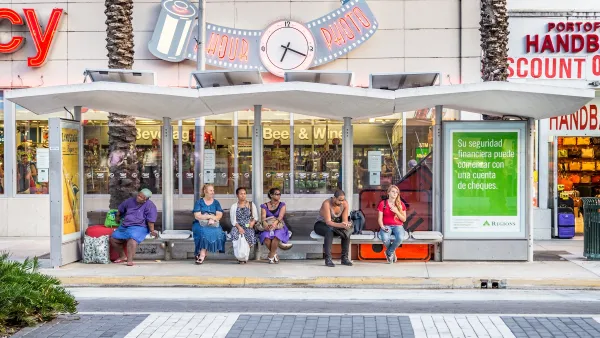
Report: Just 10% of US households live near 'frequent, reliable' transit
The analysis highlights how sprawl and a lack of transit investment perpetuate car dependency for most Americans.
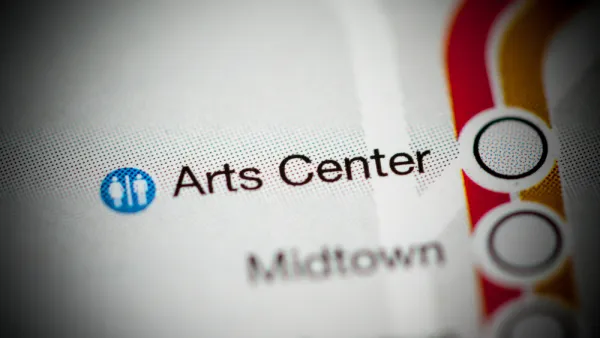
Atlanta Street Extension Project Will Benefit Transit Access
Plans to extend 15th Street in Midtown Atlanta are designed to improve access to the Arts Center MARTA station.
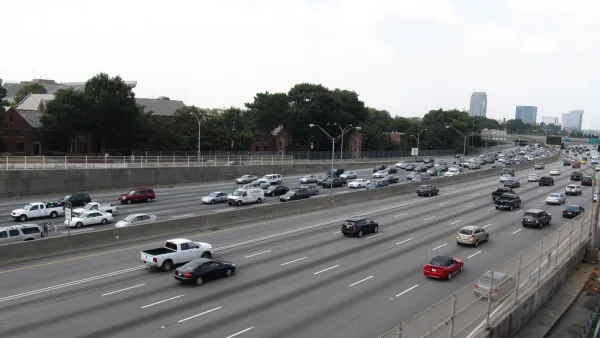
Faced With Infamously Bad Traffic, More Atlanta Residents Choose to Telecommute
More people are telecommuting in Atlanta, keeping cars of the road, but the percentages of people driving alone to work, taking transit, and walking or biking to work are holding steady.

Planetizen Federal Action Tracker
A weekly monitor of how Trump’s orders and actions are impacting planners and planning in America.

Eastern Nebraska is running out of electricity
Data centers and electrification are straining eastern Nebraska’s grid, throttling economic development.

Washington state to charge fee to drivers with fuel-efficient cars
Revenue from the fee will go towards supporting the state’s highways.

Instead of building new housing, LA developers are turning mansions into mega-mansions
In the richest areas, the number of houses valued at $30 million with demolition permits has skyrocketed since 2018.

Illinois considers spending $1 billion in taxpayer money on data center
A quantum computing campus and data center are currently under construction in Chicago.

As development costs rise, Boston moves to lessen affordable housing requirements
The Boston Zoning Commission and the City Council still need to approve Boston Mayor Michelle Wu’s proposed changes

FREE Course: Walkable City 1: Why Walkability?
After describing his path towards focusing on walkability as the essence of good planning, Jeff Speck marches through his five principal reasons for making more walkable places.
Reinventing Malls: Planning Alchemy—Turning Gray Fields Into Gold
The course focuses on the opportunities and imperatives that shape reinvention of mall sites.

City of Charlotte
City of Rosemead
Rutgers University, Edward J. Bloustein School of Planning and Public Policy
University of Michigan School for Environment and Sustainability (SEAS)
Hunter College, City University of New York (CUNY)
The Architects Foundation
University District Partnership
City of Cambridge
The Pocatello Development Authority