The skills and location data of over 175 million LinkedIn members were mined to produce a map displaying the industries most common in major cities throughout the United States and Europe.


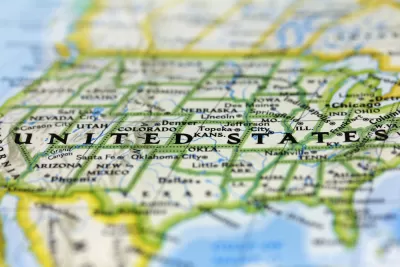
Cities have long been considered hubs of economic activity, and closely linked to opportunity. As Sohan Murthy posted earlier this week on the LinkedIn Blog, "Over 175 million LinkedIn members are located in the United States and Europe, and by mining the skills and location data in their profiles, we built two maps that highlight the skills which define almost every major city in each region."
Some findings from the map confirmed trends throughout the United States and Europe, such as the abundance of "skills valued by the petroleum industry are much more likely to found in Texas, Louisiana, Oklahoma, and most recently North Dakota."
Across the Atlantic Ocean, many European cities have technical computer skills, but "Madrid and Sevilla have just enough java development skills to rank as the dominant category, whereas Hamburg and Berlin have user interface design, game development, and mobile development skills – indicative of the region’s booming startup scene."
These maps are a continuation of LinkedIn's Economic Graph, an initiative for digitally representing the globalized economy to ultimately "build a global map of supply and demand for every skill on LinkedIn, and in the process, help members find opportunities by offering a change in scenery."
H/T to Richard Florida for the article.
FULL STORY: Defining A City By Its Professional Skill Set with Data From LinkedIn

The Role Infrastructure Employment Plays Throughout The United States
Brookings illuminates which states rely heaviest on infrastructure for employment as local policymakers are struggling with reliable federal funding throughout the peak of construction season.

How Cities Can Leverage Financial Data for Smarter Urban Planning
Explore how cities can use financial data to enhance urban planning, improve budget allocation, and boost community services.

Study: Loss of Public Transit in Chicago Would Have ‘Severe’ Mobility, Economic Consequences
The first-of-it’s kind study found that without public transit, Chicago would lose an estimated $35 billion in economic activity annually and the quality of life of residents, particularly women and low-income groups, would take a major hit.

Planetizen Federal Action Tracker
A weekly monitor of how Trump’s orders and actions are impacting planners and planning in America.

The state-sanctioned urbicide of Austin
People don’t kill cities. Freeways do.

US to reduce Colorado River water deliveries to Mexico
A new Colorado Treaty amendment reduces Mexico’s Colorado River water allocation by 250,000 acre feet.

5 New England states march closer to 800 megawatt wind energy project
Securing federal approval for the project may be complicated under the Trump administration, which has historically been hostile towards domestic wind power.

Baltimore to break ground on $50 million Transit Priority Project
The project will bring faster bus trips, safer streets and better bike connections to Baltimore.

Airbnb launches $250 million 'last-dollar financing' housing accelerator, makes first investment in Austin
The company will put $6.4 million towards affordable housing development in Texas’ capital.

FREE Course: Walkable City 1: Why Walkability?
After describing his path towards focusing on walkability as the essence of good planning, Jeff Speck marches through his five principal reasons for making more walkable places.
Reinventing Malls: Planning Alchemy—Turning Gray Fields Into Gold
The course focuses on the opportunities and imperatives that shape reinvention of mall sites.

Eagle County Government
Harvard University Graduate School of Design
Nashville Planning Department
The Architects Foundation
University of Cincinnati Online
The Pocatello Development Authority
The Urban Renewal Agency of the City of Pocatello
Journal of the American Planning Association