Following the murder of a 12-year-old homeless child in Louisville, Beverly Duncan writes an editorial calling for Louisville Metro Council members to fully fund the Louisville Affordable Housing Trust Fund.


Beverly Duncan cites the tragic story of Ray Etheridge’s murder as a shocking event in a common scenario: "there are over 20,000 families on the city’s waiting list for housing assistance — a list that has doubled in the past 10 years. Many of these are families with children, all of whom deserve a safe, secure place to call home."
The public safety net mean tot help families and children like Etheridge, however, has been neglected by the city's government: "In 2008, by a 25-1 vote, Metro Council established the fund with the goal of investing $10 million each year to create homes for working families, children, veterans, seniors and people with disabilities, all groups that have trouble finding safe and decent homes in our city that they can afford. However, six years later Metro Council has still not secured the needed public funding."
Duncan goes on to cite more of the statistics of the growing affordable housing crisis in Louisville as well as the multiplier effect of affordable housing funds: "According to Metro Louisville’s own research, every $1 invested by the city generates $6.47 in additional local revenue from outside sources. In the first year alone, investing $10 million would create more than 1,000 jobs, increase local business revenue by $13 million, and build hundreds of homes."
Read the full story: Fully fund Louisville Affordable Housing Trust Fund


Learning loss and urban schools, part 2
Did test scores in progressive cities drop more post-COVID than test scores in moderate ones?
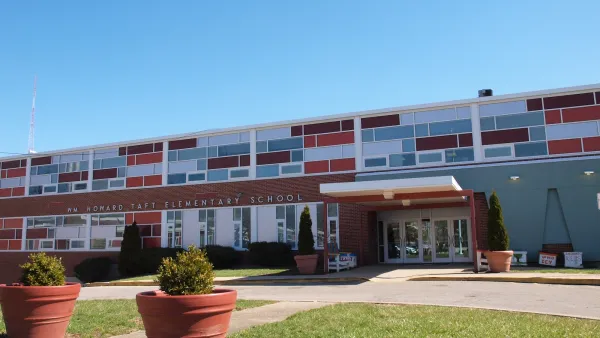
Cincinnati school district to open 'Safe Sleep' lot for unhoused families
The safe parking lot is part of Project Connect, a district-led initiative that provides services to students and families.
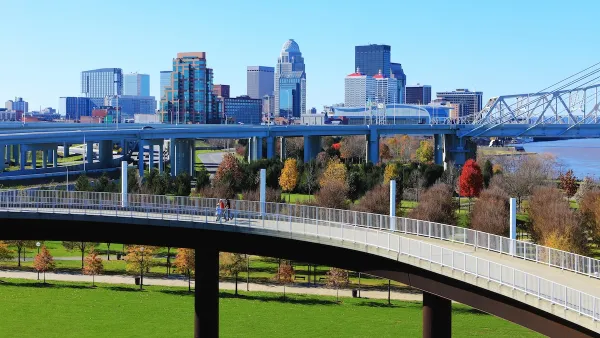
Louisville Creates its First Municipal DOT
The new department will be tasked with speeding up transportation and infrastructure projects.

Planetizen Federal Action Tracker
A weekly monitor of how Trump’s orders and actions are impacting planners and planning in America.

Chicago breaks ground on $3 billion megadevelopment
The new neighborhood, titled Foundry Park, will one day host 3,700 residences.

This MA town is drowning in its own sewage — and residents like it that way
Susan Murcott, a waste water expert, said if Carlisle didn't address their leaking sewage, the problem could turn “deadly.”

Iowa taxpayers are paying thousands to clean manure out of their water
While the Clean Water Act makes states responsible for regulating factory farms that discharge pollutants, Iowa has turned a blind eye to the polluting farms.

Amtrak cuts ribbon on Seattle Airo maintenance facility
The $250 million, nearly 100,000-square-foot building can house an entire Cascades Airo trainset.

To power data centers, Google seeks autonomous control of thousands of homes’ electricity
The tech company has signed a deal to indirectly pay Mid-Atlantic residents to reduce their power demand when the grid is strained.

FREE Course: Walkable City 1: Why Walkability?
After describing his path towards focusing on walkability as the essence of good planning, Jeff Speck marches through his five principal reasons for making more walkable places.
Reinventing Malls: Planning Alchemy—Turning Gray Fields Into Gold
The course focuses on the opportunities and imperatives that shape reinvention of mall sites.

City of Rosemead
Rutgers University, Edward J. Bloustein School of Planning and Public Policy
One Hundred Miles
The Architects Foundation
University of Cincinnati Online
Montrose County
The Pocatello Development Authority
The Urban Renewal Agency of the City of Pocatello