Sandie Angulo Chen of Trulia discusses the reasons why Millennials prefer to rent homes or apartments instead of buying properties.



In a recent post on Trulia, Sandie Angulo Chen notes how Millennials are distinct from previous generations, "[w]ith Millennials facing an unemployment rate of more than 8% and $1 trillion in student loan debt, they’re increasingly renting instead of buying homes. In fact, the true homeownership rate for 18-34 year olds has fallen to a new low: 13.2%."
First, Chen discusses how featured amenities such as gyms, movie screening rooms, or ubiquitous cell phone reception in many apartment buildings are very attractive, and these same amenities come as a significant expense to homeowners. Second, renting a small space often includes access to shared spaces within a building community or more engagement with an urban community outside of the home.
Third, "[t]he ultimate benefit of renting may arise from the flexibility of leaving for any reason, especially career reasons. Millennials tend to change jobs three times more often than their older counterparts and stay with the same employer for just three years on average, according to the U.S. Bureau of Labor Statistics. Renting instead of buying makes transferring to a new or better job much simpler." Finally, Chen also believes that Millennials opt to rent instead of own houses in part because of home maintenance, which renters are not responsible for.
Read the full story: Why Millennials Love Renting
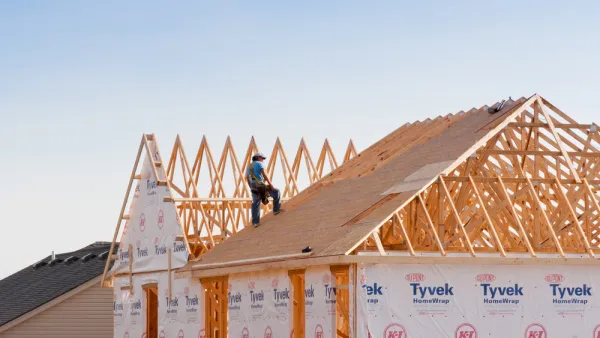
Builders Look to Growing Home Rental Market
Subdivisions in states across the country are catering to people who want the benefits of living in homes without the burdens of home ownership.

When Large Corporations Buy Homes and Become Landlords
Since the Great Recession, homeownership is down and corporations are taking advantage of the profit opportunities.

Should You Rent or Should You Buy? Trulia Maps the Question
Real estate website Trulia has released its most recent Rent vs Buy report, breaking down the value proposition of buying a home relative to renting one for cities around the country.

Planetizen Federal Action Tracker
A weekly monitor of how Trump’s orders and actions are impacting planners and planning in America.

California plans to bury El Niño’s downpour
If the state plays its cards right, it may be able to store a billion acre-feet of El Niño’s water in aquifers.

Desperate measures: Advocates weigh draining Lake Powell to fill Colorado River
Draining the reservoir could reduce evaporation losses by a couple hundred thousand acre-feet.

Los Angeles just elected an urban planner as its mayor
Transportation analysts are optimistic that Raman will be more aggressive in addressing transit issues than Bass.

Mamdani’s pied-à-terre tax survives legal challenge
A panel of judges found that the plaintiffs failed to demonstrate injury as a result of New York City's implementation of the tax.

Eastern Nebraska is running out of electricity
Data centers and electrification are straining eastern Nebraska’s grid, throttling economic development.

FREE Course: Walkable City 1: Why Walkability?
After describing his path towards focusing on walkability as the essence of good planning, Jeff Speck marches through his five principal reasons for making more walkable places.
Reinventing Malls: Planning Alchemy—Turning Gray Fields Into Gold
The course focuses on the opportunities and imperatives that shape reinvention of mall sites.

City of Rosemead
Rutgers University, Edward J. Bloustein School of Planning and Public Policy
One Hundred Miles
University of Michigan School for Environment and Sustainability (SEAS)
Hunter College, City University of New York (CUNY)
The Architects Foundation
City of Cambridge
Montrose County
The Pocatello Development Authority